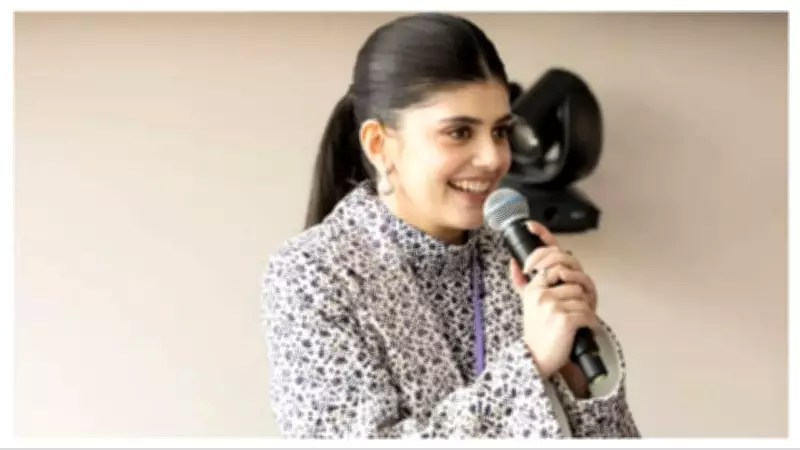
Following in the footsteps of global icons like Priyanka Chopra Jonas and Shashi Tharoor, Sanjana Sanghi has added a significant milestone to her journey as an actor and advocate. On April 18, 2026, the Dil Bechara actress took the stage at the Harvard Kennedy School for the Women in Power Conference (WIPC), underscoring her growing presence beyond cinema.
Arts and Advocacy Panel
By headlining the Arts and Advocacy panel and leading a “Lunch and Learn” session, Sanjana brought together her work in storytelling and social engagement. The appearance reflects a phase in her career where creative work intersects with conversations around impact and advocacy.
Message of Empowerment
Addressing a global audience at Harvard, Sanjana shared her perspective on self-belief and agency. The actress, who has also been part of films like Rockstar, Fukrey Returns, Kadak Singh, and Woh Bhi Din The, said, “True empowerment is the transition from seeking permission to granting it to yourself. For too long, ‘you can’t’ has been a whisper in the ears of young girls; today, we turn that whisper into a roar of ‘I will.’ Standing at Harvard, I don’t just see a podium, I see a bridge between storytelling and systemic change. Our culture is our greatest tool for advocacy, and our voices are the architects of a more equitable future.”

Early Career Milestone
At a relatively early stage in her career, her presence at one of the world’s leading academic institutions reflects her positioning at the intersection of youth engagement and global conversations. Her selection by the WIPC leadership also acknowledges her work beyond films, including associations with organizations such as UNDP, Save the Children India, and the Rockefeller Foundation.
Impactful Sessions
Her sessions drew students, faculty, and global participants, focusing on how cultural expression can influence broader conversations around education and access. She emphasised that creativity can extend beyond entertainment and contribute to areas like educational equity and digital inclusion, linking her work in cinema with on-ground initiatives.