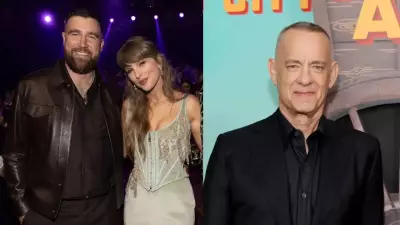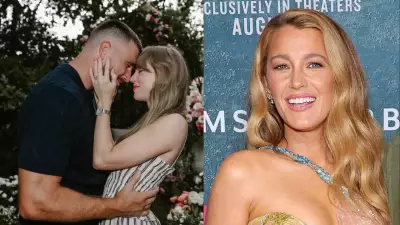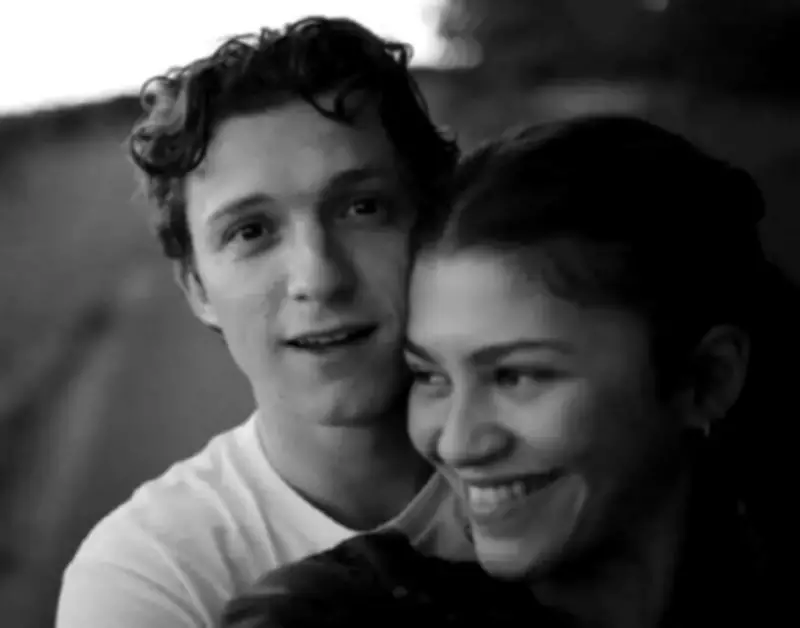
For nearly two decades, the dominant social currency of the internet has been visibility. To exist is to be seen, documented, and algorithmically validated. But a quiet but steady growth of sheer exhaustion has been brewing backstage. Now, this exhaustion with constant performance has triggered a quiet rebellion. There is a profound friction between the historic mandate of digital oversharing and a rapidly emerging counter-movement: the reclamation of silence.
This shift is visible not only in the highly strategic privacy maneuvers of global icons but also in the everyday choices of younger generations who are choosing to quietly quit social media, establish strict digital boundaries, and protect their psychological well-being at all costs. But let us begin with Zendaya and Tom Holland and their quiet wedding.
The Quiet Union of Tom and Zendaya
Two days before, actor Tom Holland put months of intense public speculation to rest by confirming his marriage to his long-time partner, Zendaya. The confirmation, delivered during an interview with Esquire UK, was characteristically brief. When asked whether Tom’s family members were bothered by all the highly realistic, AI-generated wedding photos circulating online, the Hollywood actor responded simply: “No, because they were all there. That’s all you’ll get on that.” Okay, then. The rumors were true. Tom and Zendaya are married. And more so, it is none of our business. That is how the PR machinery that handles mega stars and global icons went about this particular wedding. It seems almost soothing.

Because it is in this same world, where we recently saw another wedding. Of one of the richest businessmen in the whole wide world. The venue was Venice. The city was almost shut out. Even the locals felt they were tourists, and that Venice had been paid to become an Amazon-ian jungle for a week.
Zendaya and Tom’s understated acknowledgment of their wedding is a breath of fresh air in our hyper visible world. Their understated acknowledgment in the same world is like a breath of fresh air we all need to just breathe for a second. Let us unpack what happened here. Tom effectively verified that the couple had tied the knot in an intimate ceremony, away from the prying eyes of the global press.
This revelation followed a series of quiet milestones. The couple first met in 2016 during production on the Marvel film Spider-Man: Homecoming, where Zendaya immediately impressed producers, reportedly smashing her audition out of the park before she had even left the room.
Though the pair spent years insisting their relationship was strictly platonic, romantic rumors were officially confirmed in 2021 when they were photographed kissing in a car in Los Angeles. That same year, both spoke to GQ about the profound loss of privacy that accompanies global fame. Zendaya said at that time that when individuals deeply care about one another, certain experiences must remain strictly between them.
By keeping their personal lives sacred, the couple built a quiet foundation. Rumors of their engagement intensified at the Golden Globe Awards in January 2025, when Zendaya was photographed wearing a diamond ring. Later that year, Holland casually corrected a reporter who referred to Zendaya as his girlfriend, clarifying, “Fiancée.” In March 2026, rumor circulated that they had secretly married in Las Vegas at the Chapel of the Bells. Shortly thereafter, stylist Law Roach teased attendees at the 2026 Actors Awards with the declaration, “The wedding has already happened. You missed it!”
The choice to wed in secret is a logical shield against the unique pressures of modern celebrity. Holland highlighted this protective boundary, explaining that having a partner who understands the entertainment industry provides a rare “luxury and a resilient foundation.” Their partnership is as much a professional creative sanctuary as a personal one; for example, Holland credited Zendaya with helping him realize that a scene they shared in Spider-Man: Brand New Day was flat, which subsequently led to a complete script rewrite. By prioritizing the depth of their connection over public relations spectacles, Holland and Zendaya have repeatedly demonstrated that the most resilient relationships are those preserved backstage.

Rejection of the ‘Emotional Bloodsport’ of Loud Weddings
For nearly a century, celebrity weddings functioned as grand front-stage performances designed to entertain the public, beginning with early Hollywood unions like those of Rudolph Valentino in 1919 and Douglas Fairbanks in 1920. However, the rise of reality television in the early 2000s—fueled by shows such as Bridezillas, Say Yes to the Dress, and Four Weddings—erased the boundary between the backstage and the front stage. The intimate, often stressful processes of wedding preparation, family negotiations, and emotional vulnerability were pulled into the public spotlight, turning a personal milestone into an "emotional bloodsport."
Selena Gomez and Benny Blanco's wedding was at a custom-built private venue. Guests were transported to an undisclosed location. The arrival of smartphones and social media algorithms finalized this collapse, forcing average couples into a state of perpetual front-stage performance. Every proposal was videotaped, every dress fitting was documented, and every aesthetic choice was optimized for online validation. This continuous performance has finally proven to be highly exhausting. That is why we are slowly seeing the rise of secret weddings. This is a direct sociological backlash—a deliberate effort to keep the entire matrimonial process backstage.
No Phones, Top-Secret Venues, and Photo Dumps Two Years Later
Anya Taylor-Joy secretly wed Malcolm McRae in New Orleans two years before releasing polished photographs on her own terms. Emma Stone and Dave McCary, Colin Jost and Scarlett Johansson, and Dave Franco and Alison Brie have all bypassed traditional media campaigns in favor of private ceremonies. To protect this backstage space, high-profile couples are developing increasingly sophisticated tactical maneuvers too.
This trend of hyper-privacy has also caught on among major pop artists and influencers. Margot Robbie and Tom Ackerley got married in native Australia at an extremely top-secret location. Only 50 guests were invited. Phones and cameras were confiscated at the entrance. And dozens of security guards were posted all around the venue. Robbie made a delayed social media post displaying the wedding ring.
Same goes for Anya and Malcolm McRae. The venue was New Orleans’ historic hall. It was a secret ceremony with friends. The couple maintained absolute media silence for two years. Then Anya strategically dumped her wedding photos on Instagram on April Fool's Day, two years later.
Then came Selena Gomez and Benny Blanco. Theirs was a custom-built private venue. Guests were transported in private cars to an undisclosed location. This was straight out of a spy thriller. Get this. Tents constructed to block aerial paparazzi. And then, pre-taken wedding photos were released strategically on the day of the ceremony.
There is one thing that all these weddings have in common. The secrecy acted as a vital shield against the toxic hate comments and intense judgment that often plague public couples on social media. There is something familiar about that feeling. And it is not limited to the world of arc lights. It is happening to all of us.
The Anti-Visibility Revolt by Gen Z and Gen Alpha
A profound generational shift is occurring among digital natives, who are choosing to push back against the hyper-visibility of the digital era. Generation Z and Generation Alpha are quietly rewriting their relationship with technology. They are prioritizing their mental health over online validation.
For Generation Z, this shift is heavily driven by a harsh reality: the complete blurring of boundaries between personal expression and professional risk in the last decade. Personal social media accounts have long ceased to be isolated spaces for youthful venting or casual humor; they have become monitored extensions of the workplace. As workplace relationships extended into personal platforms, young professionals treated their digital footprints like living resumes. And this intense scrutiny eventually created a culture of strict self-censorship, where the fear of social media affecting employment outweighed the desire for authentic self-expression online. Well, all that is changing. Everyone is tired.
Ping Minimalism. Wait, What?
To combat this, Gen Z is adopting several novel methods. One being: “ping minimalism,” another being “landline mode.” These practices involve turning off non-essential notifications, leaving phones in separate rooms, and refusing to respond to work messages after hours to protect mental health from a constant state of low-level stress. Okay, let us get into the details.
Ping Minimalism: It is a digital wellness philosophy that advocates for silencing device notifications, reducing digital interruptions, and actively choosing when to check communications. Instead of reacting to every “ping” in real-time, it encourages batching your screen time to protect your focus and reclaim your mental clarity. Actually, sanity.
Landline Mode: This one is exactly as it sounds. It treats the smartphone like an old-school stationary phone. By leaving your phone in one designated spot—like a hallway or kitchen counter—you break the habit of mindless scrolling and reduce your screen time in the process.
Then Comes the Quiet Quitting of Social Media
Rather than deleting their accounts entirely, Gen Z is “quiet quitting” social media. This practice involves a fundamental shift in user behavior: scrolling has become mandatory for emotional regulation, while active posting has become entirely optional. Psychologists have noted this shift globally, and say it is largely driven by “visibility fatigue.” The exhausting emotional labor of maintaining a public-facing persona has led young users to retreat to safer, more controlled environments.
In essence, authenticity has moved from the public feed to backstage. Meanwhile, Generation Alpha—born between 2010 and 2024—is showing early signs of a similar, parent-supported counter-movement toward an offline lifestyle. Having been exposed to screens from infancy, this generation has faced dangerous levels of screen addiction, anxiety, and depression linked to excessive digital exposure. In response, there is a clear trend toward balance.
A study by Wunderman Thompson found that only 5% of Gen Alpha kids rank social media as the most important part of their lives. What is more, parents today are adopting less traditional, more collaborative styles, helping children establish healthy limits early on. Data shows a post-pandemic surge in Gen Alpha kids wanting to see their friends in person and participate in physical sports. This generation is showing a strong desire to step back from constant digital engagement, choosing real-world connections over the algorithmic feed.
The cultural trend toward privacy—seen in Zendaya and Tom’s secret wedding, Gen Z's curated social media feeds, and the rise of radical boundary-setting—is a natural response to the exhausting demands of the digital age. In a world that demands constant self-presentation, choosing to step back and protect one's personal life is a vital act of self-care.