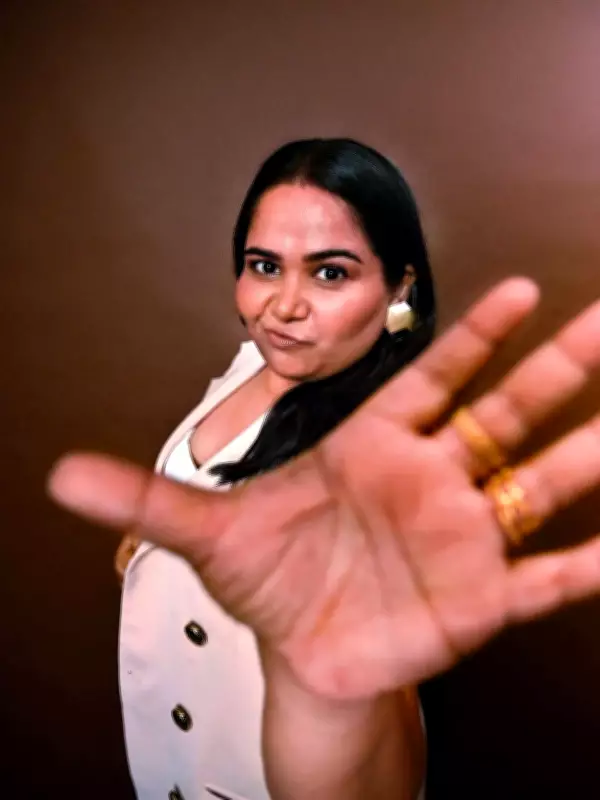
Over the years, stand-up comic Sumukhi Suresh has worked across multiple formats including acting, writing, hosting, creating shows, and performing stand-up. Yet, she emphasizes that the stage remains the most personal space for her. Recently performing internationally was more than just another career milestone; it reflected how far Indian comedy, especially women in comedy, has come. As the only woman performing at the comedy festival, Sumukhi found the experience validating, particularly since it was her first time performing in the United States.
"When I'm doing my own stand-up show, that's probably the most honest version of myself. You get to say exactly what you want to say without filtering yourself into a character," she says.
"When a big platform bets on you and says, 'You are the person we've chosen to represent us,' that itself feels like a huge compliment," she adds. However, despite years of recognition in the industry, Sumukhi admits that nervousness and imposter syndrome are feelings that never completely leave artists.

Imposter Syndrome Never Leaves Artists
Looking at a lineup filled with some of the world's biggest comics could understandably feel intimidating. Sumukhi says she experienced moments of doubt too. "There's always that nervousness — 'Am I even ready for this?' I don't think those feelings ever leave artists. Imposter syndrome is very real. For the first time, I wasn't depending only on my skills. I was depending on the fact that my show is good. It's a well-rehearsed, well-performed show. I trusted the work," she explains.
The biggest difference, she notes, is that international audiences often walk into the room without knowing much about her. "In India, some audiences already know you through your work. Abroad, you are almost like a new comic again. That's exciting because you really have to earn the audience," she says.
Navigating Cancel Culture and Scrutiny
The conversation around stand-up comedy in India today is impossible without touching on cancel culture, online trolling, and the increasing scrutiny comedians face. For Sumukhi, this becomes even more layered for women comics. "As women, we already face a lot simply by being on stage and saying certain things. Even jokes about everyday experiences can become politicised," she says.
She believes every comic eventually decides what they want to stand for and how to navigate their career. "I want my career to last long. If that means I have to alter certain ways of speaking or navigate things differently, that's okay. It comes down to the kind of artist you want to be," she says candidly.
More Female Voices in Comedy Now
Having closely witnessed the evolution of India's stand-up scene over the last decade, Sumukhi believes the biggest change has been the diversity of voices, especially among women performers. "Earlier, there were very few women comics people could name. Now everybody has a different style and a different voice. That's the exciting part. Someone may come to my show and then discover another comic whose voice is completely different from mine. There's space for everybody," she says.
Importantly, Sumukhi says she never consciously changes her personality or opinions simply to become more relatable. "If you start changing yourself based on audience validation, audiences immediately know you're pandering. What you can do is be honest about who you are. Some audiences may leave, but maybe that means a new audience will find you," she explains.
Gen Z Audiences Are Far More Open
Unlike the criticism often directed at Gen Z audiences, Sumukhi says she genuinely enjoys performing for them. "They are far more open to experiences. They understand digital culture and stand-up comedy much more naturally than previous generations," she says.
She also appreciates how younger audiences actively seek out different forms and voices in comedy. "Gen Z wants comedy to be an experience, not just a show where you sit and laugh for an hour," she points out.