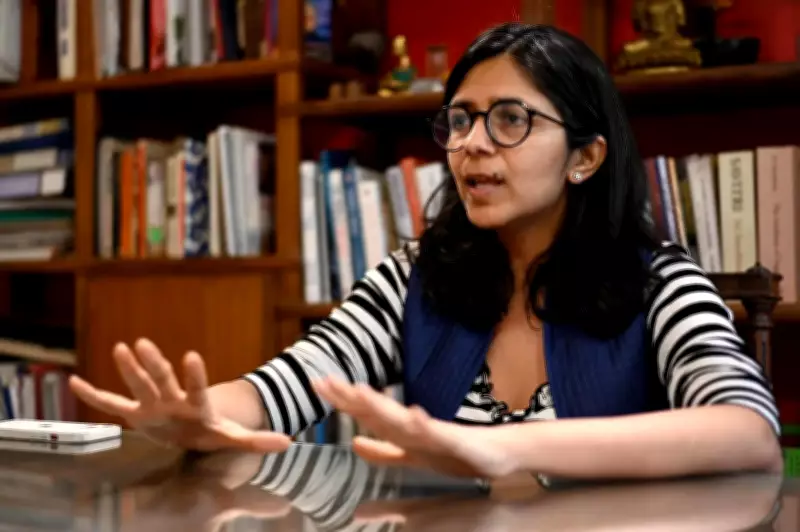
New Delhi: The defection of seven Rajya Sabha MPs from the Aam Aadmi Party (AAP) to the Bharatiya Janata Party (BJP) last week has sparked intense backlash, with the group facing accusations of betrayal and a reversal of their earlier stance against the saffron party. Speaking to The Times of India, Swati Maliwal, who was part of the coordinated split, addressed the criticism, particularly the resurfacing of her past remarks against the BJP on social media, and explained the reasons behind her decision to quit.
Maliwal's Journey and Disillusionment
Maliwal recounted her long association with AAP, stating, "I have been part of movements since 2006. I was among AAP's youngest core committee members. I spent several years working for women's causes and assault survivors. When I became the chairperson of the Delhi Commission for Women (DCW), I listened to lakhs of cases. I also went on hunger strikes twice for women's laws -- once for 10 days and once for 13 days."
Elected as a Rajya Sabha MP in January 2024, Maliwal's fallout with the party began just a few months later, in May, when she alleged that she was physically assaulted by a close aide of AAP convenor Arvind Kejriwal at the latter's house – a claim she has repeated after her exit.

Allegations of Assault and Silencing
"When I tried to file an FIR, I was threatened," she alleged. "It's been two years since, and I was not given even one minute to speak in Parliament, even though I was the only woman MP. This shows how anti-women the party is."
Maliwal said that despite the incident, she wanted to remain in the party and reform it from within. However, seeing Kejriwal's close aide, whom she had accused of assault, receiving "royal treatment in Punjab" only drove her away. "Over time, I realised Kejriwal does not listen," said the Rajya Sabha MP.
The Women's Reservation Bill as a Turning Point
According to Maliwal, AAP's opposition to the Women's Reservation Bill was the final straw that sealed her decision to exit the party. "For me, that was the point where I had to put my foot down. I resigned from the party and joined BJP. I am inspired by the PM," she said.
Looking ahead, Maliwal said she views her role in the BJP in modest terms. "I am a party karyakarta (worker) and will do what the party says. I am an MP who has a lot of work to do. I will learn from the party," she stated.
Group Decision and Coordination
Asked how the decision was reached by the group of seven MPs to leave AAP, who contacted her to switch parties, or if she took the lead, Maliwal said that discussions among the MPs played a crucial role. "All the MPs sit together in Parliament, and it was there the discussion took place," she said.
Clarifying Past Criticism of BJP and LG
On her earlier criticism of the BJP government and the Lieutenant Governor (LG) during her time as the DCW chief, especially after the termination of contractual staff, Maliwal said, "I initially blamed the LG and held a press conference. But later, I was shown files that made it clear that the order came from Delhi cabinet ministers."
Future of Women's Commissions
Since January 2024, the DCW has been largely non-functional and headless, when then chairperson Maliwal resigned upon being elected to the Rajya Sabha. Underlining the need to boost women's commissions and fill vacancies, she said, "I believe that there should be appointments, but at the same time, I have also moved a bill which would ensure more strength is given to women's commissions across India. We also need to look at states like Jharkhand, which have not had a women's commission for more than five years."