

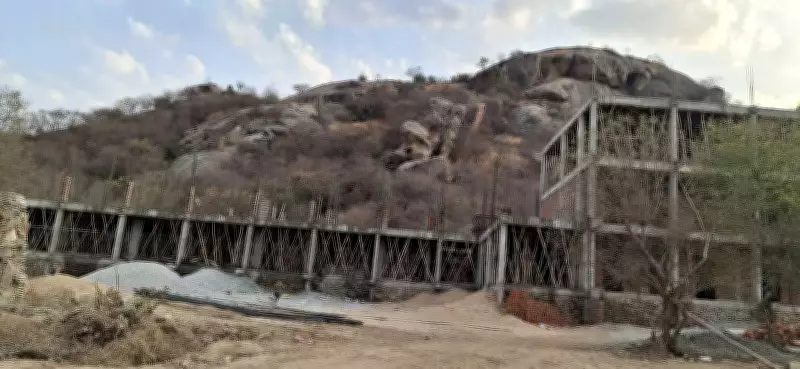
A Rajasthan High Court order prohibiting new constructions and the issuance of fresh tourism licences in the Jawai area of Pali district has sparked strong opposition from local villagers, stakeholders, and tourism operators. They argue that the directive could severely damage the region's economy and livelihoods.
Court Order and Its Implications
The court's ruling mandates that no construction can proceed in the Jawai region without prior judicial approval. Exceptions are made for development in designated abadi (inhabitation) areas, but only if they have obtained the necessary approvals. Residents and tourism industry participants contend that this regulation poses an existential threat to an area already grappling with small landholdings and low agricultural productivity.
Local Reactions and Concerns
Mahipal Singh Ranawat, a villager and stakeholder in local tourism, expressed deep concern. “Banning construction of modest hospitality units across 16 villages in the Jawai landscape, undertaken on privately held revenue land, risks precipitating a tangible economic setback,” he said. “Such a sweeping restriction would not merely stall developmental momentum but could induce a prolonged phase of stagnation.”

Jawai is globally recognised for its unique equilibrium between humans and leopards, with the latter being central to a flourishing community economy over the past 15 years. Ranawat warned that abruptly designating these lived-in landscapes as restrictive zones could engender deep resentment, potentially compelling residents to push leopards away from their own lands.
Legal Experts Question Feasibility
Legal experts are questioning the practicality of requiring court approval for construction on private property. Advocate Jaideo Singh highlighted the challenges, stating, “It will be logistically impractical for a common man, especially uneducated villagers, to every time approach the high court for permissions related to construction on their own private land.”
Impact on Tourism and Economy
Tourism industry estimates suggest that nearly 25 upcoming hotels could now find their projects halted, adversely impacting job creation in both skilled and unskilled sectors. The current restrictions have alarmed operators, who argue that an already existing 1-km construction buffer should suffice and that extending the ban beyond is excessive. Hemant Bohara, a local entrepreneur, lamented, “Now, with the high court order, it feels as though my life savings have been swept away.”
On the other hand, safari operator Gaffar Khan defended the existing sustainable tourism model. “Jawai offers some of the most affordable wildlife safaris. The intent has never been to disturb the leopard; rather, the community has become its foremost custodian,” he remarked.
Allegations of Outside Interference
Some stakeholders believe that the public interest litigation (PIL) appears to be a tactical move by outside interests to impede locals from establishing ventures on their own land. They contend that those who have already built and operationalised their properties are striving to maintain a monopoly over local tourism opportunities.
As the community grapples with the implications of the court’s order, the future of Jawai’s vibrant tourism industry and the livelihoods it supports hangs in the balance.






