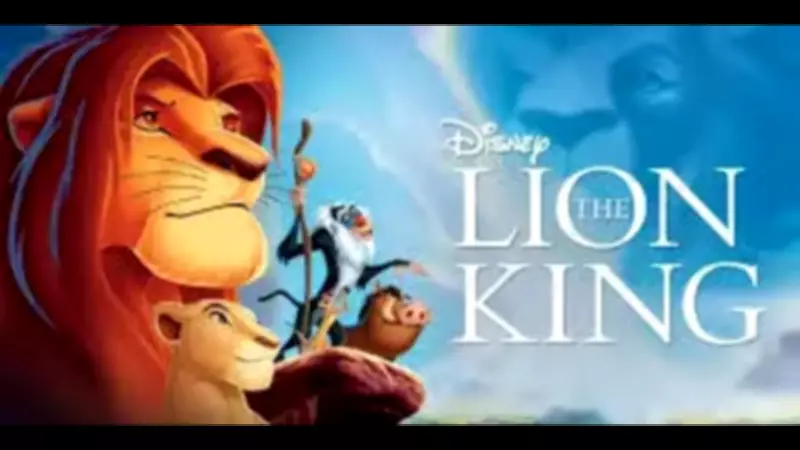
On June 15, 1994, Disney released The Lion King, a film that would go on to become one of the most beloved animated features in cinema history. More than three decades later, it continues to captivate audiences. It was technologically revolutionary at the time, but why would generations of people—who have grown up with advancing technology making things look cool on the screen—still pine for the original The Lion King? Because it did not offer a complicated story. The movie understood something that many modern films, and perhaps much of modern culture, often forget: simplicity is not the opposite of depth. In fact, the best works of art are those where it is equal to depth.
The World of 2026: Complexity Overload
In 2026, we live in a world increasingly defined by complexity. Artificial intelligence can generate essays, images, videos, songs and entire fictional worlds in seconds. Streaming platforms compete through sprawling cinematic universes and labyrinthine narratives. Social media rewards constant novelty. There is change everywhere and every day, which has somewhat emasculated the scope of the word 'change'. So, we don't really feel anything. Add to it the endless commentary and increasingly fragmented attention spans, everything seems to move faster, become bigger and demand more explanation.
The Radical Simplicity of The Lion King
In the middle of this hyperconnected and hyperstimulated age, The Lion King feels radical. Radical in its clarity. Radical in its simplicity. Its story can be summarized in a handful of sentences. A young prince loses his father. He blames himself for the tragedy. He runs away from his responsibilities. Years later, he returns home, confronts the truth and takes his rightful place as king. That is essentially the entire plot. There are no multiverses, hidden timelines, secret prophecies nested inside larger prophecies or elaborate world-building manuals explaining every corner of the fictional universe. There's only this simple story about grief, identity, responsibility and redemption. And somehow, it feels larger than most modern epics.

The Power of Ancient Storytelling
Part of the film's enduring power lies in the fact that it trusts ancient storytelling instincts. Although The Lion King was the first Disney animated feature not directly adapted from an existing fairy tale or literary work, it feels as though it emerged from stories humanity has been telling for thousands of years. Its DNA contains traces of Greek tragedy, mythology and Shakespearean drama. A king is murdered. A jealous uncle seizes power. An heir is driven into exile. A son must reckon with the legacy of his father. These are not merely plot devices. They are archetypes, narrative patterns that continue to resonate because they speak to enduring human experiences – whatever the age and time.
The hand-drawn lions conveyed feelings. The landscapes felt mythic rather than documentary. The artistry served the story rather than drawing attention to itself. The film understands that audiences do not necessarily need new stories. They need stories that tell old truths well. This confidence in simplicity was already becoming unusual when The Lion King was released in 1994. It feels even more remarkable today.
Complexity vs. Depth in Modern Entertainment
Modern entertainment often operates under the assumption that depth requires complication. Stories arrive wrapped in layers of lore, backstory and interconnected mythology. Characters are expected to be endlessly ironic and morally ambiguous. But we have seen over the years that narrative twists frequently become ends in themselves. Audiences are encouraged to decode stories rather than simply experience them. And they are tired of it. There is nothing inherently wrong with complexity. Some stories require it. But complexity is just one tool. And in an age of real complexity hitting us every second, the mind and heart demand simplicity more than ever. We have all seen and felt this trend on social media. A hard back to the 80s and 90s. An urge for this generation to watch old classics. A demand by Gen Z and Gen Alpha for authenticity over performance. That is what the legacy of The Lion King is all about.

Emotional Depth Through Clarity
This film demonstrates that emotional depth does not come from the number of moving parts in a story. It comes from the clarity with which it explores fundamental human emotions. The existential questions this generation is grappling with. The central question of the film is astonishingly straightforward: Who are we when everything we thought defined us has been taken away? Simba's journey is compelling in 2026 because it mirrors a struggle that almost everyone encounters at some point in life. He loses a parent. He experiences guilt. He runs from pain. He constructs a new identity designed to avoid confronting the past. Eventually, he realizes that peace cannot be found through escape. Aren't we all feeling something similar? Isn't this emotion recognizably human?
Artificial intelligence can now generate thousands of stories in seconds. It can identify narrative patterns, imitate literary styles and produce endless variations on familiar themes. Yet what makes The Lion King endure is this sincerity in emotional focus. The film knows exactly what it wants to say and refuses to become distracted. It's evident from its opening moments. The famous 'Circle of Life' sequence remains one of the most iconic introductions in cinema history. It communicates its central philosophy immediately and elegantly. Life is interconnected. Every living thing occupies a place within a larger order. Birth, death, renewal and continuity are all part of the same cycle. The concept is simple enough for a child to understand and profound enough to sustain reflection throughout adulthood.
The Story That Grows With You
Many viewers first encounter the film as children and respond to its adventure, humour and music. Years later, they revisit it and find themselves moved by entirely different aspects of the story. Mufasa's lessons about leadership acquire new meaning. Simba's struggle with grief becomes more relatable. The film's meditation on responsibility feels increasingly relevant. The story does not change. The audience does. That ability to grow alongside its viewers is one of the hallmarks of timeless storytelling.
Emotional Intelligence in Portraying Loss
Perhaps nowhere is the film's emotional intelligence more evident than in its treatment of loss. Entire generations remember where they were when they first watched Mufasa die. The scene remains devastating because the film refuses to dilute its emotional impact. Disney had understood this principle long before The Lion King. Previous generations had mourned the death of Bambi's mother. Walt Disney's greatest films often contained moments of genuine darkness because he recognized that children are capable of engaging with difficult emotions. Fear, grief and uncertainty are not experiences that can be avoided simply because an audience is young. Stories help people prepare for reality.
By allowing Simba to experience loss, guilt and despair, The Lion King acknowledges that suffering is part of life. More importantly, it offers a path through that suffering. The film's most famous line is arguably not 'Hakuna Matata' but Mufasa's instruction to his son: 'Remember who you are.' Those four words capture the emotional core of the entire narrative. Simba's challenge is not defeating Scar. It is recovering a sense of self that has been buried beneath shame and avoidance. His exile is psychological as much as physical. He has forgotten his identity, his responsibilities and his place in the world.
Authenticity in the Digital Age
What he needs is to reconnect with himself. His core. His soul. People from time immemorial have asked these questions: 'Who am I?' 'What do I owe the people who came before me?' 'How do I move beyond grief?' 'What kind of person do I want to become?' In an era increasingly shaped by digital identities, curated online personas and algorithmically optimized self-presentation, these questions seem more important than ever. AI allows increasingly seamless manipulation of images, voices and narratives. Against that backdrop, The Lion King's insistence on authenticity feels almost revolutionary. The story repeatedly asks a question that technology cannot answer on our behalf: Who are we when the performance ends?
The Artistry of Hand-Drawn Animation
The film's visual artistry reinforces this timeless quality. Watching the original hand-drawn animation today is a reminder that technological progress does not automatically guarantee artistic improvement. The African landscapes possess a painterly grandeur that remains breathtaking. Every frame reflects the work of artists making deliberate creative choices rather than simply pursuing technical realism. The animation captures emotional truth rather than photographic accuracy. The story does not change. The audience does. That ability to grow alongside its viewers is one of the hallmarks of timeless storytelling.
Perhaps, that's the most hard-hitting fact in the age of AI. The subsequent photorealistic remake, released in 2019, demonstrated that greater visual fidelity does not necessarily create a more emotionally resonant experience. Audiences and critics both panned it. They found themselves returning to the original. What they missed was not just nostalgia. It was expressiveness. The hand-drawn lions conveyed feelings. The landscapes felt mythic rather than documentary. The artistry served the story rather than drawing attention to itself.
Music That Lasts
The same principle applies to the film's music. Elton John, Tim Rice and Hans Zimmer created a soundtrack that remains instantly recognizable because it amplifies universal emotions rather than chasing contemporary trends. The songs endure because they are attached to timeless moments of joy, grief, longing and triumph. Nothing about the soundtrack feels designed for a particular algorithmic moment. It was designed to last. That may be the most valuable lesson The Lion King offers.