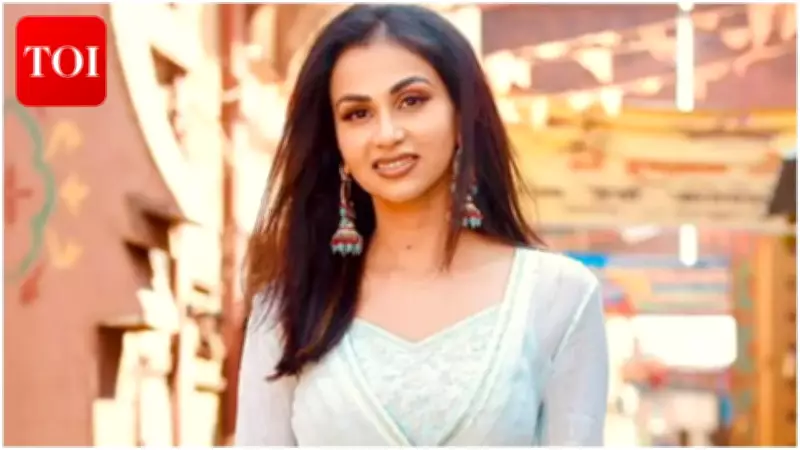
A television actress, known for her roles in popular shows like Sapne Suhane Ladakpan Ke, Roop – Mard Ka Naya Swaroop, and Bade Achhe Lagte Hain 2, has opened up about the hidden power dynamics that persist in the entertainment industry. She noted that while the industry may appear more transparent today, it still operates on unspoken systems that determine who gets opportunities and who does not.
On Informal Bans and Influence
When asked about the existence of “informal bans,” the actress acknowledged that the industry has evolved but emphasized that influence has not disappeared; it has merely become harder to identify. “I think the industry has evolved, but power dynamics still exist everywhere,” she said. “Today, it is less about someone officially saying don’t work with this person, and more about opportunities quietly drying up. Sometimes people call it politics, sometimes perception, sometimes relationships. The labels change, but influence has always existed and probably always will.”
Gatekeeping vs. Networking
She explained that gatekeeping is often subtle rather than obvious, and the line between networking and exclusion is where the shift occurs. “Networking is about building genuine professional relationships,” she said. “Gatekeeping begins when opportunities stop being based on talent, merit, or suitability and start being controlled by a small circle deciding who gets access and who does not. Relationships can open doors, but they should not become walls for everyone else.”

Industry Openness in Recent Years
Regarding whether the industry has become more open, she stated that both progress and inequality coexist. Social media has created alternative paths for those without traditional industry backgrounds, but equality remains elusive. “I think it is a bit of both,” she said. “Social media has definitely created alternate paths for people who do not come from traditional industry backgrounds. At the same time, perception management has become incredibly sophisticated. The industry is more accessible than before, but that does not mean it is completely equal. There are still advantages that some people start with and others have to fight for.”
Paparazzi Culture and Privacy
The actress also addressed the paparazzi culture in India, acknowledging that public figures are followed and photographed but noting that coverage sometimes crosses a boundary. “Sometimes, yes,” she said. “There is a difference between covering public appearances and invading personal moments. Celebrities understand that public attention comes with the profession, but basic privacy and dignity should not disappear because someone is famous. Coverage is part of the job, intrusion should not be.”
Control Over Public Image
On the question of whether celebrities truly control their public image, she said control is partial at best. Social media offers direct communication but also adds noise. “Today, public image is a combination of both,” she said. “Celebrities can communicate directly with audiences through social media, which gives them more control than ever before. But at the same time, narratives are constantly being shaped by headlines, clips, trends, and public opinion. You can influence your image, but you cannot completely control how people choose to interpret it.”
Controversies in the Industry
She concluded by discussing how controversies spread in the industry. Not everything is manufactured, but not everything remains organic once attention takes over. “Not every controversy is manufactured, but not every controversy grows naturally either,” she said. “We live in an attention driven world where outrage travels faster than facts. Sometimes situations genuinely explode on their own, and sometimes they get amplified because controversy generates engagement, clicks, and conversation. That is the reality of today’s media ecosystem.”