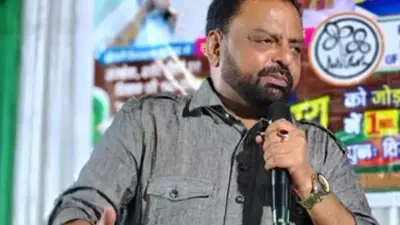
Actor Vasishta Simha, fresh from a three-month shooting schedule in Mangaluru for his upcoming film Kadala Kote, is in a reflective mood. Known for balancing mainstream entertainers with content-driven cinema, he speaks candidly about the Kannada film industry's current challenges, the neglect of writers, the need for structural reforms, and why self-assessment is crucial for everyone working in cinema.
On treating writers with respect
One of Vasishta's biggest concerns is the way writers are treated within the industry. He emphasizes that without writers, there are no films. Many talented writers struggle to even get an opportunity to narrate their stories to production houses or actors, and even when they do, they are rarely compensated adequately.
"Instead of sitting in judgement, filmmakers and actors need to create a comfortable environment where writers can pitch their ideas. Listen to them patiently. This is a responsibility the industry has ignored for far too long. Scripts are not created overnight. You need to sit with writers, discuss ideas, understand their vision and help them develop it. Facilitate them, don't intimidate them," he says.

Despite years of discussions about improving cinema, Vasishta feels little has changed for writers. "The plight of writers has remained largely unchanged for the last 13 years. The cost of living has gone up, but writers continue to be underpaid. The industry has fixed payment structures for assistant directors, dancers and technicians, but there is still no standard fee system for writers. That's one of the reasons I built my own team of writers. I believe I am in a position to compensate them fairly. Together, they have already developed 25 solid scripts. Whenever I need them, they are there. They are my strength. Good stories emerge only when writers are given the space, security and dignity to work. Writers should be the first people paid well because every film begins with a script," he explains.
On portrayal of women in cinema
Vasishta also feels the portrayal of women in cinema needs to evolve. "Filmmakers need to move away from objectifying women. If a romantic scene exists, it should serve the story and the characters, not simply provide glamour. I will never participate in a scene that objectifies a woman. That sensitivity is something I will always carry with me."
On self-assessment
Looking back at his own career, Vasishta says self-awareness is something the industry often lacks. After Raja Huli, where he played Jagga, he was offered several lead roles. Initially excited, he consciously took time to evaluate whether he was truly ready to shoulder a film as a lead actor. He spent weeks thinking about his capabilities before making a decision.
"That kind of self-assessment is important. Today, you sometimes see a clap boy on a film set trying to become a producer by the time the project is completed. Ambition is good, but people often take on responsibilities they may not yet be prepared for. Self-assessment is overlooked in our industry. Everyone needs to practise it because it helps avoid mistakes and pushes us towards creating better, more distinctive work," he says.
On comparing every film to KGF and Kantara
Vasishta believes the Kannada film industry has become overly obsessed with scale and spectacle. "We need to stop comparing every film to KGF or Kantara. You cannot make only two or three giant films a year and expect the industry to thrive. What we need are more good films made on sensible budgets. Emerging filmmakers are struggling because larger players are hesitant to back smaller projects. The industry needs a steady flow of 10 to 20 films. Small and mid-budget cinema must happen more frequently."

Another challenge is release planning. Some weeks see multiple films arriving simultaneously, hurting each other's prospects. Better coordination would benefit everyone. "We may be going through a low phase right now, but I think this correction is necessary. People who are doing random things will eventually get weeded out. The competent ones will survive, evolve and contribute towards making better cinema. In the long run, that can only be good for the industry. In fact, I am working towards building something better. It may not be big today, but it will grow. And I'll say this again: if we take care of our writers, the industry will automatically become stronger because the stories being told will connect more deeply with audiences," he concludes.