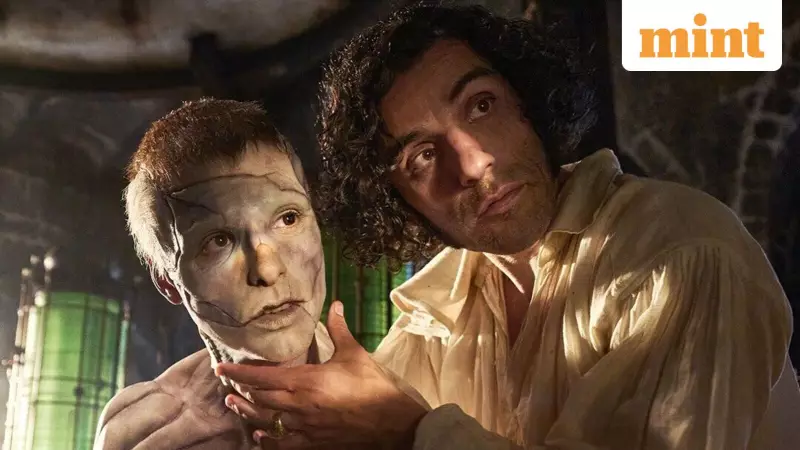
Acclaimed filmmaker Guillermo del Toro is set to release his highly anticipated adaptation of Mary Shelley's Frankenstein in 2025, promising audiences a deeply personal and emotionally charged reinterpretation of the classic Gothic tale. Rather than presenting another straightforward horror film, del Toro transforms the story into a haunting meditation on creation, abandonment, and the painful legacy of inherited trauma.
A Visionary Reimagining of a Classic
Guillermo del Toro serves as writer, director, and producer for this 2025 cinematic experience that completely redefines what a Frankenstein adaptation can be. The film moves beyond traditional horror elements to explore the heartbreaking intimacy of what it truly means to create life and the devastating consequences of rejecting that creation.
Oscar Isaac takes on the role of Victor Frankenstein, portraying him as a scientist so consumed by his own brilliance that he loses touch with his humanity. His obsessive pursuit of creating life brings forth the Creature, played with remarkable sensitivity and raw vulnerability by Jacob Elordi. Their dynamic forms the emotional core of the film, transforming what could have been a simple monster story into a tragic examination of how pain is transmitted across generations.

An Exceptional Cast Brings Depth to Del Toro's World
The supporting cast represents some of the finest talent in contemporary cinema. Mia Goth delivers a mesmerizing performance as Elizabeth, who serves as the film's moral compass rather than merely a love interest. Her ethereal presence provides a soft, empathetic counterpoint to Victor's destructive storm of ambition.
Christoph Waltz, Charles Dance, Lars Mikkelsen, and David Bradley complete the stellar ensemble, each inhabiting del Toro's meticulously crafted world where beauty and horror exist side by side. The film's visual landscape is characterized by fog-filled scenes illuminated by candlelight, creating an atmosphere of profound melancholy that feels carved from grief itself.
Exploring Generational Trauma Through Gothic Storytelling
Del Toro's interpretation reveals Victor Frankenstein as a complex character whose arrogance and selfishness stem from deeper psychological wounds. The director presents Victor not as a villain motivated purely by ego, but as a product of paternal cruelty. The abuse Victor endured in his own childhood echoes through his actions, particularly in how he abandons his creation, mirroring the neglect he once suffered.
This devastating cycle—where the hurt child becomes the unfeeling parent—is captured with aching precision throughout the narrative. Del Toro has repeatedly emphasized that this is not a horror film but rather an emotional story that treats both Victor and the Creature as vessels exploring inherited trauma and profound longing.
Jacob Elordi's performance as the Creature stands as one of the film's most astonishing achievements. He portrays the being not as a monster but as a soul stitched together from sadness and desperate longing. His eyes alone communicate the entire story of every outcast who has ever yearned to be seen and accepted.
The screenplay, written entirely by del Toro, respectfully nods to Shelley's original novel while incorporating the director's personal fascinations with father-son relationships, the consequences of unchecked creation, and the universal desire for connection among outsiders. Oscar Isaac noted that he approached his dialogue as if it were written in iambic pentameter, giving the film a lyrical quality that elevates the emotional depth.
Visual Storytelling That Speaks Volumes
Cinematographer Dan Laustsen collaborates closely with del Toro to create a visual symphony that blends sweeping Gothic grandeur with intimate character moments. The production design emphasizes old-fashioned craftsmanship with real, tangible sets rather than relying heavily on CGI environments.
Color plays a crucial role in the storytelling, with del Toro using specific palettes and camera movements to represent coded emotional states. In one particularly powerful sequence, when Elordi's Creature first comes to life, the lighting transitions from cold, clinical blues to a trembling golden hue as the being reaches toward its creator.

Del Toro often underplays dialogue, allowing silence to convey the weight of awe and dread. Rather than focusing on grotesque elements, the film lingers on the emotional birth of a soul, with Victor's face flickering between triumph and terror while the Creature's gaze reflects both confusion and a desperate need for recognition.
The result is a film that feels both epic in scale and deeply human in texture, with each shot carefully crafted to reflect the story's central themes of creation, abandonment, and the possibility of renewal.
While those familiar with Shelley's novel will notice changes to the timeline, relationships, and particularly the ending, these alterations are implemented with clear respect for the source material. Del Toro remains faithful to the spirit of Shelley's work while reshaping her story into something more forgiving, with an ending that offers a touch of hope—a small mercy that feels entirely characteristic of del Toro's compassionate vision.
Ultimately, Guillermo del Toro's Frankenstein isn't about science gone wrong but about love withheld and the emptiness it leaves behind. The film powerfully reminds us that monsters are made, not born, and that understanding itself can be a form of redemption. Gorgeously crafted and emotionally fearless, this 2025 release represents del Toro at his most vulnerable and visionary—a filmmaker looking at the creature and finally seeing himself reflected back.