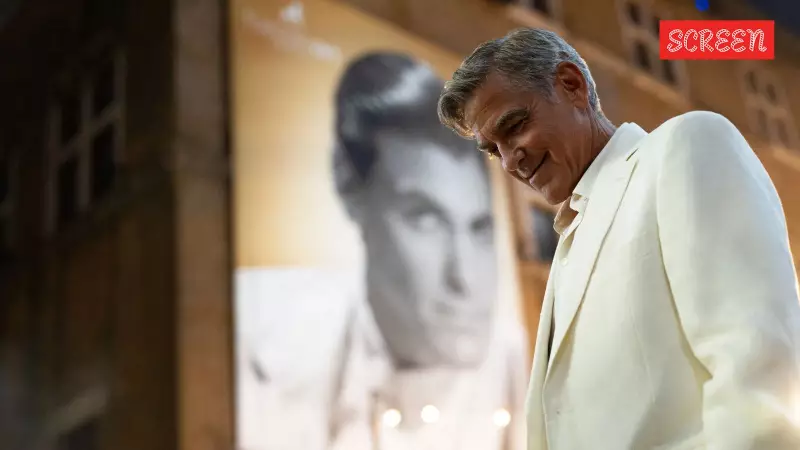
Noah Baumbach's latest cinematic offering, Jay Kelly, grapples with the immense weight of stardom and the hollowness that can lurk beneath its glittering surface. Starring George Clooney in a meta-portrayal of a fading star, the film, which released on streaming platforms on December 5, 2025, delivers moments of brilliance but struggles to find a coherent emotional core. Our review finds it a 2.5 out of 5 star experience.
A Portrait of Loneliness Amidst Adoration
The film opens with a poignant Sylvia Plath quote, setting the stage for an exploration of identity under the relentless public gaze. George Clooney's Jay Kelly is a celebrated actor swollen with success yet hollowed by it. Following the death of his mentor, director Peter Schneider (Jim Broadbent), Kelly abandons his professional commitments and jets off to Europe. His aim is to reconnect with his backpacking daughter, Daisy (Grace Edwards), and attend a ceremony in Tuscany, but the journey becomes a meandering search for purpose and absolution.
Clooney works diligently to embody this version of a version of a star, bringing a palpable weariness and soft tremor to the role. He confesses to feeling "all alone" and that his memories feel like movies. However, the film often tells us about his suffering rather than letting us feel it intimately, creating a curious emotional distance. The European backdrop, while scenic, feels like a clichéd postcard, all cobblestones and curated melancholy, failing to deepen the protagonist's internal conflict.

Standout Performances and the Film's Beating Heart
If the film has unambiguous delights, they are found in its supporting cast. Billy Crudup is electric as Timothy, Kelly's old roommate, sharing a charged bar scene that is impossible to look away from. The welcome return of Greta Gerwig to the screen is another highlight. However, the real emotional anchor of Jay Kelly is Adam Sandler as Ron Sukenick, Kelly's long-suffering manager.
Sandler brings a warmth and grounded humanity that Clooney's character cannot access. While Kelly contemplates the existential tragedy of fame, Ron embodies the everyday sacrifices—missed family time, personal compromises—made in service of another's dream. In a powerful scene, Ron states, "You are not Jay Kelly alone. I am Jay Kelly too." This line cuts to the film's most potent truth: stardom is a collective effort, but its rewards and burdens are ultimately solitary.
An Indulgent and Scattered Narrative
Where Jay Kelly falters is in its inability to settle on a clear vision. Baumbach, known for his nuanced dialogue, seems uncharacteristically blunt. The film tries to be too many things at once: a Hollywood satire, a meta-commentary, a European travelogue, and a Netflix prestige drama. You can sense the director wrestling with the demands of a bigger budget, awards season expectations, and streaming platform polish.
The result is a narrative that feels fitfully engaging but often airless. Promising actors like Laura Dern, Patrick Wilson, and Riley Keough are underutilized, with Dern's minimal screen time feeling like a particular missed opportunity. The finale, intended as a grand reckoning, circles back to celebrating the very career it spent two hours critiquing, resulting in a solipsistic flourish that lacks transcendence.
In conclusion, Jay Kelly is a film of intriguing ideas and stellar moments, particularly from Adam Sandler and Billy Crudup. Yet, it remains a strange cinematic artifact—half confession, half performance—that never fully decides what it wants to be, leaving the audience with more admiration for its parts than its whole.