

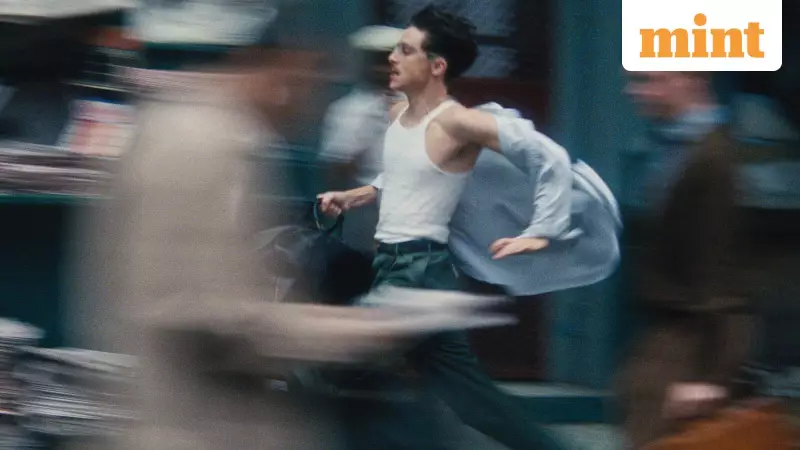
Set against the gritty backdrop of 1950s New York in the aftermath of World War II, Marty Supreme paints a vivid portrait of a society where individuals are trapped in mundane jobs they despise. At the center of this discontent is Marty Mauser, a character whose unwavering conviction in his own ping pong prowess makes him instantly compelling. The audience is drawn to root for him, despite the mystery surrounding his self-proclaimed status as a champion player destined for the British Open.
The Unlikely Dream of Ping Pong Glory
Marty dismisses the American Table Tennis Association as merely "two guys at a table somewhere," yet he fervently believes in New York's underground ping pong betting scene. This unconventional arena, far removed from boxing or MMA cage fights, becomes his ticket to London. His partner in this audacious grift is Wally, a New York taxi driver portrayed with magnificent flair by Tyler The Creator, accompanied by Moses, a formidable black dog owned by a mobster.
A Joyful Escape and Cinematic Homages
The duo's ventures out of town to hustle money from unsuspecting "white boys" evoke memories of the classic film White Men Can't Jump. Their brief escapes are infused with such infectious joy that they recall the iconic prison break of Jai and Veeru in Sholay, accompanied by the laughter that opens the song Ye Dosti. This playful nod to Bollywood classics adds a layer of cultural resonance, much like the contemporary re-spelling of Timothy as Timothee in homage to the immensely talented Chalamet.

A Sonic Tapestry of Chaos
The film's wild ride is underscored by a masterful musical selection that defines its chaotic energy. Fats Domino seamlessly blends with Peter Gabriel's I Have The Touch, while the cries of babies harmonize with Tears For Fears' Everybody Wants to Rule The World. The juxtaposition of Ain't No Mountain with The Order of Death creates a perfect auditory fit. Daniel Lopatin's original score stands out as phenomenal, elevating the cinematic experience. This orchestrated chaos begs the question: what joy lies within such tumult?
The Allure of Rogues and Hustlers
Repeated references to chaos underscore our conditioned affection for rogues, bad boys, and hustlers—characters who allow us to briefly escape our own monotonous lives. Rachel, portrayed by the stunning Odessa A'zion, is Marty's childhood sweetheart and no ordinary woman. She hustles alongside him, yet Marty often reduces their relationship to that of friends or siblings, even denying paternity when she becomes pregnant. His harsh words—"I have a purpose, you don't. And if you think that's some kind of a blessing, it's not"—reveal his relentless drive.
Complex Relationships and Social Dynamics
Why do we find Marty so endearing? Consider Gwyneth Paltrow's character, Kay, a former star now trapped in a marriage to a wealthy pen company owner. She seeks escape in fleeting encounters with Marty, who is far beneath her social standing. Marty's motivations are multifaceted: he is captivated by her beauty, aims to steal her jewelry to fund his trip to Tokyo for ping pong, and seeks revenge against her odious husband, Mr. Rockwell, played by Shark Tank's Kevin O'Leary, who treats Marty with contemptuous disdain.
A Turbulent Cinematic Flight
Marty's desperate quest for recognition as a table tennis champion propels him into a series of high-stakes risks. The film unfolds like a 152-minute flight through a violent storm, leaving viewers both horrified and amused. A particularly shocking moment occurs when Marty tells reporters about a match in London: "I'll do to him what Auschwitz didn't." This is followed by an uncomfortable laugh as he adds, "It's okay to say that because I'm Jewish," highlighting the film's provocative edge.

Chalamet's Unmatched Performance
Josh Safdie's Uncut Gems evoked similar tension with Adam Sandler as Howard Ratner, but here, Timothée Chalamet's portrayal of a table tennis player is truly matchless. Having already convinced audiences of his Bob Dylan prowess in A Complete Unknown, Chalamet now makes us believe in his ping pong skills—from trick shots to volleys—whether in New York, where undershirts might just become a trend, or in London. The final showdown against reigning champion Koto Endo, played by the monk-like Kawaguchi Endo, is intensely satisfying. Even non-players will appreciate the meditative reverence of the Japanese champion versus the wild, pushy style of the "defeated American."
Audience as Collective Character
Viewers transform into Rachel, yearning to keep Marty close; the uncle who owns the shoe store, wanting to handcuff him to his job; the mobster seeking retribution; Kay, unable to resist him; and her husband, who despises yet exploits him. We become part of the crowd that applauds while shaking their heads in disapproval, much like writer Pico Iyer, who plays the skeptical head of the table tennis federation. His cameo, alongside appearances by Fran Drescher, Sarah Bernhardt, and Isaac Mizrahi, adds fleeting moments of star power to Marty's chaotic world.
A Defiant Stand Against Conventional Cinema
In a bold move, the film celebrates A24 for delivering such audacious content to audiences weary of Indian propaganda films cloaked in loud patriotism. Shahid Kapoor's real-life presentation of the film further bridges cultural divides. Marty Supreme is as absurd as watching Marty compelled to play table tennis with a seal while rejecting an anti-Semitic "loser will kiss a pig" deal in Tokyo. It stands as a strong contender for Best Actor and Sound Design accolades—a cinematic experience not to be missed.
