

The History of Sound: A Deliberately Paced Exploration of Music and Memory
Directed by Oliver Hermanus and adapted by Ben Shattuck from his short stories The History of Sound and Origin Stories, this quiet, deliberately paced film delves into the themes of missed chances and unresolved lives. Tracing one man's emotional journey through music, memory, and profound restraint, the narrative unfolds with a contemplative rhythm that demands patient engagement from its audience.
A Journey Beginning in Rural Kentucky
The story opens in 1910 in rural Kentucky, where we meet Lionel Worthing, portrayed with remarkable subtlety by Paul Mescal. Growing up on a family farm, Lionel dutifully embraces physical labor while finding his only release through song. "It never occurred to me that music was only sound," Lionel reflects early on, establishing music not merely as art but as something far more significant. For him, music becomes:
- A means of survival in an otherwise constrained existence
- A repository of personal and cultural memory
- A conduit for emotional connection that words cannot provide
When a local teacher recognizes his exceptional singing ability and helps secure a scholarship to the New England Conservatory of Music in Boston, this opportunity briefly lifts Lionel from what appears to be a dead-end life, offering a glimpse of different possibilities.

Boston and the Meeting That Changes Everything
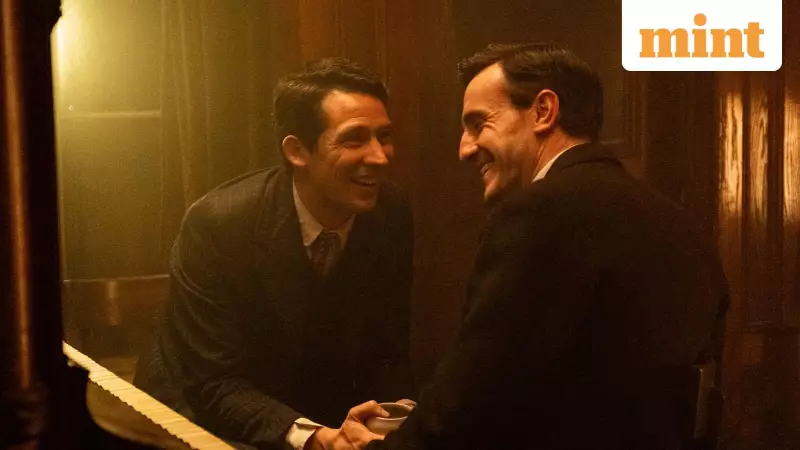
Boston in 1917 brings both expansion and tremors to Lionel's world. Here, he encounters David White, played by Josh O'Connor, a fellow student whose openness and curiosity provide a perfect counterbalance to Lionel's introspective nature. Their relationship develops quietly, marked more by shared listening than by confession—a stoic, deeply restrained love story that Hermanus never gives explicit language or definition.
Instead, the director allows intimacy to exist in:
- Meaningful glances exchanged between the characters
- Musical harmonies they create together
- The significant silences that speak volumes about their connection
This approach creates something fragile yet believable for the historical setting, a relationship shaped by the constraints of its time.
The Disruption of War and Return to Duty
The First World War abruptly disbands the conservatory class, and David is drafted into service. Hermanus chooses not to dramatize the war through combat scenes but rather through its profound absence. The conflict puts Lionel's emotional life on indefinite hold, pulling him back to Kentucky and the familiar weight of family responsibility.
Caring for his ageing parents and working the farm, Lionel slips quietly into a life shaped entirely by duty, with both music and love pushed to the margins of his existence. From this point, the film settles into an unhurried, despondent rhythm that may test some viewers' patience with its languid pace and devotion to mood.
The 1921 Recording Journey and Broader Themes
In 1921, Lionel and David reunite briefly to travel and record folk songs, capturing voices and histories that might otherwise disappear into obscurity. These sequences powerfully underscore the film's broader themes, demonstrating how American music carries:
- The weight of war and its aftermath
- The complex legacy of slavery
- Generations of inherited trauma
The songs themselves are never romanticized; instead, they remain heavy with memory and history. Music emerges as much a character as any human presence in the film, carrying a persistent undercurrent of melancholy throughout the narrative.
Restless Movements and Unresolved Absences
By 1923, Lionel finds himself in Rome, only to be ghosted by David—another disappearance without explanation or closure. Lionel's life becomes a series of geographical movements that feel less like progress and more like restless searching:
- In 1924, he moves to the UK and becomes a music conductor
- Later, he returns to the United States
- In 1927, he travels to England's Lake District
These shifts represent a constant quest for closure, with Lionel haunted by something unresolved, perpetually circling the absence at the center of his life.

Reflections in 1980 Boston
The film finally arrives in Boston in 1980, where an older Lionel, portrayed with quiet weight by Chris Cooper, reflects on his life's work collecting music. Cooper's performance adds depth to the character's journey, while Paul Mescal's earlier portrayal anchors the film with remarkable restraint. Josh O'Connor's David feels both present and yet perpetually out of reach—a perfect embodiment of the film's central tension.
Their relationship and on-screen chemistry represent a love shaped as much by historical circumstances as by music, feeling, and timing—a love that could have been, and perhaps should have been, under different circumstances.
A Film Confident in Its Choices
In the end, The History of Sound moves at its own unhurried pace, lingering on silences, daily routines, and folk songs that carry specific cultural histories rather than broad commercial appeal. Its carefully constructed musical landscape, steeped in early American folk traditions (particularly highlighted by the Irish-English folk song 'The Unquiet Grave'), gives the film its distinctive atmosphere while also limiting how inclusive it might feel to some audiences.
Regardless, the film remains confident in its artistic choices, content to let the music and its lead actors carry the emotional weight as Lionel and David fight battles both external and internal—a quiet testament to lives shaped by what might have been.
