

Abraham Mazumder on Kolkata's Enduring Western Classical Music Tradition
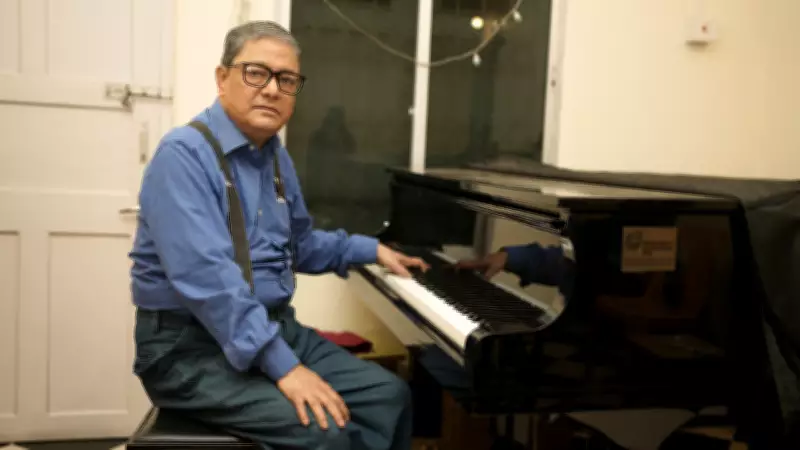
As you enter Abraham Mazumder's Kolkata residence, the initial greeting comes not through silence but through sound – the distant, elegant strains of violins, the deep, resonant tones of a cello, and the occasional, delicate ripple of piano notes flowing down from a rooftop teaching space where he mentors a new generation of musicians. Upstairs, where our conversation unfolded, a grand piano served as the room's anchor, positioned beside a music stand holding notations for a Tagore composition, symbolizing how seamlessly Mazumder's artistic journey navigates between Western classical rigor and Bengali musical imagination.
As Calcutta Times commemorates its 25th anniversary, this dialogue with the former member of pioneering Bengali band Moheener Ghoraguli turns toward a quieter yet profoundly enduring strand of the city's musical life – one shaped by unwavering discipline and continuous evolution.
The Evolution and Perception of Western Classical Music in Kolkata
How has Western classical music evolved in Kolkata, and how is it viewed in contemporary times?

"Comprehending Western classical music requires significant time investment," Mazumder explains. "Instruments such as the violin and cello demand substantial commitment and disciplined practice. Our primary objective as educators is to help students genuinely enjoy the music itself. Many individuals initially drift away from formal training but frequently return later in life, subsequently passing their knowledge to subsequent generations, despite Western classical not enjoying the same mainstream popularity as film music."
Decades of Music Education in Kolkata Schools
You served as a music teacher at prominent Kolkata schools for many years...
"Yes, I taught at Calcutta Boys' School for seven years and at La Martiniere for twenty-five years," Mazumder confirms. "Numerous students learned music during that period – while not all pursued professional musical careers, the training became integral to their personal development. Former students consistently remark that music instruction taught them essential life skills: careful listening, following instructions precisely, and approaching tasks seriously – competencies that proved valuable in their professional lives. Although disciplinary approaches have evolved over time, with teachers facing more questioning today, our fundamental effort remains to instill this discipline, because without it, Western classical music cannot be properly learned."
Core Values Beyond Discipline in Musical Training
What fundamental values, besides discipline, are crucial for learning Western classical music?
"A teacher cannot always anticipate what inherent qualities a student possesses, and the learning process becomes a shared exchange of ideas," Mazumder reflects. "I genuinely believe I continue learning from my students – not exclusively about musical techniques, but about perspectives and experiences I hadn't previously encountered. Over extended periods, we develop understanding about which students possess particular aptitudes. Students can demonstrate remarkable improvement through regular, dedicated practice, sometimes showing substantial progress within just a few months."
Musical Influences and Formative Teachers
Who were your most significant musical influences and teachers?
"During the mid-1970s, pianist Dr. Adi Gazdar was truly exceptional; we performed works by Schubert and Schumann together and presented concerts for All India Radio," Mazumder recalls. "Father Theodore Mathieson guided my early musical training, under whose mentorship I secured first position in Asia for ATCL and LTCL examinations around 1980. Although he personally disliked formal examinations, they became necessary at Calcutta Boys' School. Visiting German professors at the school also significantly shaped our approach to composers like Bach. Without contemporary social media platforms, our exposure to music developed organically. Unlike Indian classical musicians, we learned and taught through our own distinctive methods, discovering genuine joy throughout the learning process."

"Western classical music is not universally accessible," Mazumder observes. "It demands considerable time, patience, and disciplined commitment, with only a select few truly grasping its deeper essence – a characteristic shared across all forms of high classical music."
Reflections on Moheener Ghoraguli's 50-Year Milestone
On Moheener Ghoraguli completing fifty years...
Music has consistently represented a path of discovery for Mazumder. "Beginning my teaching career at Calcutta Boys' School provided me with a sense of independence I hadn't previously experienced," he remembers. "Around that same period, I encountered Gautam Chattopadhyay. After hearing me perform, he suggested we collaborate, leading directly to the formation of Moheener Ghoraguli, which opened an entirely new musical world extending far beyond Western classical traditions for me."
He smiles warmly, adding, "Each of Gautam's brothers embraced different musical philosophies. One brother, Biswanath da, taught me how to connect authentically with audiences and make music more accessible, while another, Bula da, deepened my comprehension of Indian classical traditions. Later, Ranjon Ghoshal encouraged me to reinterpret Tagore's compositions through Western classical frameworks, and alongside my wife Madhushree – who also received training in Western classical traditions – we presented numerous concerts, each experience shaping my musical journey in innovative ways."
