A Dance of Belonging in Amsterdam
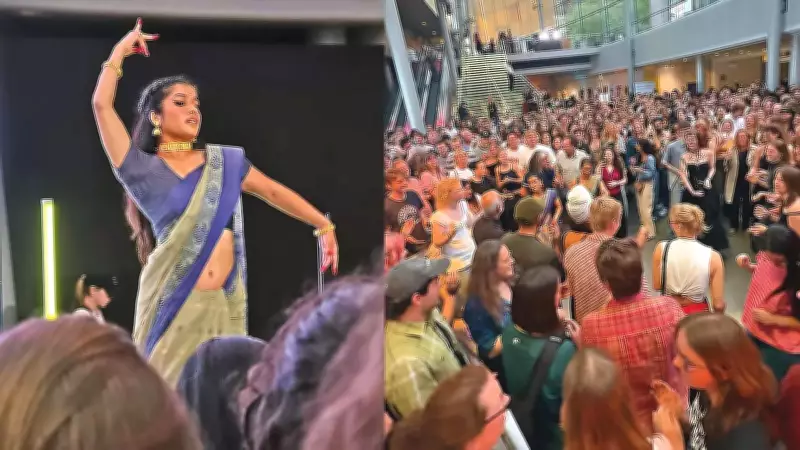
At a time when videos of Indian tourists dancing abroad often draw criticism for being intrusive, a heartwarming scene unfolded at the Van Gogh Museum in Amsterdam. Nearly 1,500 people joined fashion student Aishwarya Bhattacharjee to dance to the Bengali folk song Tomar Ghore Boshot Kore Koy Jona. Most participants did not understand the language, and none had rehearsed the steps, yet they instinctively moved in harmony.
For Aishwarya, this was more than a viral moment. 'Growing up in Amsterdam wasn't easy. I often felt alone, isolated, like I didn't belong. But that day felt different. For a moment, everything shifted,' she shared. While the crowd enjoyed a unique cultural experience, she found something she had been searching for all her life: a sense of belonging.
'Born and raised in the Netherlands to Bengali-Sylheti parents, my skin colour is dusky, which makes it difficult for people to accept me here. On the other hand, when I go back to our homeland, I'm treated differently because I don't belong there either. So I keep asking myself: What are my roots? Where do I belong?'

The Making of the Viral Moment
The performance was entirely Aishwarya's creation. She developed the concept, selected the music, and led the evening. It began with Rabindra Sangeet, but she wanted it to become more than a solo act. 'Dance has always been a community experience for me,' she says. The Van Gogh Museum encouraged her to make it interactive, but with 1,500 people, she was unsure if a traditional Sylheti Dhamail — a folk dance usually performed at weddings — would work.
'I just said, Now I want to dance with you in a circle. I was nervous. The place was so busy that I thought it wouldn't be possible,' she recalled. She explained the basics: clap to the rhythm and move together in a circle. 'Everyone just stood in a circle. They made space for one another and went with the flow. It didn't feel like we were from different backgrounds. We were simply people dancing together. It was truly magical.'
The response exceeded expectations. Staff members said they had goosebumps watching the crowd. 'As the performance ended, chants of one more, one more broke out from the audience,' she said. 'There were other performances scheduled, so we couldn't continue, but people really wanted another round.' The Bengali community was particularly moved, with many wanting another Dhamail session.
A Bridge Between Cultures
Aishwarya reflects, 'We, the kids of immigrants, are bridges between cultures. That evening proved that dance can bring people together in ways words sometimes cannot.' The event underscored how art can foster unity and belonging, even in a diverse crowd.