

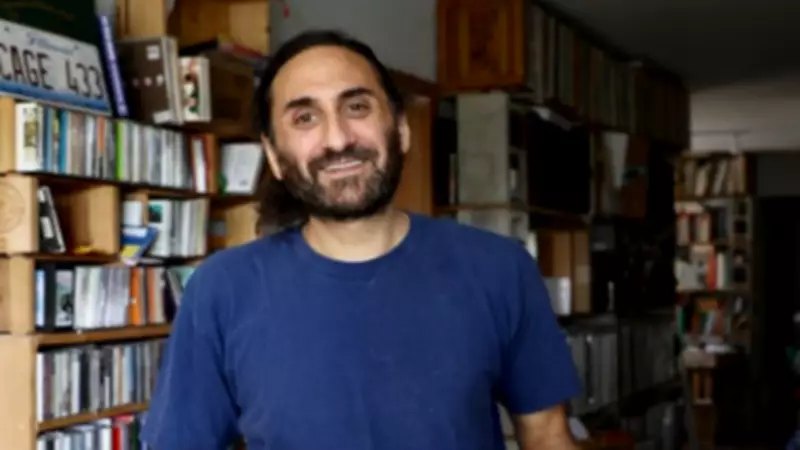
The Unseen Archivist of Chicago's Music Scene
For more than four decades, one unassuming individual meticulously documented Chicago's vibrant live music ecosystem with a dedication that went largely unnoticed during his active years but is now receiving widespread recognition. Aadam Jacobs, affectionately known throughout the city as the "tape guy," captured more than 10,000 live performances spanning nearly 40 years, preserving musical moments that would have otherwise faded into collective memory.
From Personal Habit to Cultural Treasure
What began as a simple personal practice has transformed into a significant cultural repository of immense historical value. With thousands of aging cassette tapes currently undergoing digitization and being uploaded to online platforms for free public access, Jacobs' collection provides an unparalleled window into the evolution of live music during the pre-internet era. This transformation represents one of the most comprehensive personal archives of musical performance ever assembled by a single individual.
Jacobs initiated his recording journey in the mid-1980s, starting as a teenager attending shows throughout Chicago. During this period, live performances rarely received formal documentation unless officially sanctioned by recording companies, leaving much of the city's rich musical culture existing only in fleeting moments. Jacobs began bringing recording equipment to concerts simply because he wanted to revisit the auditory experiences he had enjoyed. This initial impulse gradually evolved into a consistent routine, with Jacobs attending multiple shows weekly, often moving between different venues while discreetly capturing entire sets without drawing attention to himself.

The Accidental Historian
In various interviews, Jacobs has revealed that he never intended to create an archive of historical significance. For him, recording represented more of a compulsion than a deliberate project. He described the process as something he "just kept doing" without considering scale or long-term purpose. The tapes accumulated steadily over decades, carefully stored and organized but remaining largely unheard beyond his personal listening sessions.
What makes Jacobs' recordings particularly remarkable is their extraordinary scope and diversity. While some tapes contain early performances by artists who later achieved international fame, the majority of his work focuses on local and emerging acts. He recorded opening bands, short-lived musical groups, and complete line-ups from individual nights, capturing the full context of live shows rather than isolated highlights. His archive comprehensively reflects Chicago's diverse musical ecosystem, spanning multiple genres including:
- Rock and punk movements
- Alternative and indie scenes
- Hip-hop developments
- Various underground musical expressions
The collection documents not just individual performers but the complete environments in which they created music—the specific venues, the audience interactions, and the distinctive energy of particular historical moments. In numerous instances, these recordings represent the only surviving evidence of bands that never released studio material or achieved commercial visibility.
Historical Significance of Early Recordings
Among the thousands of preserved tapes are early performances by artists who would later achieve widespread recognition. These recordings hold value not merely for their rarity but for their authentic, unpolished quality. They capture musicians before major label involvement, before refined production techniques, and often before their artistic sound had fully matured.
Some of Jacobs' most notable recordings preserve early shows by influential bands like Nirvana during their initial touring periods, along with performances by alternative and underground acts that defined the musical landscape of the late 1980s and 1990s. These tapes provide crucial insights into how music scenes developed organically, without the influence of digital platforms or extensive media coverage that characterizes today's musical environment.

Jacobs typically employed portable recording devices, working within the limitations of analog technology available during different periods. The audio quality varies depending on venue acoustics, available equipment, and recording positioning, yet many recordings demonstrate remarkable clarity considering the circumstances of their creation. He maintained a consistent system of labeling and storing tapes, noting essential details including dates, venues, and performers whenever possible. This organizational discipline has proven invaluable during the current digitization process, enabling volunteers to systematically organize and catalogue the extensive material.
From Private Collection to Public Resource
The transformation from private archive to publicly accessible resource began when others recognized the extraordinary extent and historical importance of Jacobs' collection. Understanding the urgent need for preservation before further tape degradation occurred, volunteers stepped forward to assist with digitization efforts. Magnetic tape naturally deteriorates over time, making the transfer process critically time-sensitive.
The preservation process involves transferring each cassette in real time, cleaning audio where technically feasible, and adding comprehensive metadata including artist names, performance dates, and specific locations. This meticulous work is being carried out by a distributed network of contributors, many of whom are professional archivists or dedicated music enthusiasts. The recordings are being uploaded to the Internet Archive, ensuring the material remains freely accessible to a global audience without financial barriers or usage restrictions.
Philosophy of Access Over Ownership
Jacobs has consistently emphasized that financial motivation never drove his recording efforts. He neither sold the recordings nor attempted to license them commercially. His approach aligns with a broader philosophical perspective that music, particularly live performance, should be experienced and remembered rather than controlled or commodified.
In interviews, he has explained that he recorded shows because he believed they held importance and deserved preservation, even when no one else was undertaking similar documentation. The decision to allow the archive to be shared publicly reflects this same mindset—prioritizing universal access over exclusivity or personal benefit.
Artist Responses and Legal Considerations
Despite the complex legal landscape surrounding concert recordings, the preservation project has encountered minimal opposition. Because the archive operates on a non-commercial basis and is framed explicitly as a preservation initiative, many artists have responded with support or indifference. In several cases, musicians have expressed appreciation for the recordings, particularly those capturing formative stages of their artistic development.
Only a limited number of takedown requests have been reported, allowing the digitization and upload process to continue largely uninterrupted. This cooperative environment has enabled steady archive growth as additional tapes undergo processing and become available to the public.
Documenting Musical Evolution
Beyond preserving individual performances, Jacobs' recordings collectively provide a broader narrative about how live music culture transformed over time. They document significant shifts in genre popularity, changes in venue culture, and the emergence of new musical scenes within the urban landscape. As venues opened, closed, or underwent transformation, his tapes captured these important transitions.
For researchers, historians, and music enthusiasts, the archive offers a multi-layered understanding of music history—not as a series of isolated major releases but as a continuous flow of live experiences. It highlights the crucial importance of local scenes and their role in shaping larger movements within the music industry.
As digitization efforts continue, more recordings steadily become available, gradually revealing the full extent of Jacobs' remarkable contribution. What originated as a private collection is evolving into a shared cultural resource, accessible to anyone interested in exploring decades of live musical expression. Jacobs never set out to create a historical record, yet his persistent dedication has resulted in one of the most extensive archives of live performance ever assembled by an individual, preserving the soul of Chicago's musical heritage for future generations.
