As 2025 drew to a close, Jatin Varma, the founder of Comic Con India, compiled a list of digital and cultural phenomena that gave him a severe case of second-hand embarrassment. For Varma, a self-professed easily-annoyed individual, the year was a treasure trove of cringe, defined less by innovation and more by relentless, algorithm-driven repetition.
The Algorithm's Playground: Virality Without Value
Varma observes that 2025 was a year where trends felt unavoidable rather than beloved. Sounds, formats, and aesthetics were not adopted for their quality but for their omnipresence. While it's easy to blame the algorithms of social media platforms, Varma argues that participation ultimately remains a choice. His list highlights moments that genuinely tested his patience, with little hope that 2026 will offer respite. "The internet is stretching before a sprint," he notes, suggesting the relentless cycle is only set to intensify.
Digital Rituals and Absurd Apologies
One of the standout absurdities was the "Digital Mahakumbh Snan." This service involved sending a photo via WhatsApp to have it ritually dipped in the Ganga. The unsettling part for Varma was not the concept itself, but how swiftly it was normalized, blending religion with convenience and sharp business instinct. When its novelty wore off, it morphed into the "gutter snan," a deliberately absurd version targeting figures like economic offender Lalit Modi, thriving purely on engagement.

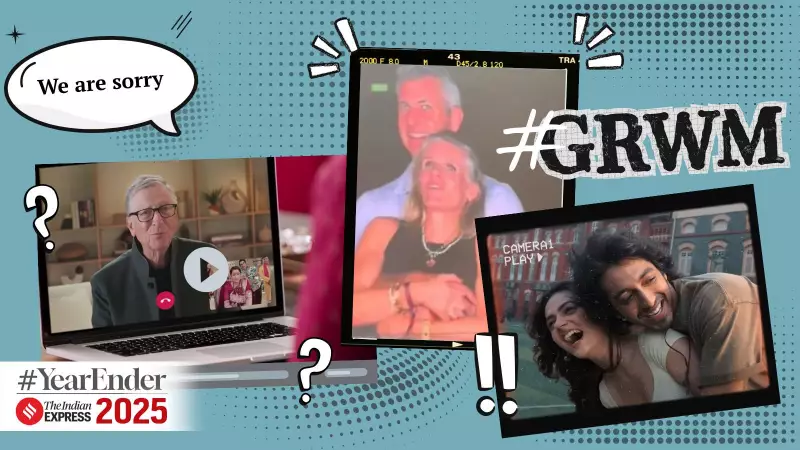
Equally baffling was the "We Are Sorry" trend on Instagram, where users posted vague apology videos without any context or accountability. The format worked virally, despite offering no resolution, leading Varma to suggest anyone involved should "self-demote."
The Professional and Personal Blur
The professional network LinkedIn came under fire for fostering "trauma dumps." Varma criticizes the platform for allowing personal setbacks—being fired, cheated on, or emotionally wrecked—to be repackaged into numbered-list carousels under the guise of professional thought leadership. He argues that LinkedIn, as a business platform with rules, could intervene but instead rewards this behavior, turning feeds into a stream of public coping mechanisms.
Another moment highlighting blurred lines was the Coldplay concert "Kiss Cam" incident, where a CEO was filmed kissing someone other than his wife. The internet's reaction, featuring statements, subtweets, and speculative HR discussions, escalated into a public inquiry that Varma found more uncomfortable than the original, forgettable clip.
Content Fatigue: From AI Slop to Forced Nostalgia
Artificial Intelligence, promised as a tool for ease, instead flooded social media with what Varma terms "AI slop." He describes a landscape of shiny, soulless images with floating limbs and repetitive lighting, exhausting in its artificiality. A prime example was an AI-generated remake of the Mahabharata, which he found hollow and artistically bankrupt. "Where is the religious outrage when you need it?" he quips, questioning why real artists weren't employed instead.
Varma also calls out the forced 2012–2016 nostalgia loop, arguing that a decade is insufficient for genuine nostalgia and merely reflects a present that feels creatively thin. Similarly, he critiques the persistent "Main Character Energy" in feeds, where ordinary moments are falsely cinematic, and "GRWM For No Reason" videos that document getting ready for nowhere, valuing views over authenticity.
Bollywood and Billionaire Missteps
The entertainment world provided its share of cringe. A video of Bill Gates appearing on a Hindi soap opera, specifically Kyunki Saas Bhi Kabhi Bahu Thi, and using a MacBook on screen, struck Varma as a strangely awkward moment in a rough year for the billionaire. In film, the heavily promoted "Saiyaara" failed to live up to its hype, being all sap and single expressions, while "Skyforce" felt overly effortful and loud.

However, not all was criticism. Varma admits a perverse fondness for Ajay Devgn's "Hand Dance" from Pehla Tu, appreciating its minimal, unpretentious virality as his "favourite cringe moment of the year." On the other end of the spectrum was the film "Mere Husband Ki Biwi," a title and project that seemed to embarrass even its stars.
Jatin Varma's list is a snapshot, not an exhaustive catalogue, of a year where the internet's capacity for cringe seemed to expand. As he looks ahead, the forecast for 2026 is clear: more trends, more explanations for unasked-for phenomena, and undoubtedly, more second-hand embarrassment to document.