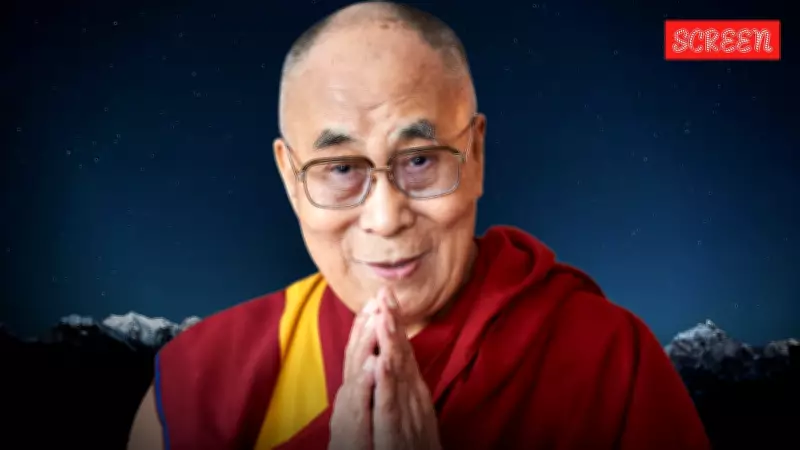
Dalai Lama Makes Grammy History with First Win at Age 90
The 68th Grammy Awards ceremony held at the Crypto.com Arena in Los Angeles witnessed a historic moment as the Tibetan spiritual leader Dalai Lama secured his first-ever Grammy award. At 90 years old, he triumphed in the category of Best Audiobook, Narration and Storytelling Recording for his work titled 'Meditations: The Reflections of His Holiness The Dalai Lama'.
A Politically Charged Ceremony with Surprise Winner
In a glittering event dominated by musical heavyweights like Kendrick Lamar, Bad Bunny, and Lady Gaga, where political themes resonated throughout the night, the Dalai Lama's victory stood out as particularly significant. The award was accepted on his behalf by Canadian-American singer Rufus Wainwright, who collaborated on the album alongside American vocalists Maggie Rogers and Andra Day.
"It was a privilege to participate in this project. It is an honour to accept this recognition on behalf of His Holiness the Dalai Lama, whose wisdom is at the heart of this work," Wainwright expressed while receiving the golden gramophone trophy.

The spiritual leader defeated formidable competitors including US Supreme Court Justice Ketanji Brown Jackson, comedian Trevor Noah, actor Kathy Garver, and French musician Fab Morvan to claim the prestigious award.
India's Grammy Disappointment Despite Multiple Nominations
While the Dalai Lama celebrated his maiden Grammy victory, India's contingent of nominated artists returned empty-handed from the ceremony. Despite having representation across various genres and generations, none of the Indian nominees managed to secure a win.
The notable Indian nominees who missed out included:
- Anoushka Shankar - Nominated in two categories: Best Global Music Performance and Best Global Music Album (marking her 11th and 12th Grammy nominations respectively)
- Charu Suri - Madurai-based pianist
- Shakti - Renowned Indo-jazz ensemble
- Siddhant Bhatia - Received surprise debut nomination for 'Sounds of Kumbha'
Anoushka Shankar's Candid Reflection on Grammy Process
Currently on her India tour, sitar virtuoso Anoushka Shankar addressed her decision not to attend this year's ceremony through social media. In a thoughtful post, she highlighted the challenges artists face in the Grammy ecosystem.
"Sometimes the process of spending literally thousands of dollars on the privilege of flying, attending, marketing and getting sucked into the machine, hugely anxious about outfits and red carpets, starting to hope to win and then not winning (again and again!) can take a toll," Shankar wrote.
She further elaborated on the competitive nature of the awards, noting that "there is always a bigger mainstream artist dropping into our global categories who has MORE money to spend on marketing" and that "there is always an artist who chooses to spend months networking, attending nominee events and ensuring their music and name lands in front of voters."
Despite her honest assessment of the Grammy process, Shankar maintained a philosophical perspective: "If tonight, I happen to win for the first time, of course, it will be a joyful experience, but I truly, truly believe it doesn't matter in a deeper context."
Cultural Significance and Global Recognition
The Dalai Lama's Grammy victory represents more than just an award for an audiobook recording. It signifies global recognition of spiritual wisdom and meditation practices that have transcended cultural boundaries. His work, which emphasizes universal responsibility and compassion, has now received one of the highest honors in the entertainment industry.
Meanwhile, India's continued presence in Grammy nominations across multiple categories demonstrates the country's growing influence in global music, even as the elusive golden gramophone remains just out of reach for another year.