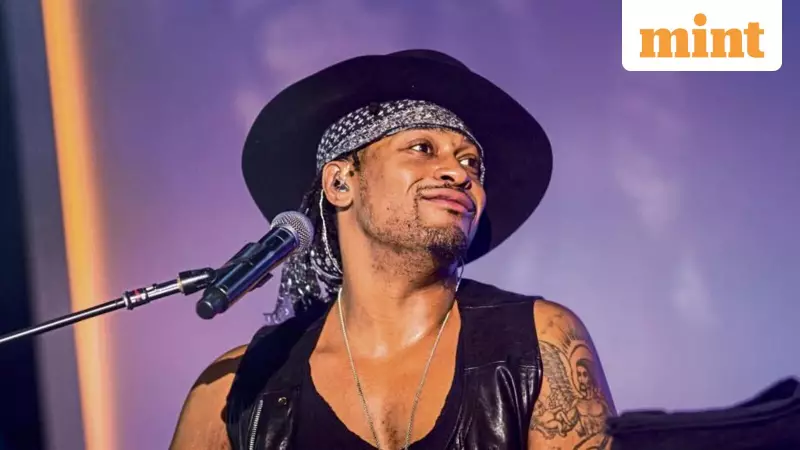
The recent passing of musical visionary D'Angelo at age 51 after battling pancreatic cancer has left the music world reflecting on his profound impact. With just three albums released over two decades, the American artist born Michael Eugene Archer crafted a legacy that continues to resonate through contemporary music.
The Untitled Phenomenon: A Masterpiece of Erotic Soul
Among the pantheon of sensual compositions, D'Angelo's Untitled (How Does It Feel?) stands unparalleled. This seven-minute masterpiece builds with divine tension, blending raw desire with spiritual yearning. The track represents a culmination of Black musical excellence, channeling the vulnerability of Prince, the longing of Marvin Gaye's Sexual Healing, and Jimi Hendrix's explosive guitar work into what became the definitive pop erotic statement.
Even if this were his only creation, it would have secured D'Angelo's place among music's immortals. However, his artistic journey encompassed far more than this singular achievement.

From Gospel Roots to Neo-Soul Revolution
D'Angelo's musical journey began in Richmond, Virginia, where he was born to a Pentecostal minister. His talent emerged early, with his older brother discovering him playing piano at just three years old. He soon graduated to performing gospel songs for his father's congregation.
By his teenage years, he was dominating school talent competitions and performing locally with his band Three Of A Kind. His first significant break came in 1994 with U Will Know, a song he co-wrote and co-produced for supergroup Black Men United, collaborating with R&B luminaries including Usher, Brian McKnight, and Boyz II Men.
His 1995 debut album Brown Sugar marked a turning point for R&B. At a time when the genre embraced synthetic production, D'Angelo returned to the organic warmth of 1970s soul, seamlessly blending it with contemporary hip-hop sensibilities. Tracks like Shit, Damn, Motherfucker combined murder ballad storytelling with irresistible bass grooves, while the title track offered a smoky jazz tribute to marijuana in the tradition of James Brown.
Though initially a modest success, Brown Sugar eventually spent 65 weeks on the Billboard 200 charts, launching what would become known as the neo-soul movement—a term popularized by his manager Kedar Massenburg though later disavowed by D'Angelo himself, who preferred calling it simply Black music.
The Soulquarians Era and Voodoo's Lasting Impact
Following two years of touring, D'Angelo retreated to New York's historic Electric Lady Studios—founded by Jimi Hendrix—to craft his follow-up. Despite battling writer's block, he found creative kinship in the experimental collective Soulquarians, which he co-founded with Questlove and J. Dilla.
This collaborative environment produced legendary albums including The Roots's Things Fall Apart, Erykah Badu's Mama's Gun, and Common's Like Water for Chocolate. Yet even among these classics, D'Angelo's 2000 release Voodoo stood apart as an extraordinary achievement.
The album abandoned conventional song structures in favor of extended jams drawing from funk, soul, blues, and rock. Questlove's drumming deliberately lagged behind the beat, creating what felt like time itself bending to the musicians' will. Voodoo explored deeper philosophical themes of spirituality, sexuality, and fatherhood, but it was the incendiary video for Untitled—featuring a shirtless, muscular D'Angelo—that captured public imagination.
This transformation into an unwilling sex symbol took its toll. D'Angelo struggled with the attention, with women lining up at concerts demanding he remove his clothes. He withdrew from public life after the Voodoo tour, facing battles with addiction, a near-fatal car accident, and drug arrests.
The Triumphant Return and Enduring Influence
Fourteen years after Voodoo, D'Angelo reemerged in December 2014 with Black Messiah, reclaiming his status as a visionary genius. The album arrived amidst the growing Black Lives Matter movement, following the acquittal of police officers involved in the deaths of Michael Brown and Eric Garner.

Its dense jazz-funk arrangements and psychedelic guitar work provided the soundtrack for D'Angelo's powerful commentary on systemic racism and Black resilience. In the liner notes, he explained: We should all aspire to be a Black Messiah. It's about people rising up in Ferguson and in Egypt and in Occupy Wall Street and in every place where a community has had enough and decides to make change happen.
D'Angelo's influence extends across generations of artists, from Alicia Keys and Tyler The Creator to contemporary avant-garde musician KeiyaA. His fusion of spiritual yearning and raw sensuality created a blueprint that continues to shape modern R&B and soul.
As the world faces new challenges, his final album's message resonates as both challenge and inspiration for artists to continue his legacy of musical innovation and social consciousness.