Sarod Maestro Debojyoti Bose Returns to Stage in Guru's Presence After Decade-Long Gap
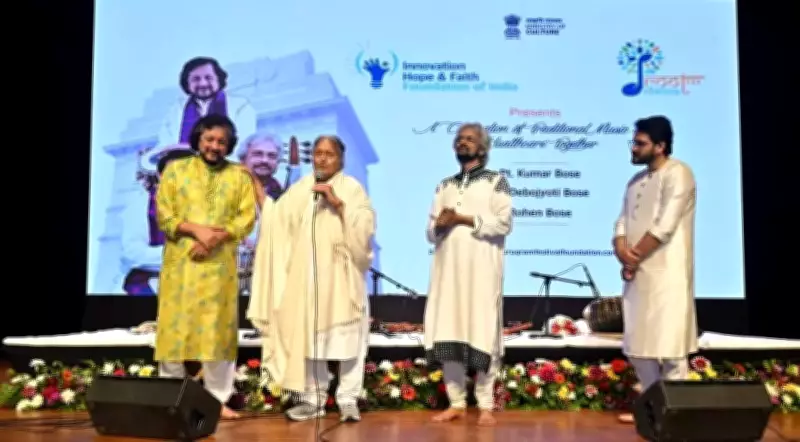
In a moment that transcended mere performance, sarod virtuoso Debojyoti Bose created musical magic at Delhi's Kamani Auditorium, performing for the first time in nearly ten years before his revered guru, the legendary Ustad Amjad Ali Khan. This significant event was organized as part of the IHFFI's flagship initiative Root Chetna, meticulously curated by the Gurugram Festival team, bringing together generations of musical excellence.
A Musical Dialogue Between Tradition and Innovation
Debojyoti Bose, representing the esteemed Senia Bangash gharana known for its expansive melodic approach, delivered a performance that masterfully balanced technical precision with profound emotional expression. Accompanied by the exceptional tabla artistry of Kumar Bose and Rohen Bose, the trio format evolved into a captivating musical conversation between strings and rhythm, silence and sound.
The evening commenced with Raga Jhila Kaafi in Deepchandi taal, setting a contemplative tone that would characterize the entire performance. This was followed by Shudh Basant, presented with traditional alap, jor, and a jhaptal bandish, including a drut composition originally created by Amjad Ali Khan himself.

Guru's Blessings and Emotional Reflections
Reflecting on his disciple's performance, Ustad Amjad Ali Khan shared heartfelt sentiments that captured the essence of the evening. "Witnessing Debojyoti's music felt like seeing a plant one has nurtured finally bloom," he expressed emotionally. The maestro further praised Debojyoti's understanding of the poetic nature of musical composition and expressed sincere hope for his continued artistic growth and ascent to greater heights.
Amjad Ali Khan also commended tabla maestro Kumar Bose for bringing a new dimension to tabla playing, highlighting the innovative rhythmic contributions that enriched the performance.
Traditional Roots with Contemporary Resonance
Debojyoti Bose further showcased his mastery through Vilambit Teental and Drut Teental compositions in Raga Khamaj, maintaining deep roots in traditional presentation while exploring emotional depth and technical brilliance. The sarod, with its characteristically deep, introspective, and expressive sound, remained the central voice throughout the evening, offering audiences both meditative calm and intense emotional engagement.
The rhythmic interplay, a distinctive hallmark of the Bose family musical style, drew enthusiastic applause from the captivated audience, creating an immersive musical experience that lasted over two hours. This wasn't merely a concert but a significant artistic comeback and a vibrant celebration of the Senia Bangash tradition.
Reaffirming Classical Music's Contemporary Vitality
More than just a musical presentation, the evening served as powerful testament to Indian classical music's enduring relevance and capacity to engage contemporary audiences. Debojyoti Bose, through his meditative yet powerful performance, demonstrated how traditional forms continue to evolve while maintaining their essential character.
The concert at Kamani Auditorium ultimately represented a beautiful convergence of guru-shishya parampara, musical lineage, and artistic evolution, reminding listeners that at the heart of classical music lies that unspoken bond between artist and audience—a connection that truly speaks directly to the soul.