

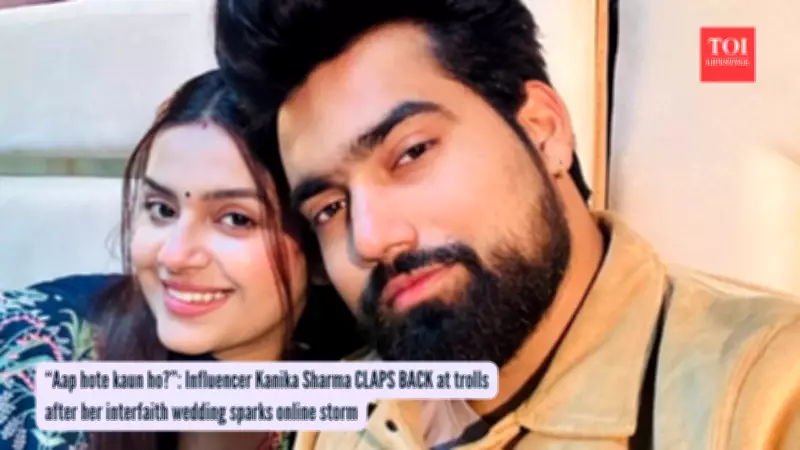
Influencer Kanika Sharma Confronts Online Trolls Over Interfaith Marriage
As social media platforms increasingly blur the boundaries between digital interactions and real-world consequences, content creator Kanika Sharma has found herself thrust into an intense public spotlight. Her experience vividly demonstrates how personal life choices can rapidly transform into heated public debates that attract both support and vicious criticism.
Who Is Kanika Sharma?
Kanika Sharma is a prominent social media influencer who has cultivated a substantial following through relatable comedy sketches and authentic day-to-day lifestyle content. For years, she maintained a close professional partnership with fellow creator Saqib Saifi, which gradually evolved into a romantic relationship that both openly shared with their dedicated audience over time.
The couple, after being together for several years, formalized their commitment in March 2026 with a wedding ceremony that beautifully blended both Hindu rituals and a traditional nikaah. Their union received full support from both families despite their different religious backgrounds. Kanika, frequently described in media reports as coming from a Hindu Brahmin family, and Saqib, who is Muslim, have consistently emphasized that their marriage resulted from years of genuine love and mutual understanding rather than any fleeting or fashionable decision.

Emotional Video Response to Cyber Abuse
Kanika Sharma recently posted a powerful and emotional video on Instagram that quickly went viral, coming as a direct response to a significant surge of online hate following extensive media coverage of their wedding. In the compelling clip, she directly confronts anonymous internet users, questioning their perceived right to interfere in her personal life and to insult her carefully considered choices.
She revealed with visible distress that the abusive comments have extended far beyond targeting her personally, now spreading to include her parents and brother as well. According to detailed reports summarizing her emotional statements, she declared, "Aap mujhe gaaliyan de rahe ho, mere maa-baap ko, mere bhai ko gaaliyan de rahe ho… aap hote kaun ho?" (You are abusing me, my parents and my brother… who do you think you are?). This poignant line has become a central focus in coverage of the entire controversy, powerfully illustrating how cyber-abuse frequently spills over into attacks against family members who have no direct involvement.
Kanika also firmly pushed back against the widespread moral policing surrounding her marriage, challenging the fundamental assumption that anyone, particularly anonymous online strangers, possesses legitimate authority to judge or publicly humiliate her for her life decisions.
Highlighting Family Values and Contributions
Within the same impactful video, Kanika thoughtfully discussed her family's core values to create a stark contrast between their real-world behavior and the relentless negativity proliferating online. She specifically mentioned that her brother actively participates in animal-welfare initiatives and personally cares for cows, while her parents have dedicated many years to supporting vulnerable people in need within their community.
Mixed Reactions and Broader Societal Conversation
Following both the wedding ceremony and Kanika's heartfelt video response, social media reactions have been sharply and deeply divided. Numerous users have extended warm congratulations to the couple, praising their interfaith marriage as a beautiful example of love transcending traditional boundaries and societal divisions.
Conversely, other commentators have harshly criticized the union, frequently employing religious labels and directly targeting Kanika's personal identity in their critiques. This polarized response has sparked a much larger conversation about:

- The appropriate boundaries between public figures and private lives
- The escalating problem of cyber harassment targeting women
- Societal attitudes toward interfaith relationships in contemporary India
- The psychological impact of online abuse on content creators and their families
The situation continues to develop as more people engage with Kanika's message, highlighting the complex intersection of social media influence, personal autonomy, and cultural expectations in today's digitally connected world.
