Kolkata Influencer's Complaint Ignites Debate on Social Media Boundaries
The social media post by an influencer regarding a service issue at Kolkata's iconic Olypub has sparked a heated debate that has spread from online platforms to offline discussions. The controversy centers on the growing power of social media influencers and the boundaries of their influence in real-world situations.
The Incident That Started It All
Influencer Sayak Chakraborty filed a formal complaint at Park Street Police Station and posted a vlog criticizing an Olypub waiter for serving the wrong type of meat. This action resulted in the waiter's arrest and subsequent imprisonment. The incident quickly gained traction across social media platforms, dividing public opinion about the appropriateness of the influencer's response.
Influencer's Apology and Reflection
On Sunday, Chakraborty posted a reflective statement acknowledging potential missteps in his approach. "My issue was specifically with the mistake made by Oly Pub. It is possible that my reaction was also wrong. I am sorry," he wrote. The influencer further expressed his desire to avoid similar controversies in future vlogging endeavors, stating "In the future, I do not want to get involved in such controversies while making vlogs."

Chakraborty later addressed speculation about the incident being staged, expressing genuine surprise at such theories. He explained his emotional state during the incident, saying "It is true I went to the police station out of anger. I lost my cool because of Oly Pub's casual approach towards their mistake." The influencer announced his decision to withdraw the complaint against both the waiter and the establishment.
Cultural Figures Voice Concern
National Award-winning director Supriyo Sen strongly condemned Chakraborty's actions, describing them as a "vile conspiracy to fuel communal tensions." Sen took to social media to call for greater responsibility, suggesting it was time to "put down the pen and the camera" when appropriate.
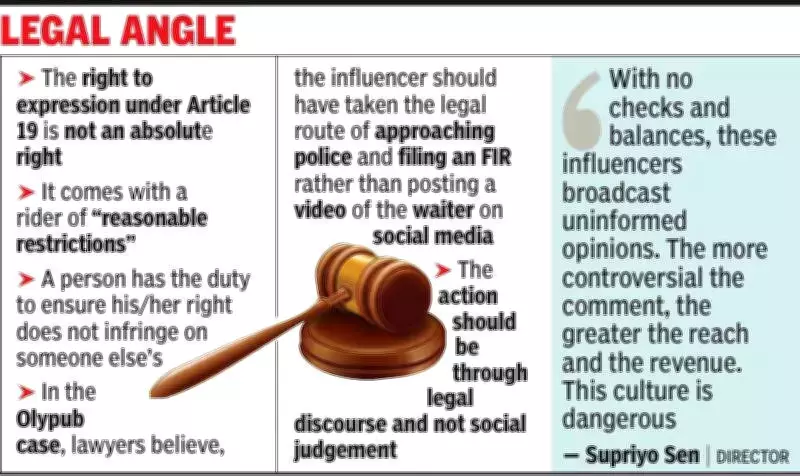
In conversation with media outlets, Sen elaborated on his concerns about social media's democratization of influence. "Learned people think before giving an opinion. With no checks and balances, these influencers broadcast uninformed opinions," he observed. The filmmaker highlighted the dangerous incentive structure where "The more controversial the comment, the greater the reach and the revenue. This culture is dangerous."
Filmmaker Debalina Majumdar, a former regular at Olypub, expressed surprise at not recognizing Chakraborty despite her active social media presence. "Many influencers supposedly have huge followings yet remain unknown outside their online bubble," she noted. Majumdar characterized the incident as reeking of entitlement, with the most disturbing aspect being how "his vile behaviour still shaped real-world 'influence', including a waiter's arrest."
Academic and Psychological Perspectives
Prasanta Ray, professor emeritus of sociology at Presidency University, described the rise of such influencers as alarming. He identified two concerning patterns: some influencers being inherently perverse with their behavior amplified by social media, while others become easily manipulated by political interests. Ray characterized this phenomenon as "low-level politics" with harmful social consequences, noting that "The educated society has little ability to counter it. The most worrying part is people may believe the allegations."
From a psychological standpoint, psychiatrists identified concerning patterns in influencer behavior. Amit Bhattacharya, director of the Institute of Psychiatry at SSKM Hospital, explained that many influencers who stir controversies exhibit attention-seeking traits. "They may go to extremes to feel important, with body language and voice that keep the focus only on themselves and their views," he observed. Bhattacharya warned about the psychological risks when engagement drops, noting that these individuals "risk serious psychological problems" when their online influence wanes.
The Broader Implications
This incident has raised fundamental questions about:

- The real-world consequences of online influence
- The responsibility that comes with social media popularity
- The psychological motivations behind controversial content creation
- The societal impact of uninformed opinions amplified through digital platforms
- The balance between freedom of expression and responsible communication
The debate continues to evolve as Kolkata grapples with the intersection of digital influence and real-world consequences, highlighting the need for more nuanced discussions about social media ethics and responsibility in the digital age.