

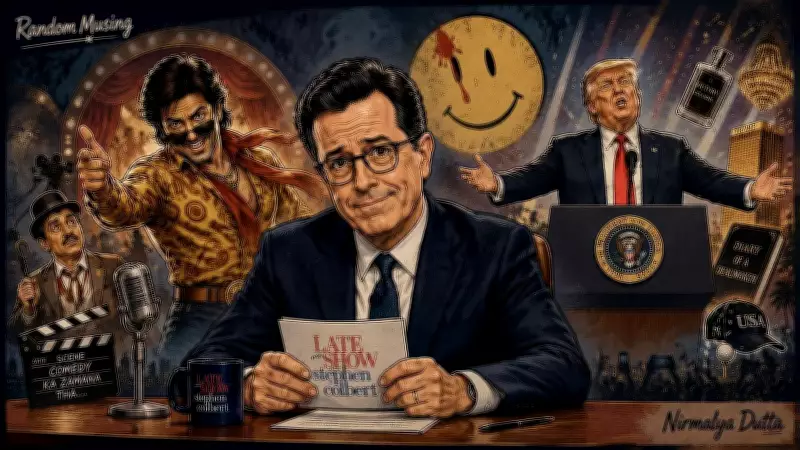
The Vanishing Comedian: A Cross-Cultural Phenomenon
What do the graphic novel Watchmen, Bollywood, and America have in common? They all grapple with the mystery of the missing comedian. In Zack Snyder's film adaptation of Watchmen, the plot revolves around the death of a character called the Comedian. Similarly, Bollywood once had clear roles: the hero, the heroine, the villain, and the comedian. But that changed as leading men like Dharmendra in Chupke Chupke and Amitabh Bachchan in Amar Akbar Anthony began incorporating comedy into their performances. By the 1990s, with stars like Govinda, the line between hero and comedian blurred, pushing professional comedians like Johny Walker, Mehmood, and Keshto Mukherjee into obscurity. This mirrors the current situation in America, where late-night comedians struggle to compete with the comedic prowess of political figures like Donald Trump.
The Decline of Late-Night Comedy in America
America, a nation that values free speech, now faces its own comedian crisis. CBS is reportedly ending Stephen Colbert's Late Show after 20 years and 3,000 episodes. While some praise Colbert for his truth-telling, critics note his one-sided coverage during the 2024 election, where he unabashedly supported Kamala Harris. Harris's campaign faltered, failing to differentiate itself from Biden's. Colbert's peers, like those on The Daily Show, have shifted from light political humor to moral sermons, alienating half the audience. This change, documented in a 2025 study, began with Jon Stewart's focus on attacking George W. Bush and the Iraq War, but softened during the Obama era. With Trump, comedy turned into a defensive sermon against a perceived threat.
Economic and Structural Challenges
The financial landscape has also shifted. Late-night TV revenue plummeted from $439 million in 2018 to $220 million in 2024, with CBS losing $40 million annually on Colbert's show. The rise of podcasts, roasts, memes, and social media platforms like X has made traditional late-night formats obsolete. Audiences no longer wait for 9 PM broadcasts; they consume short clips online. Moreover, the main attraction—Trump—provides endless material with his unfiltered remarks, from discussing a dead golfer's anatomy to declaring victory after economic turmoil. No comedian can compete with such reality-bending humor.

Parallels with Bollywood's Comedy Evolution
The same dynamic played out in Bollywood. As heroes became funnier, comedians were sidelined, surviving only in niche roles. This pre-AI version of obsolescence mirrors the current state of American comedy, where the central figure—be it a politician or a hero—has absorbed the comedian's role. The result is a crisis of identity for professional comedians, who must adapt or fade away.
In both cultures, the comedian's disappearance reflects broader shifts in entertainment and politics, where the line between performer and audience blurs, and the most outrageous voice wins.

