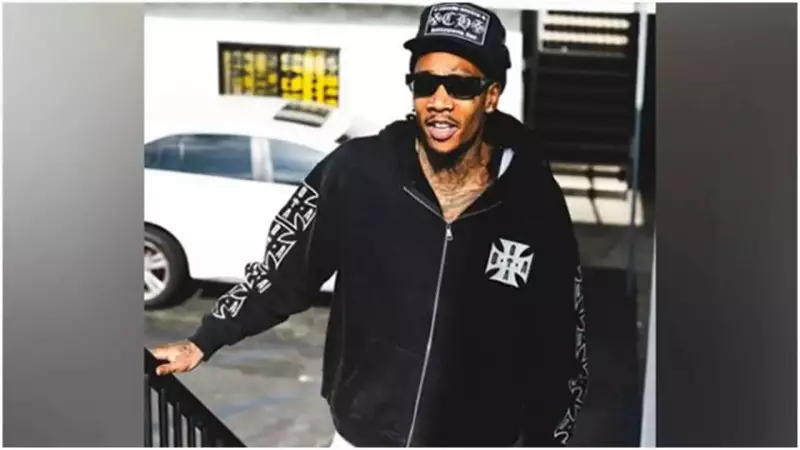
In a significant legal development, popular American rapper Wiz Khalifa has been handed a nine-month prison sentence by a court in Romania. The verdict comes over a year after his initial arrest for illegal drug possession during a music festival.
The Incident at 'Beach, Please!' Festival
The case stems from an incident in July 2024, when the rapper, whose real name is Cameron Jibril Thomaz, was performing at the 'Beach, Please!' festival in Costinesti, Romania. Authorities alleged that he had more than 18 grams of cannabis in his possession and consumed some on stage during his act.
Following his performance, Wiz Khalifa took to social media platform X to address the situation. He stated that the show was "amazing" and clarified that he did not intend any disrespect to Romania by his actions. "They were very respectful and let me go. I'll be back soon. But without a big ass joint next time," he had written in his post.

Legal Proceedings and the Court's Rationale
The legal journey saw an initial ruling in April 2025, where a lower court in Constanta County imposed a criminal fine of USD 830 for the offence of "illegal possession of dangerous drugs." However, prosecutors appealed this decision, seeking a harsher punishment.
The Constanta Court of Appeal has now delivered its judgment, convicting Khalifa of "possession of dangerous drugs, without right, for personal consumption" and sentencing him to nine months in prison. The court provided a strong rationale for the sentence, stating it was aimed at setting an example.
The judges argued that the rapper's conduct was ostentatious and significantly amplified the social danger of the offence. "He transmitted to the general public a message of normalisation of illegal conduct, tacitly encouraging tolerance of, and implicitly the consumption of, drugs among young people," the court added in its explanation.
Potential Extradition and Next Steps
As Wiz Khalifa is a US citizen, the case now enters a complex international phase. It remains to be seen whether Romanian authorities will proceed with filing a formal extradition request to bring him back to serve the sentence. This aspect introduces a layer of diplomatic and legal procedure to the high-profile case.
The sentence underscores the strict stance Romanian law takes on drug-related offences, especially when they involve public figures and occur in a highly visible setting like a music festival. The court's emphasis on the "message" sent to the youth highlights its intent to use the verdict as a deterrent.