Bangladeshi Cinema Takes Center Stage at Kolkata Film Festival
The 12th Kolkata People's Film Festival (KPFF), which commenced on January 23, is showcasing a remarkable selection of 39 films, with at least four productions focusing on Bangladesh. This cultural event unfolds against the backdrop of strained bilateral relations between India and Bangladesh, following India's recent designation of Bangladesh as a "non-family" diplomatic posting. The festival serves as a poignant reminder of the power of cinema to transcend political boundaries and foster human connections.
Filmmakers and Their Compelling Narratives
Three of the featured films are directed by filmmakers of Bangladeshi origin, while the fourth is helmed by an Indian director based in Delhi. Kasturi Basu, a founder member of People's Film Collective and part of the KPFF programming team, emphasized the festival's mission. "We believe that in these times, it is important to have these screenings, to do away with imagined and imposed demonisation and otherings," Basu told TOI. She noted that screening films has always helped audiences connect to common human experiences that cut across nationalities and borders.
The Bangladeshi films present diverse, human-centric stories. Jafar Muhammad's "Pankauri" sheds light on the exploitation of pebble collectors along the Karatoa River in northern Bangladesh, focusing on laborer Mujibur Rahman's 56-year struggle for dignity and workers' rights. Shekh Al Mamun's "Drained by Dreams" follows Selim, a Bangladeshi migrant in Korea who, at his family's urging, remains abroad and takes a job at a furniture factory. Vivek Bald and Allaudin Ullah's "In Search of Bengali Harlem" documents Ullah's personal journey from the streets of Harlem to villages in Bangladesh, exploring identity and heritage.

Visa Hurdles Prevent Director Attendance
Despite the selection of their films, none of the Bangladeshi directors will be able to attend the festival in person due to visa challenges stemming from the current political climate. Jafar Muhammad expressed his disappointment, stating, "It's great to be selected in KPFF. I wished to attend this festival but for the political issues between our countries it's hard to get visa. So, I couldn't attend the festival. But through this film I hope our people will connect." This absence underscores the tangible impact of diplomatic strains on cultural exchanges.
Indian Director's Rohingya Documentary Premieres
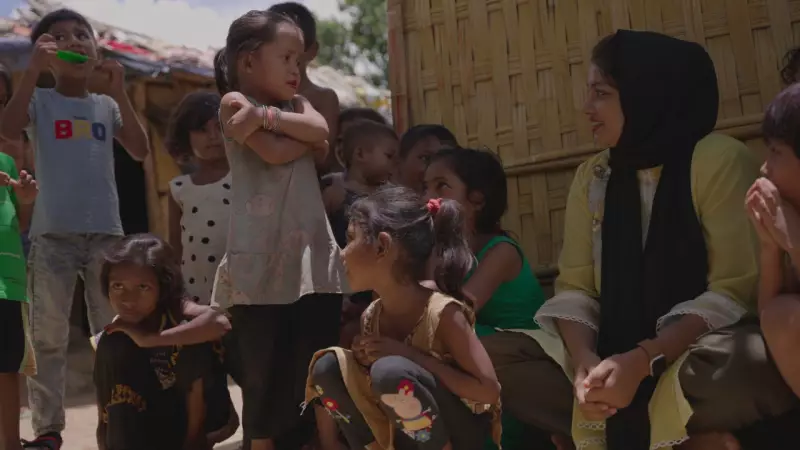
Adding to the festival's international flavor, Indian director Rishabh Raj Jain is presenting the Kolkata premiere of his film "A Dream Called Khushi (Happiness)" on Republic Day. Jain is in Kolkata to attend the premiere. His documentary follows the life of a Rohingya girl born in the world's largest refugee settlement in Bangladesh, offering a deeply human perspective on the refugee crisis.
Jain eloquently articulated the unifying power of cinema, saying, "I believe the most beautiful thing about films is that they don't have borders. In fact, the whole point of telling a story is to bring it out for the world to see and therefore have better understanding of communities, cultures and places they might not get to physically visit." He commended the KPFF for showcasing films from Bangladesh, including his own, and reflected on the historical ties between India and Bangladesh. "They have deep economic and social ties, which may be currently strained, but far from being over. I am not too surprised to see KPFF bring films from both sides of Bengal to Kolkata," he added.
Reflective Journalism and Rohingya Realities
Jain's film incorporates a unique reflective dimension, as it documents his return to the refugee camps years after his Associated Press reporting unexpectedly affected Khushi's life. This approach raises important questions about journalistic storytelling, ethics, and agency. Jain considers the Kolkata screening particularly significant amid the current political discourse surrounding Rohingya refugees.

He emphasized that the 2026 SIR, often cited in political rhetoric, does not directly apply to Rohingya as they are refugees, not immigrants. "While they have previously been dehumanised as 'bugs', now they are portrayed as 'illegal voters'. However, news reports suggest that the number of fake or ghost voters was significantly lower than claimed by some politicians. They actually are a stateless community trying to find a place to live some semblance of a normal life," Jain explained.
Through his film, Jain aims to highlight the lived struggles of Rohingya refugees and contextualize what refugee communities endure globally. "Khushi's story, I hope, gives people an opportunity to appreciate how similar we are to Rohingya, and that no child, despite their country of origin or status, should be denied education and an opportunity to be human," he concluded, underscoring the festival's broader message of empathy and shared humanity.