Book Overview and Core Themes
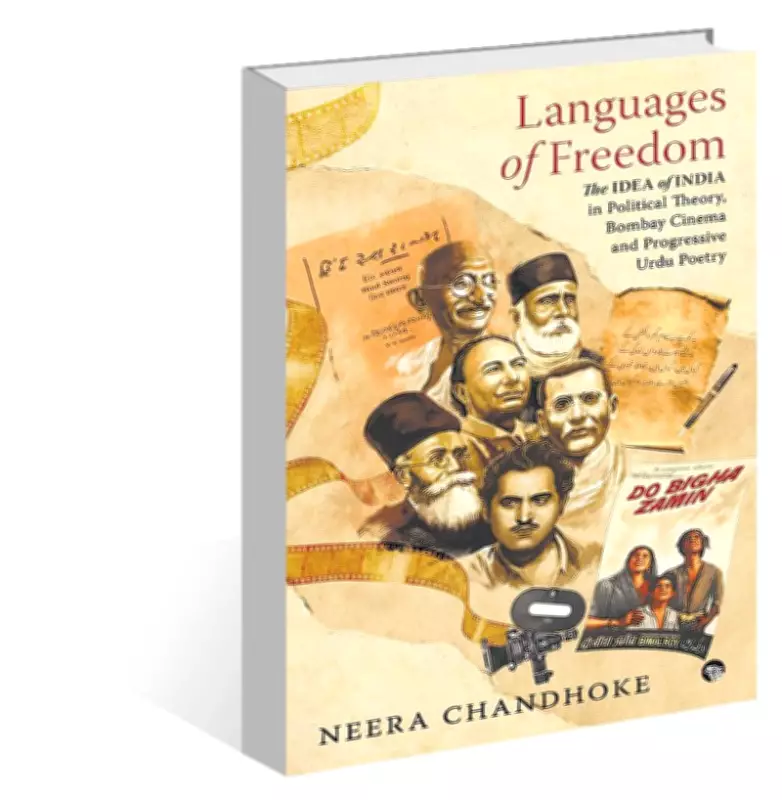
Neera Chandhoke's new book, Languages of Freedom (Speaking Tiger, 332 pages, Rs 699), examines the concept of freedom through five interconnected essays. The author analyzes ideas of India in political theory, Bombay cinema, and progressive Urdu poetry, all connected by a restless search for freedom. Chandhoke critiques the current political climate in India while extending her analysis beyond it.
The chapters are titled 'Swaraj as Freedom', 'Thinking Freedom', 'The Poetry of Freedom', 'Films as Critiques of Unfreedom', and 'Writing Indian Political Theory', covering a wide spectrum of thought.
Rediscovery of Krishna Chandra Bhattacharya
A standout feature of the book is Chandhoke's rediscovery of philosopher Krishna Chandra Bhattacharya (KCB). His influential essay 'Swaraj in Ideas', delivered in 1929 and published posthumously in 1949, raised critical questions about intellectual colonization. As George V Chair of Philosophy at Calcutta University, KCB asked: "How do the ideas and ideals introduced by a dominant culture to a colonised culture affect the freedom to think, reflect and evaluate? How do we acquire swaraj in ideas in an intellectually dominated society?"

Chandhoke quotes KCB: "When a person can shake himself free from it, he feels as though the scales have fallen from his eyes. He experiences a rebirth and that is what I call Swaraj in Ideas." While KCB's thesis made waves in philosophical circles, scholars like Rajendra Prasad and Dharmendra Goel have questioned it as conservative and vague about Indian culture, suggesting KCB meant classical Hindu culture rather than medieval or modern systems of thought.
Freedom in Cinema and Poetry
Chandhoke explores how Hindi/Urdu cinema and poetry articulated progressive, secular, and pluralistic ideas of India. She writes: "As we walk through the gardens of the many religions and their culture in India, we become conscious that our cultural concepts are sculpted by the poetry of Ghalib, Iqbal, and Sahir as well as Guru Gobind Singh, the magnificent prose of Munshi Premchand and the genius of MF Husain…"
The book highlights the Progressive Writers' Association's critical role and analyzes Bombay films as critiques of unfreedom. Chandhoke recounts an interesting anecdote: hearing that the film Achhut Kanya (1936) promoted inter-caste mingling, "Sarojini Naidu took Jawaharlal Nehru to see the film in Bombay. Nehru was greatly impressed by the presentation and wrote to the heroine Devika Rani a fan letter requesting an interview to discuss the film. The letter remained unanswered…"
The impact of the Indian People's Theatre Association and the Partition on Bombay films is also examined.
Writing Indian Political Theory
In the final chapter, Chandhoke adeptly addresses the need for and difficulties in writing Indian political theory. She highlights Swami Vivekananda, who "established a firm and confident political identity for India by declaring its culture to be predominantly spiritual, and distinctive from the West," as well as Rammohun Roy and various reform movements.
Chandhoke reflects that for Gandhi, religion was important but political struggles were more important. "He reconciled the relationship between the two by transforming a predominantly spiritual philosophy, aimed at the liberation of the self, into liberation of the collective. He theorised swaraj, ahimsa and satya as not only individual virtues, but as also the attributes of a collective movement, and ultimately those of an ideal state…"
The book, which lacks an index, achieves a great deal in exploring the languages of freedom in the Indian context, according to the reviewer Amitabha Bhattacharya, a retired IAS officer.