Nadharer Bhela Director Pradipta Bhattacharyya Champions Intimate Screenings Over Multiplex Releases
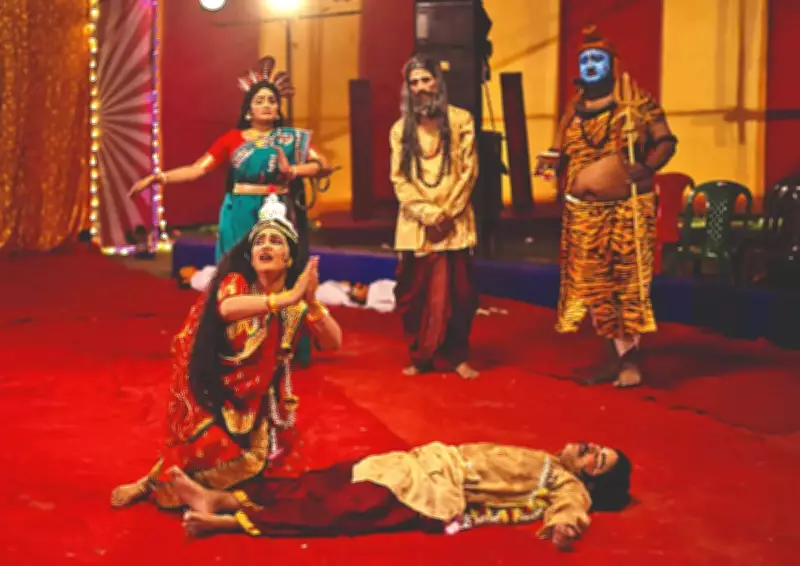
With his latest film Nadharer Bhela (The Slow Man and His Raft), director Pradipta Bhattacharyya delves deeply into themes of slowness, alienation, and human compassion. This artistic vision extends beyond the screen to the very manner in which the film connects with its audience. Featuring Amit Saha as a deliberate, slow-moving man in a rural circus, alongside Ritwick Chakraborty and Priyanka Sarkar, the project distinguishes itself not only through its narrative but also via its unconventional distribution journey.
Bypassing Traditional Circuits for Meaningful Engagement
Bhattacharyya has consciously avoided the standard multiplex circuits and formulaic release strategies. Instead, he opts to present his work in intimate, alternative venues such as community halls, art galleries, and theatre spaces. His films are designed to travel as lived experiences, shared in environments that foster pause, reflection, and conversation. This approach embodies the very ethos of slowness that defines his storytelling philosophy.
"This idea of screening beyond conventional cinema halls began as a practical response to the prohibitive costs of distribution, uploads, and marketing—financial backing we simply lack," explained Pradipta Bhattacharyya. "It reflects the stark reality for independent film releases today." However, he identifies the deeper challenge as authentically reaching audiences. "After taking the film to these alternative spaces, I've realized that meaningful cinema, where audiences truly connect with the story, will always find its value," he added.

Cinema Beyond Theatres: A New Paradigm
Pradipta Bhattacharyya firmly believes that cinema is not confined to traditional theatres. He cites screenings in Delhi at an art gallery as evidence. "After every screening, I sit with the audience to explain our alternative distribution model and why taking films directly to people matters," he said. "I don't believe cinema belongs only to theatres. The experience can be just as meaningful, sometimes even more so, across various platforms, at home, or on personal devices."
At the core of this belief is a simple conviction: "If the story is strong and the film resonates, audiences will come. Content still leads the way."
How Independent Screenings Function and Succeed
The release model for Nadharer Bhela is distinctive and widely discussed. Eschewing a conventional theatrical rollout, screenings are organized independently with a structured fee system. In Kolkata and Barrakpore, nominally priced tickets led to full houses, attracting nearly 825 attendees. This grassroots approach has historical precedents, echoing experiments by filmmakers in the 1970s and 1980s.
"Our film didn't have a theatrical release and is being screened differently, something rarely attempted in Bengali cinema at this scale," noted the director. The enthusiastic response clearly indicates an appetite for such films when presented effectively. Technically, the model prioritizes flexibility, utilizing projectors to adapt to available infrastructure.
Industry Validation: The 'Call Show' Model Gains Traction
Director Ranjan Ghosh has adopted a similar alternative distribution strategy with his film Adamya, blending conventional aspirations with on-ground outreach. "My strategy involved first exploring a theatrical release through existing systems—I consider it my right," Ghosh stated. "The next step was taking the film into the interiors."
The film's rollout reflects this pivot, with its teaser launched in the Sundarbans and its first screening at Sundarban Mahavidyalaya in Kakdwip. Acknowledging Bhattacharyya's pioneering efforts, Ghosh remarked, "Pradipta has been doing this for years." While cautious about scalability, he remains optimistic: "Whether this will work for every independent filmmaker is something only time will tell. For now, the 'call show' model seems innovative, viable, and definitely worth exploring."

This movement signals a transformative shift in how independent Bengali cinema can reach and resonate with audiences, prioritizing intimate connection over commercial spectacle.