The Evolution of South Indian Sci-Fi: From Grand Spectacles to Intimate Human Stories
For decades, South Indian cinema has been synonymous with grandeur and visual spectacle, with science fiction naturally fitting into this tradition of larger-than-life storytelling. The genre's roots in the region trace back to pioneering efforts that introduced audiences to futuristic concepts through imaginative filmmaking techniques.
The Foundation: Early Experiments with Fantasy and Technology
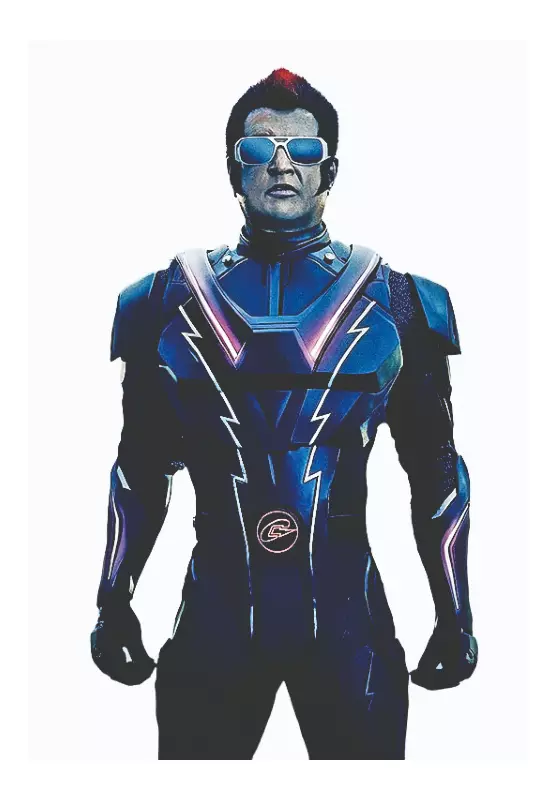
The journey began with groundbreaking films like 'Kalai Arasi' in 1963, which brought alien encounters and spaceships to Tamil audiences for the first time. Utilizing innovative trick shots and fantasy elements, these early works established science fiction as a vehicle for pure escapism and wonder. This tradition of spectacle reached new heights with director Shankar's landmark film 'Enthiran' in 2010, which combined massive visual effects with a thought-provoking narrative crafted by writer Sujatha.
The film's central question—what if a robot could experience human emotions?—marked a significant shift toward more psychologically complex storytelling within the sci-fi framework. This approach culminated in the record-breaking sequel '2.0' in 2018, which despite narrative shortcomings, demonstrated how advanced 3D technology and large-scale VFX could create unprecedented box office success, becoming the highest-grossing Tamil film of its era.

The Contemporary Shift: Technology as Emotional Mirror
In recent years, South Indian sci-fi has undergone a remarkable transformation, turning inward to explore how technology intersects with human vulnerability, relationships, and psychological states. Rather than focusing solely on external threats or futuristic wonders, contemporary creators are using scientific concepts to examine intimate aspects of the human experience.
The 2025 Tamil web series 'Heartiley Battery' exemplifies this new direction by blending science fiction with romance and comedy, imagining a world where love becomes quantifiable through technological means. Actor Padine Kumar, who portrays the character Sophia, explains that her role represents emotional fragility in a digital age. "Technology becomes her emotional safety helmet," Kumar reveals, "something she depends on, but which keeps slipping off."
Kumar further elaborates on the series' thematic depth: "She's also trying to find a solution to past traumas. Today, we trust blue ticks, social media algorithms, and all these systems more than our own instincts. Sophia understands how dependent we've become on technology, and that's why she wants to prove emotions through technology itself." While the narrative suggests that ambiguity is essential to love, Kumar personally believes uncertainty can be "annoying," adding that "imperfection is what makes relationships real and meaningful. If love came with clear instructions, none of us would be confused all the time."
Psychological Depth in Sci-Fi Storytelling
Parallel developments in Telugu-language science fiction demonstrate similar thematic sophistication. The 2025 web series 'Nayanam' takes a distinctly psychological approach, focusing on the emotional isolation that comes with extraordinary knowledge. Lead actor Varun Sandesh describes his character's journey as moving through multiple emotional stages, creating a profound sense of loneliness.
"Knowing truths that others can't makes the character lonely," Sandesh explains, "because he has no one to share them with. His curiosity begins in childhood, turns into an obsession, and once he uncovers certain truths, that knowledge leaves him restless and helpless." Despite its sci-fi framework, Sandesh emphasizes that "it's more about a person carrying a heavy burden. That's why I chose to keep the performance restrained and subtle."
Sandesh connects this narrative to contemporary digital realities: "With so much information about anything and anyone online, there is a constant feeling of being watched, which makes Nayan's character feel more relatable." This connection between sci-fi concepts and modern surveillance anxieties represents a key trend in current South Indian science fiction.

Industry Perspectives on Evolving Narratives
Content creators recognize this significant shift in how science fiction functions within regional cinema. Raghavendra Hunsur, chief content officer at ZEEL, articulates the industry's evolving philosophy: "We view science fiction as a genre that is most effective when technology serves the narrative and deepens character arcs, rather than driving the story on its own."
Hunsur identifies specific themes that resonate with contemporary audiences: "Themes such as privacy, surveillance and emotional accountability resonate with audiences because they mirror reality. Our focus is to develop stories that are thought-led, culturally grounded, and aligned with how audience expectations are maturing across southern markets."
The Comedy Connection: Lighter Takes on Sci-Fi Concepts
Alongside these serious explorations, South Indian cinema has also produced humorous interpretations of science fiction tropes, particularly through time-travel narratives:
- In 'Indru Netru Naalai' (2015), the protagonist and his friend face comedic consequences after misusing time-travel technology
- The 2021 comedy 'Dikkilona' features a former hockey player turned electricity board employee who accidentally discovers time travel in a laboratory
- Songwriter Subu's web series 'Time Enna Boss' (2020) blended comedy with sci-fi by depicting an IT professional sharing his home with people from four different time periods
Box Office Success Stories in Modern Sci-Fi
Recent years have witnessed several commercially successful science fiction films that have pushed creative boundaries while connecting with audiences:
- Maanaadu (2021) – Venkat Prabhu's innovative time-loop thriller broke away from conventional Kollywood templates, with its memorable refrain "vandhan suttan sethan, repeat-u!" (he came, shot, died, repeat) becoming popular meme material
- Mark Antony (2023) – Directed by Adhik Ravichandran, this film added nostalgic elements to the time-travel format, successfully blending retro aesthetics with sci-fi action
- Ayalaan (2024) – After significant production delays, this film subverted traditional alien narratives by portraying the extraterrestrial as a friendly ally rather than a threat, particularly appealing to children and female audiences
Future Directions: Romance in Data-Driven Worlds
The evolution continues with upcoming projects that further redefine science fiction's boundaries. Scheduled for 2026 release, 'Love Insurance Kompany' (LIK), written and directed by Vignesh Shivan, represents the latest phase of this transformation. Though set in 2040 and positioned within the sci-fi genre, the film is being marketed not for technological spectacle but as a romantic comedy that examines relationships in a data-centric world.
This strategic positioning highlights how South Indian science fiction has matured from pure visual extravagance to nuanced explorations of how technology shapes our most intimate human connections—proving that the genre's future lies not in bigger explosions, but in deeper emotional resonance.