The script in Telugu cinema, often called Tollywood, feels tragically repetitive. Once again, women are forced to lead the charge against deep-seated industry misogyny, a burden they should not have to bear alone. In the wake of actor Sivaji's recent comments policing women's clothing, a new collective named Voice of Women, TFI has emerged. They aim to fill a glaring vacuum of accountability, moving beyond polite requests for better behavior to demand concrete institutional reform.
A Collective Stand Against 'Casual' Sexism
The Voice of Women, TFI is not merely asking for improved manners. In a strong statement, the collective demanded restraint in public statements and accountability at every level of the film industry. They argue that so-called "casual" sexism forms the foundation of a toxic culture that shields harassers and forces victims into silence. This is a direct refusal to accept the old excuse that such remarks are just "isolated slips" or "harmless jokes" made in the moment. In an industry built around heroic, larger-than-life male figures, the women of Tollywood are asking for something fundamental: the basic dignity of a safe and professional workplace.
Actor-director Jeevitha Rajashekar emphasized the need for lasting change over temporary social media outrage. She pointed out the critical lack of proper accountability mechanisms. "Often, such incidents against female actors spark a quick social media reaction before fading. There should be a proper system in place to ensure these incidents don't happen again," she stated. Jeevitha highlighted that while women like Chinmayi or Anasuya consistently condemn such behavior, those in positions of power must also speak up. "Only through collective support and accountability can these issues be addressed seriously and the industry made safer for women," she asserted.

Hollow Apologies and a Culture of Complicity
Social activist Sunitha Krishnan identified a disturbing pattern in the apologies that follow public backlash. She noted that these incidents repeat over the years, with offenders saying sorry primarily out of fear for their film's success, not from genuine remorse. "There has been no real shift in the mindset of those who make such comments — not back then in 2016, and not now, which is truly disturbing," Sunitha observed, underscoring the lack of sincere change.
Actor Anasuya Bharadwaj recently amplified a powerful message about male complicity. The post she shared outlined a common scenario: out of ten men, one makes a sexist joke, some laugh, some awkwardly chuckle to fit in, and most stay silent. "Not a single one speaks up, not a single one stops it. The laughter, the silence, the looking away—all of it creates the same environment," the message read. It concluded with a stark truth: "Not every man harasses women, but most men participate in protecting the system that does."
A Timeline of Recent Controversial Incidents
The calls for reform are grounded in a series of recent public incidents that exemplify the problem:
Wear modest clothes: Sivaji (December 2024)
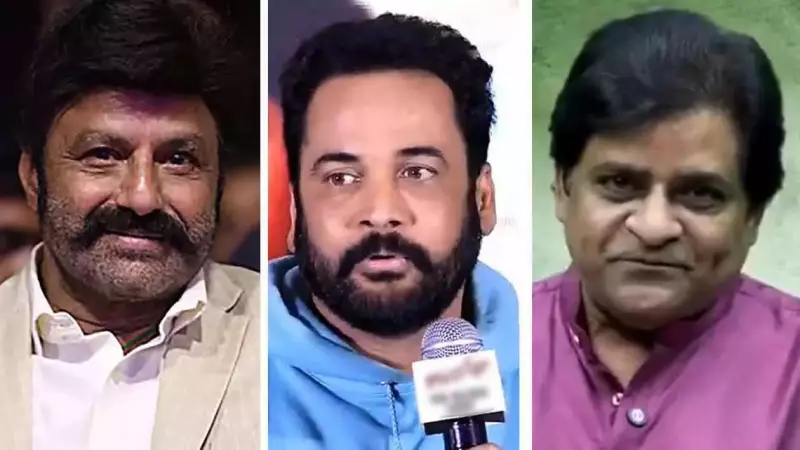
The actor faced severe backlash for moral-policing women's attire at a film event, controversially linking revealing outfits to harassment and using derogatory language. He later apologized and was summoned by the Telangana Women’s Commission for an inquiry.
The director called me "Chilaka": Divya Bharathi (November 2024)
Actress Divyabharathi accused a director of repeated misogynistic behavior during the filming of GOAT, including calling her chilaka (a derogatory term). The All India Cine Workers Association (AICWA) demanded action and called for a women's redressal committee.
SKN's double entendre (February 2025)
At the Dragon pre-release event, producer Sreenivasa Kumar (SKN) sparked controversy by stating a preference for non-Telugu speaking actresses and making a crude double entendre referring to them as "kayalu, pandlu" (fruits and vegetables).

You need to be bigger in size: Trinadha Rao Nakkina (14 January 2025)
At the Mazaka teaser launch, director Trinadha Rao Nakkina publicly commented on actress Anshu's weight, saying she needed a bigger size for Telugu cinema. He apologized following the backlash.
I either kiss the girl or make her pregnant: NBK
Veteran actor Nandamuri Balakrishna's (NBK) 2016 remark about having to either kiss or get a girl pregnant, along with a recent incident where he pushed actress Anjali on stage, show a pattern of conduct that sparks outrage but sees little institutional correction.
Ali's jab at Anushka
Comedian Ali has a history of objectifying female co-stars publicly. He once called Anushka Shetty a "hot jalebi" and made unsolicited remarks about her thighs, and on another occasion compared Samantha's midriff to a city landmark. These acts, often followed by apologies, exemplify how objectification is repackaged as entertainment.
The emergence of the Voice of Women, TFI marks a significant moment of organized resistance. It challenges the industry to move beyond performative apologies and enact real, systemic change to ensure dignity and safety for every woman working in Telugu cinema.