Nostalgia's Gentle Grip: Why 2016 Feels Like a Cultural Turning Point
Nostalgia possesses a peculiar ability to ambush us unexpectedly. One moment, you might find yourself humming a familiar tune, rewatching an old clip, or encountering a meme labeled "from a few years ago," only to realize with a jolt that an entire decade has slipped away. The years begin to blur, their sharp edges softening, and time transforms from a linear progression into a curated highlight reel of memories.
The Year Before the Storm: 2016 as the Final 'Normal'
For countless individuals across the globe, 2016 has been quietly redefined as the last conventionally normal year. This perception does not stem from it being a period of peace or perfection—far from it. Instead, 2016 existed just before a cascade of profound global transformations that fundamentally reshaped how we live, connect with others, and consume culture. It was the final chapter before the pandemic, before lockdowns redefined our understanding of time and solitude. It preceded the era when political discourse began to dominate social media feeds entirely and before artificial intelligence became an omnipresent daily reality. Life, in 2016, was still primarily felt, seen, and observed through a more direct, less mediated lens.
However, nostalgia is a notoriously slippery concept. We do not recall the past with objective accuracy; we remember it through a warm, slightly distorted vignette—colors artificially boosted, motion subtly slowed, and harsh edges deliberately blurred. This process often leads to a longing for an imagined "golden age," whether from our own lived experience or from a distant historical period. Philosopher Svetlana Boym describes this feeling as nostos: the deep, often painful yearning to return to a home that may no longer exist in the way we remember it.

A Fractured World: The Realities of 2016
It is crucial to remember that 2016 was far from a gentle year. The Brexit referendum sent seismic shocks through Europe, while the election of Donald Trump as President of the United States upended global politics. A horrific mass shooting at the Pulse nightclub in Orlando devastated the LGBTQ+ community, and the Syrian city of Aleppo burned amidst a deepening global refugee crisis. The world was already showing deep fractures; we simply lacked the vocabulary to describe the tumultuous era that would follow.
Pop Culture as a Mirror, Not a Distraction
It is tempting to dismiss the movies and television of 2016 as mere distractions from these harsh realities. Yet, art has never functioned in such a simplistic manner. Pop culture does not merely soothe us; it acts as a powerful mirror, reflecting and sometimes magnifying the contradictions of its time. It can resist prevailing ideologies or, at times, quietly acquiesce to them. To pretend pop culture is insignificant is foolish, especially in a year when a reality television star turned businessman ascended to the highest political office. If anything, its role in shaping and reflecting public sentiment mattered more than ever.
Ten Cultural Artefacts: What 2016's Hits Reveal About Us
So, a full decade later, let us revisit ten notable movies and television shows that arrived in 2016. Their stories and reception quietly reveal who we were, what we valued, and what we feared during that pivotal year.
Deadpool (February 12, 2016)
Deadpool felt like Marvel Studios finally letting its hair down and swearing loudly in the process. Ryan Reynolds found the perfect vehicle for his talents, weaponizing sarcasm, frequent fourth-wall breaks, and juvenile humor within a superhero genre that had begun to take itself exceedingly seriously. The massive commercial gamble paid off handsomely, with the film becoming the sixth highest-grossing movie domestically and ninth worldwide that year. Beyond mocking tired tropes, Deadpool served as a vital reminder to audiences that unadulterated, irreverent fun still held immense value.

Zootopia (March 4, 2016)
Disney's Zootopia managed to smuggle a sharp, timely parable about systemic bias, policing, and institutional power into a vibrantly colored animated film about talking animals. The evolving partnership between Judy Hopps and Nick Wilde carried far more thematic weight than initially met the eye. The film's monumental success proved conclusively that so-called "kids' movies" could tackle profoundly uncomfortable societal issues, provided they were cleverly dressed in appealing fur and wrapped in fast-paced humor.
Fleabag (2016)
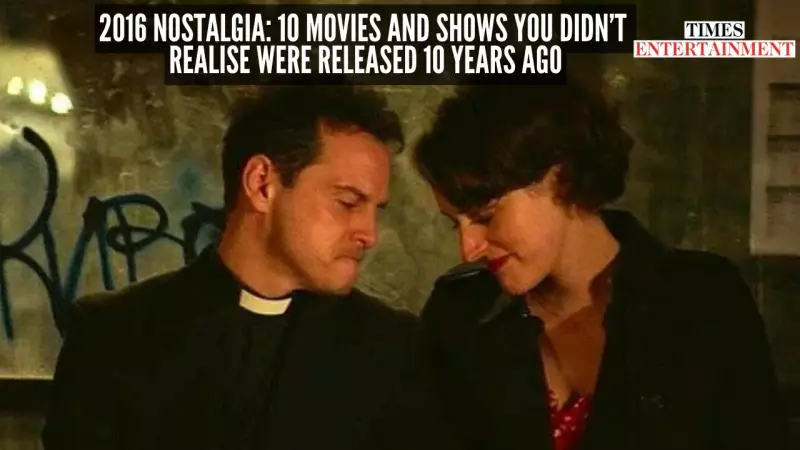
When Fleabag arrived, it did so without asking for permission. Creator and star Phoebe Waller-Bridge stared directly into the camera, daring viewers to keep pace with the show's raw, breaking-the-fourth-wall intimacy. Beneath the layers of acerbic British humor lay profound explorations of grief, guilt, and self-sabotage, all rendered painfully and hilariously human. The series remains endlessly quoted, clipped for social media, and referenced as a genuine cultural reset. While the iconic "Hot Priest" arrived in the second season, the foundational groundwork for global obsession was firmly laid right here in 2016.
Batman v Superman: Dawn of Justice (March 25, 2016)
Batman v Superman: Dawn of Justice was a messy, wildly ambitious, and deeply polarizing cinematic event. It brought Batman and Superman together in live-action for the first time and introduced Gal Gadot's Wonder Woman, yet it left audiences and critics starkly divided. While critical reception was largely unkind, the box office told a different story, finishing as the seventh highest-grossing film worldwide that year. In retrospect, the film stands as a perfect artefact of its era: grim, overstuffed with plot, and operating under the conviction that a somber tone automatically equated to narrative depth.
The Jungle Book (2016)
Jon Favreau's The Jungle Book quietly revolutionized filmmaking. Released in 2016, it utilized groundbreaking CGI technology to render talking animals with startling, sometimes unsettling realism. Young actor Neel Sethi carried the emotional core of the film with remarkable ease, while voice performances from stars like Idris Elba and Bill Murray added layers of gravitas and charm. Its commercial and critical success effectively greenlit Disney's ongoing obsession with live-action remakes, for better or for worse, altering the studio's strategic direction for years to come.
Captain America: Civil War (May 6, 2016)
Captain America: Civil War felt less like a standard sequel and more like a full-scale Marvel summit meeting. Nearly every major Avenger assembled, only to see alliances fracture along stark ideological lines. The film also served as the grand introduction for Chadwick Boseman's regal Black Panther and Tom Holland's instantly beloved Spider-Man. Looking back, it represented the calm before the emotional storm of later Marvel chapters, and audiences worldwide sensed they were witnessing a major turning point in blockbuster storytelling unfold.
Stranger Things (Premiered July 15, 2016)
When Stranger Things premiered, it did more than simply revive 1980s nostalgia; it refined and repackaged it for a new generation. The familiar iconography—bikes, synthesizer scores, Spielbergian wonder—was all present and effective. However, what truly resonated was the show's bedrock of emotional sincerity. The child actors felt authentically real, and the pervasive sense of fear felt genuinely earned. Almost overnight, its cast became global celebrities. Critics rightly praised the series for handling nostalgia with care, resisting pure sentimentality in favor of a pervasive, underlying unease.
The Crown (Debuted November 2016)
Netflix's The Crown debuted and immediately enveloped viewers in a world of velvet restraint and quiet, simmering tension. Claire Foy's portrayal of a young Queen Elizabeth II captured porcelain poise amidst post-war scarcity, with every controlled gesture loaded with unspoken meaning. The production's lavishness was intoxicating, almost narcotic in its appeal, and for a time, the series felt genuinely profound before later seasons gradually tipped into perceived excess. Nonetheless, its impeccable first season remains a masterclass in the execution of prestige television.
La La Land (December 2016)
La La Land arrived in December 2016 and instantly crystallized into a full-blown cultural moment. It romanticized the pursuit of artistic ambition, the sting of heartbreak, and the painful choice between personal dreams and romantic love, all while dazzling audiences with primary colors and sweeping musical numbers. Emma Stone won her first Academy Award for her performance, the film collected six Oscars in total, and it was forever marked by the infamous Best Picture envelope mix-up. A decade later, it endures as a bittersweet love letter to hope and the significant costs often required to chase it.
Atlanta (Premiered 2016)
Donald Glover's Atlanta premiered and quietly, confidently redefined the possibilities of television narrative. Surreal, melancholic, funny, and defiantly uncategorizable, it followed its drifting protagonist through the intersecting worlds of Atlanta's rap scene, complicated relationships, and quiet urban despair. An audacious episode featuring a white, dreadlocked version of Justin Bieber alone announced the show's unique creative voice. While its run may have been uneven, that groundbreaking first season delivered something rare and precious: an entirely new language for cinematic storytelling on the small screen.
These ten works, among many others, form a cultural time capsule from 2016. They capture a world on the cusp of monumental change, reflecting our anxieties, our hopes, and our complicated relationship with the recent past. Their enduring legacy reminds us that pop culture is never just entertainment; it is a living, breathing record of who we are at a specific moment in time.