A hearse is rarely associated with hope, but an upcoming Bengali web series aims to challenge that perception by placing the vehicle at the heart of a story about survival, social attitudes, and resilience.
About the Series
Swargarath Sargaram, a seven-episode comedy-drama directed by Arijeet Toton Chakraborty, follows the life of Balahari, a middle-aged driver in rural Bengal whose world is turned upside down after he loses his job during the lockdown. Burdened with supporting his wife, Manasi, and their two sons, Monta and Ghanta, Balahari struggles to find a way to provide for his family.
Plot Overview
Unable to secure steady work and convinced that driving is the only profession he knows, Balahari sells his wife's jewelry and travels to the city in search of a fresh start. He eventually purchases a third-hand hearse and returns to his village, hoping it will help him rebuild his livelihood. However, the arrival of the village's first hearse sparks debate among residents. Some regard it as an ominous presence capable of bringing misfortune, while others view it as a practical necessity and a sign of changing times. The divide exposes deep-rooted beliefs, fears, and prejudices within the community.

As the story unfolds, the hearse gradually takes on significance beyond its intended purpose. It silently witnesses moments of grief, conflict, and compassion, becoming intertwined with the lives of those around it and reflecting the complexities of village life.
Themes and Exploration
Through Balahari's journey, the series explores themes of dignity, livelihood, and perseverance while examining how communities respond to change. It also raises questions about superstition, acceptance, and the everyday struggles of ordinary people trying to navigate uncertain times.
Cast and Crew
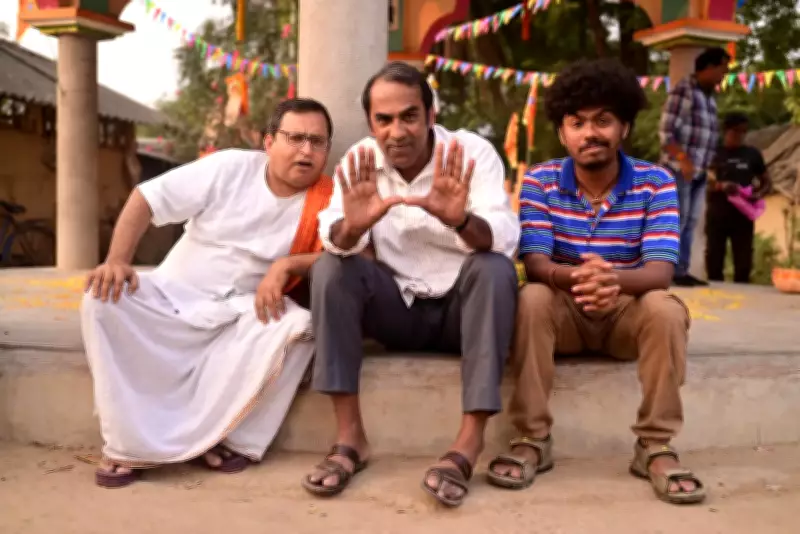
The cast includes Lokenath Dey as Balahari, alongside Pradip Dhar, Taranga Sarkar, Durbar Sharma, Pushan Dasgupta, Buddhadeb Bhattacharya, and Arshiya Mukherjee. The series is based on an original story by Iman Chakraborty, with the screenplay and dialogues co-written by Iman and Pele Bhattacharya.