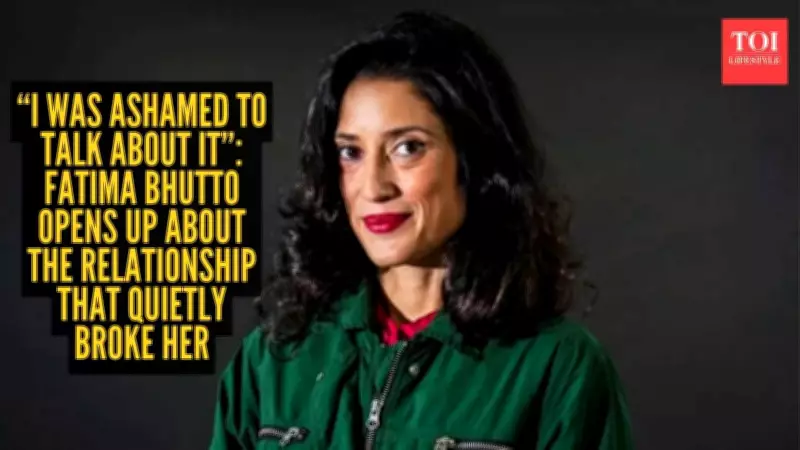
Fatima Bhutto's Unplanned Memoir Confronts a Decade of Hidden Abuse
Fatima Bhutto never intended to write this book. In fact, the Pakistani author and journalist actively resisted telling this story for years. Yet some narratives possess an undeniable force, refusing to remain concealed in the shadows of memory. Her powerful new memoir, The Hour of the Wolf, represents a profound departure from her previous political works, turning the lens inward to examine a relationship that privately dominated nearly ten years of her life.
The Slow Erosion of Self in a Relationship That Looked Like Love
This was not a story of loud, obvious violence from the outset. The danger did not announce itself in familiar, warning-sign forms. Instead, it arrived disguised as love—a facade that made disentanglement extraordinarily difficult. Bhutto recounts meeting a man in 2011, during her travels for an earlier memoir, Songs of Blood and Sword. What followed was a partnership built on secrecy, with the couple living in separate cities and sometimes different countries.
He avoided her friends and family, and gradually, her world began to constrict around him, even as her public career continued to flourish. The control mechanisms were insidious, not overt. There were no visible bruises or dramatic confrontations initially. Rather, Bhutto describes small, persistent cuts to her confidence: public humiliations framed as jokes, prolonged cold silences lasting days, and affectionate moments abruptly withdrawn.

This pattern of highs and lows, she writes, slowly conditioned her to accept humiliation as an intrinsic component of intimacy. For years, she struggled to even name her experience as abuse. Because it wasn't always physical, she convinced herself it wasn't that bad, that she was overreacting, and that strong, independent women like herself shouldn't fall into such traps. This internal narrative, she admits, kept her ensnared far longer than she wishes to acknowledge.
From Emotional Coercion to Physical Harm and Eventual Escape
The emotional manipulation eventually escalated to physical violence. Bhutto details one particularly harrowing incident where a confrontation turned physically abusive, resulting in nerve damage from a bite. However, by that point, the psychological wounds had already been deeply inflicted. A profound sense of shame cemented her silence. She writes of feeling intense embarrassment that she, with her background and awareness, had remained in such a damaging situation.
She blamed herself for not leaving sooner, for believing empty promises of commitment, and for waiting endlessly for change that never materialized. The relationship finally concluded in 2021, when Bhutto confronted the reality that she was waiting for a future that would never arrive—a future devoid of shared plans, stability, or any genuine intention to build a life together.
Motherhood, Healing, and the Lingering Shadows of a Political Legacy
The end of that chapter paved the way for a new beginning. Within a year, she met her future husband and swiftly became a mother to two children. Bhutto reflects that motherhood fundamentally altered her perspective on safety, love, and personal boundaries, clarifying what she would never again tolerate.
Her life has always been framed by heavy political shadows. Growing up amidst violence and loss—her father killed in a Karachi police operation, her grandfather executed after a coup, her aunt Benazir Bhutto assassinated—shaped her worldview. A childhood spent moving between countries, living quietly and cautiously, taught her to accept secrecy as normal and to coexist with background fear.
Bhutto reflects that these early-learned patterns followed her into adulthood, making the hidden nature of her abusive relationship feel familiar rather than alarming. She has consistently eschewed political office for herself, finding her voice instead through writing, activism, and human rights advocacy. In recent years, she has been a vocal advocate for Gaza, editing a collection of essays on the humanitarian crisis there, work she continued even during pregnancy.

Breaking the Silence for Herself and Others
Yet this memoir compelled her to turn inward and address long-ignored personal wounds. In a quiet online video, Bhutto is seen with her dog, Coco, holding a copy of her book. She admits she resisted writing this part of her story due to enduring shame. "I stayed longer than I should have," she confesses, not out of ignorance but because she was broken in ways she didn't yet comprehend.
She ultimately chose to speak out because she recognizes how many individuals suffer in similar silence—not from weakness, but from confusion, shame, and eroded self-trust. The memoir also highlights the healing, uncomplicated love of her dog, Coco, who provided steadfast companionship during her darkest periods.
Bhutto does not present her story as a tidy tale of dramatic escape or complete recovery. It is messier and more nuanced, exploring how difficult it is to recognize control while immersed within it, and how long it takes to rebuild self-trust once your reality has been systematically undermined. She may not have wanted to write The Hour of the Wolf, but she realized that remaining silent would have exacted an even greater personal cost.