

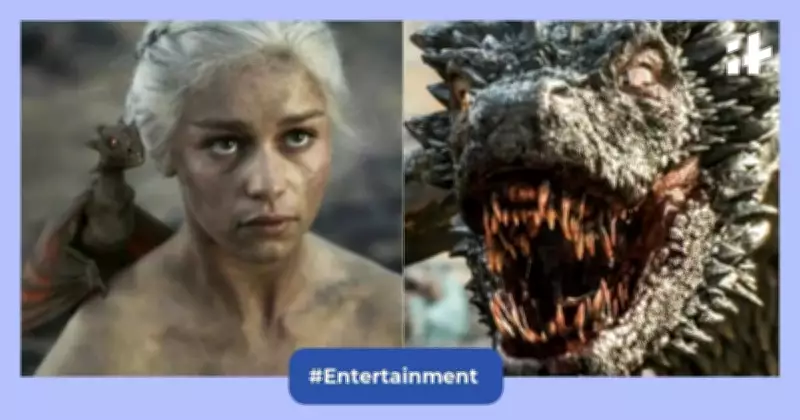
Game of Thrones at 15: A Legacy of Revolution and Reflection
It has been exactly fifteen years since Game of Thrones first premiered on HBO on April 17, 2011, marking a pivotal moment in television history that remains profoundly influential yet incomplete. Author George RR Martin has yet to deliver the final two books of his magnum opus, A Song of Ice and Fire, leaving the literary saga unfinished. Meanwhile, the fantasy television landscape that the show revolutionized has experienced an unprecedented boom, reshaping audience expectations and production standards across the industry.
The Rise of Epic Fantasy on Screen
In the decade following its debut, Game of Thrones demonstrated that audiences would embrace complex, dark fantasy narratives, justifying cinematic production budgets that often exceeded $15–20 million per episode. This shift prompted streamers to invest heavily in sprawling worlds, such as The Lord of the Rings: The Rings of Power, which became the most expensive television series ever made with total costs for its first season estimated between $715 million and $1 billion. To put this in perspective, production alone for season one cost approximately $465 million. Similarly, the now-cancelled The Wheel of Time had an estimated total budget exceeding $260 million for its first two seasons.
Author George RR Martin recently expressed dissatisfaction with the television ending, stating that the Game of Thrones books will not have the same conclusion as the show. This highlights a growing tension between original literary works and their adaptations.

The Thrones-Like Formula and Its Impact
In the years after Game of Thrones debuted, the industry widely adopted a Thrones-like formula, targeting a generation raised on Harry Potter but introducing them to fantasy worlds enriched with sex, violence, and gore on a scale previously unseen in mainstream media. These series featured complex political intrigue, gritty realism, and adult themes, elevating epic fantasy to feel sophisticated and culturally significant without descending into juvenile escapism. It was not merely about dragons and swords but explored brutal politics, layered betrayals, the corrupting nature of power, and the heavy weight of consequences, where death was not cheap and choices left permanent scars.
Characters like Ned Stark, Tyrion Lannister, and Daenerys Targaryen felt richly human amid the spectacle, setting new standards for character depth in television fantasy. On screen, audiences witnessed unprecedented levels of special effects, detailed costumes, and immersive world-building, which became benchmarks for modern fantasy productions.
Mainstreaming Sex, Violence, and Spectacle
While Game of Thrones did not invent explicit content in prestige drama, it normalized it within the fantasy genre on an unprecedented scale. For a time, this felt liberating—a rejection of the sanitized, often childish fantasy that preceded it. Iconic moments like The Red Wedding were not mere gore but devastating narrative gut-punches that shattered viewer expectations and underscored themes of fragile alliances and cyclical vengeance.
This blueprint influenced a wave of successors, including The Wheel of Time, The Witcher, Shadow and Bone, and The Rings of Power, though often with diminishing returns. Many equated mature fantasy with gratuitous explicitness rather than emotional or philosophical complexity, resulting in visually impressive but emotionally thinner storytelling. Authors like Brandon Sanderson, co-author of The Wheel of Time, have criticized adaptations, with Sanderson remarking, Fans deserved better.

Fractured Fandom and Waning Audience Engagement
As we celebrate fifteen years of Game of Thrones, the fantasy fandom has become increasingly fractured. Recent commentary from authors highlights a troubling trend: many high-profile adaptations have drifted from their source material, turning into studio-driven projects rather than faithful interpretations. From Martin to Andrzej Sapkowski, author of The Witcher, and Brandon Sanderson, creators have grown vocal about unfaithful changes.
Sapkowski noted that streamers never listened to me and he cannot praise the show, it wouldn’t be decent. Martin, after years of silence about later seasons he wasn’t thrilled with, expressed frustration with the direction taken in House of the Dragon, based on his book Fire and Blood, stating, We got into season two, and [Condal] basically stopped listening to me. I would give notes, and nothing would happen.
These critiques underscore a broader pattern: while adaptation requires changes for the medium, when source material becomes a loose suggestion rather than a guiding star, the soul of the story risks dilution. Martin has argued that the best adaptations, like Peter Jackson’s Lord of the Rings films, make smart changes that enhance the core narrative.
The Streaming Problem and Its Consequences
The rise of streaming platforms has transformed fantasy production and consumption, but often at the expense of narrative quality and depth. Platforms crave constant content, pressuring productions into rushed development. Epic fantasy thrives on patience—intricate plots, slow-burn character arcs, and immersive lore—yet many modern entries prioritize immediacy and bingeability, sacrificing coherence.
This has led to a quantity over craft approach, where studios rely on familiar tropes and explicit content to maintain cultural relevance, making different fantasy worlds feel interchangeable. Early Game of Thrones mastered restraint, with battles infrequent but devastating, and horror built gradually. In contrast, the streaming effect has created an emotionally thin world where immersive world-building is sacrificed for speed, scale, and shock value.
Fidelity Over Shock Value: A Path Forward
This environment has fueled a wider reckoning, with fantasy authors advocating for greater fidelity to source material. Ironically, streaming’s longer formats should allow for more nuance, yet challenging elements are often smoothed for broader appeal. Positive counterexamples exist, such as JK Rowling’s active involvement as executive producer in the new Harry Potter TV series, set for release this December, which has fans optimistic about faithfulness.
Similarly, A Knight of the Seven Kingdoms, based on Martin’s Dunk and Egg novellas, has performed strongly, averaging nearly 13 million US viewers per episode and over 24–26 million globally, demonstrating that grounded, character-focused storytelling can captivate without relying on endless dragons or gore. Today, viewers approach new fantasy entries with healthy skepticism, seeking coherence, respect for the source, and stories that reward investment.
The End of an Era or a Mature Reset?
Audiences crave what made early Game of Thrones and great fantasy literature compelling: strong writing, morally complex characters, and immersive worlds built with discipline and patience—not louder dragons or more gratuitous shocks. If the genre feels like it is waning, the fatigue may not be with fantasy itself but with poorly told or overly reinvented versions.
The past fifteen years offer a clear lesson: treat source material as gospel rather than a disposable framework. Fidelity is not a creative limitation but the bedrock of genuine immersion and emotional resonance. Authors like Martin, Sapkowski, and Sanderson remind us that the best adaptations honor the text while thoughtfully translating it.
Fantasy now stands at a crossroads. Creators and studios can continue down paths of ego-driven reinvention and trend-chasing, or they can recommit to the literary roots that have made the genre enduringly powerful. The dragons may have landed spectacularly, but the real magic was always in the words on the page—the intricate plots, human truths wrapped in myth, and slow-burn wonder that define timeless storytelling.
