

Harry Potter Series Snape Casting Ignites Fiery Debate Over Race and Plot Integrity
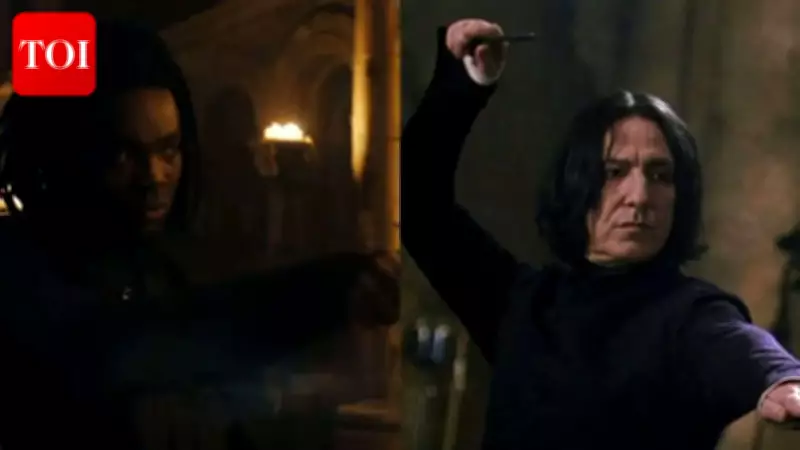
The recent release of the first teaser for HBO's upcoming 'Harry Potter and the Philosopher's Stone' series has sent waves of excitement through the global fanbase. However, this anticipation has been sharply tempered by a reignited controversy surrounding the casting of Paapa Essiedu as the iconic, brooding Professor Severus Snape. While previous fan discontent focused on replacing Alan Rickman's legendary portrayal, the current uproar delves deeper into narrative and racial implications, sparking a heated discourse that threatens to overshadow the show's launch.
Core of the Controversy: Plot Integrity Versus Inclusivity
According to numerous devoted readers of J.K. Rowling's books and viewers of the acclaimed film series, the decision to cast a black actor as Snape introduces unintended racial dynamics into the story's core. Fans argue that this casting choice fundamentally alters character perceptions and plot nuances. In the original lore, Harry Potter's suspicion of Snape stems from the professor's harsh demeanor, ambiguous loyalties, and past as a Death Eater, not from racial prejudice. Snape is frequently at the center of trouble at Hogwarts, bullies Harry, and is known as a follower of the dark lord Voldemort.
Moreover, the complex personal history between Snape and Harry's parents adds layers to this dynamic. Snape was deeply in love with Harry's mother, Lily Potter, while enduring bullying from Harry's father, James, and his friends during their school years. James and his peers famously hexed Snape, nicknamed him 'Snivellus,' and hung him upside down—actions now viewed through a potentially different lens with a black actor in Snape's role.

Fans Voice Concerns Over Character Miscasting and Narrative Shifts
In the original books, Rowling described Snape as having "sallow" skin, a large "hooked" nose, and "shoulder-length, greasy black hair." This description, coupled with Alan Rickman's celebrated performance in the films, cemented a specific image in fans' minds, contributing to the franchise's monumental $7.7 billion box office success. The shift to a black actor for the series has led fans to cite a significant miscast, arguing it changes more than just appearance—it reshapes the entire character arc and underlying themes.
"This miscast of Snape in Harry Potter is a prime example of race-swapping altering an entire narrative," wrote one user on X. "If Snape is Black, despite the books stating he's White, then Harry's suspicion could be misinterpreted as targeting the only Black teacher at Hogwarts. Similarly, James Potter bullying a Black child introduces connotations of racism absent from the original story."
Another fan elaborated, "It completely transforms how audiences perceive James Potter. In the original, bullies like James are seen as misguided but redeemable, whereas a racist bully is often viewed as irredeemable. This adds heavy baggage that strays from the source material, where Slytherin's bigotry centered on blood purity, not skin color."
Critics further contend that this casting choice inadvertently injects modern racial ideologies into a story cherished for its simplicity. "For children of the 90s and 2000s, Harry Potter was a tale of childhood friendships, innocent rivalries, and the triumph of good over evil," one critic noted. "Now, it risks becoming a vehicle for 'woke' propaganda, exposing young viewers to complex issues of racism and discrimination prematurely."
Is HBO Engaging in Strategic Rage-Baiting?
Amid the controversy, an intriguing perspective emerges from the media industry's playbook. Indian-origin content creator Aakash Gupta recently highlighted on X that Warner Bros. has a history of leveraging casting controversies for publicity. "The internet raged when Heath Ledger was cast as the Joker, when Daniel Craig became Bond, and when Michael Keaton was cast as Batman. Each performance later became definitive," Gupta pointed out.

With HBO investing a staggering $100 million per episode in the Harry Potter reboot, the financial stakes are immense, driven by potential returns from merchandising, theme parks, and streaming revenue. Essiedu's casting controversy has generated unprecedented press coverage, arguably providing more marketing value than traditional campaigns. "Every article about death threats includes the trailer link. Every outrage tweet keeps the show in public timelines. The 13 million views on a single tweet prove this strategy's effectiveness," Gupta added.
Ultimately, whether driven by genuine plot concerns or trolling, the controversy ensures that audiences will tune in. "Even those threatening Essiedu over Instagram DMs will watch the show. That's the part they won't admit," Gupta concluded. Thus, whether perceived as wokeness or rage-bait, the casting debate may ultimately benefit HBO by fueling viewership and discussion.
Considering the Next Generation of Viewers
As the debate rages, a crucial consideration remains: the children who will experience Harry Potter for the first time through this series. While raising awareness about inclusivity is important, some argue that stories like Harry Potter should prioritize magic and wonder over heavy-handed messaging. "If we overburden the narrative with modern ideologies, do we risk losing the essence of Hogwarts—the hope of sitting under the Sorting Hat, yearning to be placed in Gryffindor?" one fan pondered. The series now faces the challenge of balancing inclusivity with the timeless enchantment that made the wizarding world a global phenomenon.
