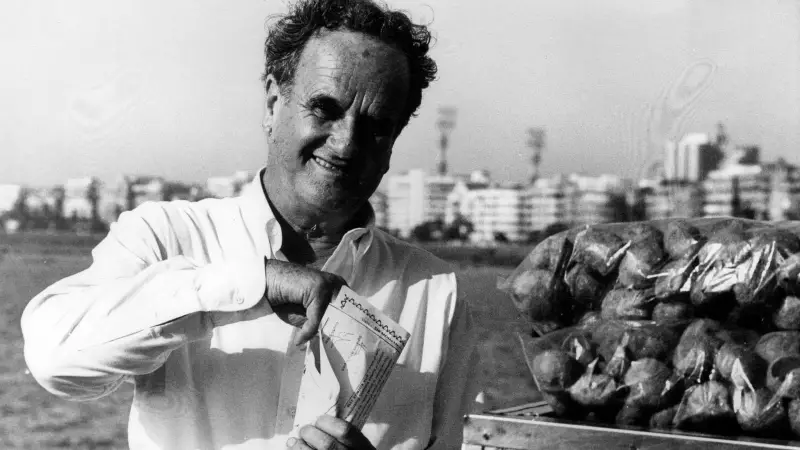
Sir Mark Tully, BBC's Revered 'Voice of India', Passes Away at 90 in New Delhi
Veteran BBC journalist Sir Mark Tully, who was affectionately known as the 'voice of India' for his decades of authoritative and empathetic reporting from the subcontinent, has died in New Delhi at the age of 90. The broadcaster, whose warm and trusted voice reached millions through crackling shortwave radios, spent most of his life in India, the country he called home until his final breath.
A Life Deeply Rooted in Indian Soil
Born in Calcutta in 1935 during the British Raj, Tully's connection with India was profound and permanent. Historian William Dalrymple emphasized this bond, stating, "It was his home. There was never any question that he would retire to England. He wanted to remain in India and to die here — which is what he's done." After being raised partly in India and educated in Britain, Tully returned in 1965 with the BBC, initially in an administrative capacity before evolving into one of the most influential foreign correspondents the region has ever witnessed.
Chronicling India's Most Turbulent Decades
Mark Tully's reporting career spanned some of the most critical and chaotic chapters in South Asia's modern history. His journalistic journey covered:

- The Emergency of 1975, after which he was expelled from India
- The horrific Bhopal gas tragedy that shocked the nation
- Operation Blue Star and the storming of the Golden Temple
- The assassinations of Prime Ministers Indira Gandhi and Rajiv Gandhi
- The demolition of the Babri Masjid in 1992, where he narrowly escaped lynching by mobs chanting "Death to Mark Tully" — a moment he later described as "the gravest setback to Indian secularism since Independence"
Former BBC journalist Qurban Ali remembered Tully's uncompromising independence, noting that he "never became an embedded journalist" and preferred to close his office rather than report what the government wanted.
The Unwavering Credibility That Touched Rural Hearts
Author and literary historian Rakhshanda Jalil recalled the extraordinary trust Tully commanded in rural north India, where people would say, "Tully sahab ne kaha hai, sahi hoga" (If Mr. Tully has said it, it must be true). She attributed this credibility to his completely non-judgmental attitude toward India and Indians, forged through relentless ground reporting.
Tully's methodology was distinctly hands-on — he preferred trains, village conversations, and long cups of chai over official briefings. "Here was somebody who actually travelled the ground," Jalil added. "He belonged to a generation who sat down with people and listened. That ear to the ground is something journalism is losing."
Embracing Language, Culture, and Spiritual Curiosity
Historian S. Irfan Habib, who frequently met Tully at the India International Centre, remembered how insistently the journalist embraced Hindustani, always insisting they converse in the language to brush up his Hindi. Tully particularly loved the dialect and linguistic nuances of western Uttar Pradesh.
Former broadcaster Sumit Tandon highlighted another dimension of Tully's personality — his wonderful sense of humor and acute understanding of Indian society. Tully's long-running BBC Radio 4 program Something Understood revealed his reflective, philosophical, and spiritually curious side through explorations of poetry, music, and philosophy. "He could criticise without being unkind — an art that is lost nowadays," Tandon noted.
A Substantial Literary Legacy and Quiet Life in Nizamuddin
Beyond broadcasting, Tully built a significant literary legacy with nine books that reflected his deep engagement with rural north India and the moral complexities of the country he loved. His notable works include:

- Amritsar: Mrs Gandhi's Last Battle
- No Full Stops in India
- India in Slow Motion
- Upcountry Tales
Knighted in Britain and honored with both the Padma Shri and Padma Bhushan, Tully lived quietly in Nizamuddin with his partner, journalist Gillian Wright. Ratish Nanda, CEO of the Aga Khan Trust for Culture, encountered Tully almost daily at Sunder Nursery during the pandemic, describing him as "always smiling, humble, polite, kind, appreciative and generous." Nanda added, "We will find a way to keep his memory alive."
Mark Tully's passing marks the end of an era in Indian journalism — the silencing of a voice that reported with empathy, authority, and an unflinching commitment to truth through India's most turbulent moments, from the Emergency to Ayodhya and beyond.