Amazon's High-Profile Melania Trump Documentary Faces Embarrassing UK Box Office Failure
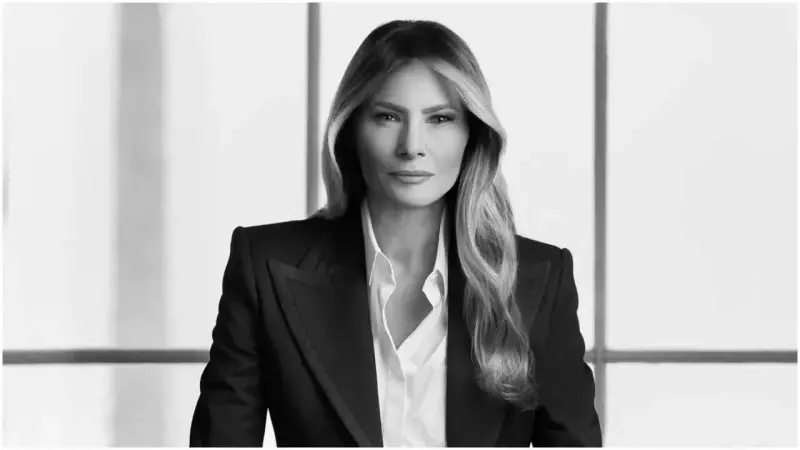
Amazon MGM Studios' authorized documentary about former First Lady Melania Trump has encountered a spectacularly disappointing reception in United Kingdom cinemas this week, with ticket sales described as alarmingly "soft" despite the streaming giant's substantial financial investment and marketing efforts.
Massive Investment Meets Minimal Audience Interest
The film, for which Amazon reportedly paid $40 million (£30 million) to acquire rights—including a significant payment to Melania Trump herself—has been accompanied by an aggressive $35 million global marketing campaign. This substantial promotional push has primarily focused on the United States market, featuring television advertisements, billboard placements, and even a complete takeover of Las Vegas's renowned immersive venue, The Sphere.
However, this considerable expenditure has failed to translate into audience enthusiasm across the Atlantic. At the flagship Islington branch in London, a mere single ticket was sold for the initial 3:10 PM screening on Friday, with only two additional bookings for the 6:00 PM showing. The situation proved equally bleak at other locations, with all seats remaining available for twenty-eight scheduled screenings at Blackburn, Castleford, and Hamilton branches.

Scattered Patrons Amid Widespread Empty Seats
A slightly better—though still dismal—picture emerged at London's Wandsworth Cineworld, where four tickets had been purchased, while the Broughton location reported five bookings for back-row seats. These numbers represent a startling contrast to Amazon's apparent expectations of a blockbuster performance for the documentary.
Tim Richards, founder and CEO of Vue International, revealed to The Telegraph that his company received numerous critical emails from the public regarding their decision to screen the film. Richards defended the exhibition choice, stating, "I have told everyone that, regardless of how we feel about the movie, if it is BBFC [British Board of Film Classification] approved we look at them and 99% of the time we will show it. We do not play judge and jury to censor movies."
Documentary Content and Controversial Premiere
The film chronicles the twenty-day period preceding Donald Trump's return to presidential power in January 2025. It received a special screening at the White House last Saturday and was scheduled for an official premiere at Washington's Kennedy Center—recently renamed the Trump-Kennedy Center through a legally disputed executive order—on Thursday before its simultaneous release across twenty-seven countries.
Social Media Erupts in Mockery Over Financial Disaster
The combination of enormous budget and minuscule ticket sales ignited widespread ridicule across social media platforms. One X user commented, "I'm sorry, this is hilarious! The UK premiere of Melania's film has sales being described as 'soft'? Trump will just lie about it being a sell-out, of course he does! Who frankly would go and see such a thing?"
Another user sarcastically congratulated Amazon "on getting Amazon to waste $30+ million to market this garbage to empty theaters." A particularly scathing post declared, "Melania the Movie is a disaster for Amazon and embarrassing AF for Melania and Trump. $5 million opening weekend. They paid her $40 million and another $35 million to get it into 1,400 theaters across 27 countries. That's an average of $3,571 for each theater. FAILURE!"
The most hyperbolic reaction came from a user who wrote, "I'm laughing so loud I scared my dog and I almost pissed my pants! They spent over 35 million dollars on marketing the Melania Trump movie in England and it resulted in one ticket sold? One ticket?"
This public relations and financial debacle highlights the significant challenges of translating politically charged content into commercial success, particularly in international markets where subject matter may generate more controversy than genuine audience interest.