

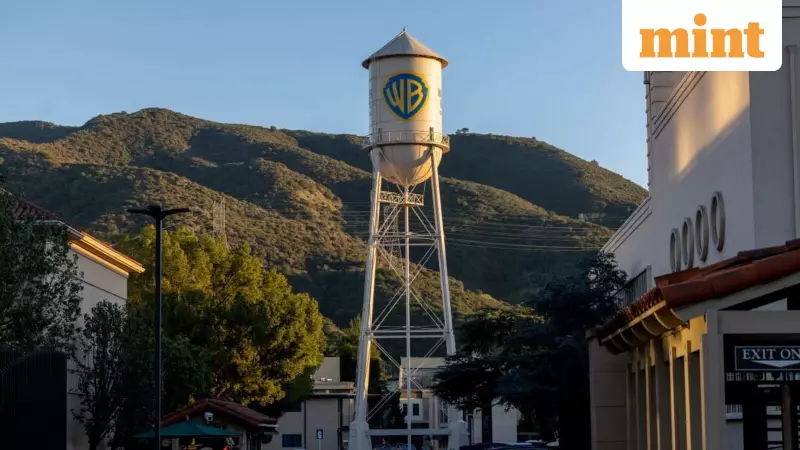
The year 2025 is ending with a seismic bang for the global media and entertainment industry, marked by colossal takeover battles and strategic breakups. The fight for control of Warner Bros. Discovery stands as the headline event, but it is merely the tip of the iceberg in a year of profound transformation. As consumers permanently shift from traditional TV to streaming platforms, giants are scrambling for scale, content, and survival.
The Epic Battle for Warner Bros. Discovery
The biggest media story of the year erupted in December when streaming behemoth Netflix announced an agreement to acquire Warner Bros.’ studio and streaming businesses for $27.75 per share. This values the deal at approximately $72 billion, with Netflix also assuming nearly $11 billion in debt and planning to borrow around $50 billion to fund the cash portion.
However, Netflix is not without a formidable challenger. Paramount, backed by Skydance Media, has made a rival all-cash offer of $30 per share for the entire Warner Bros. entity, including its cable networks. Paramount's CEO, David Ellison, is leveraging significant financial muscle, with his billionaire father, Larry Ellison, providing an irrevocable personal guarantee of $40.4 billion for the equity financing.

Analysts see this fierce competition as a sign of deeper industry anxieties. Pivotal Research Group's Jeffrey Wlodarczak suggested the expensive Netflix bid highlights management's fear that short-form content from platforms like TikTok and YouTube is now disrupting streaming, just as streaming once disrupted linear TV. For Paramount, the drive is about achieving essential scale to compete with giants like Netflix, Amazon Prime Video, and Disney.
The regulatory path is a key battleground. Paramount argues its offer would face easier antitrust scrutiny than Netflix's, given Netflix's dominant position in streaming. The outcome, requiring shareholder and regulatory approval, will redefine the competitive landscape. If Netflix succeeds, analysts like Gimme Credit's Dave Novosel warn that Paramount will be forced to seek other acquisition targets to remain viable.
Corporate Breakups and the Linear TV Dilemma
Parallel to the merger frenzy, legacy media companies are actively splitting themselves apart to navigate the new era. Even before Netflix's bid, Warner Bros. had planned to separate into two public companies: one for its studios and HBO Max, and another for its cable channels like TNT and Discovery. Netflix's offer specifically excludes these cable assets, which would be spun off as a separate entity named Discovery Global.
Similarly, Comcast announced in November 2024 it would spin off NBCUniversal's cable networks into a new publicly traded company, Versant Media Group, whose shares are expected to begin regular trading on January 5, 2026. While companies acknowledge the continued importance of pay-TV for live sports and news, these moves signal a strategic pivot away from the declining linear TV model.
The New Frontiers: Live Sports, AI, and Exclusive Content
With the streaming market crowded, attracting and retaining subscribers requires blockbuster, exclusive content. The current holy grail is live sports, one of the last bastions of traditional TV. Major players are investing heavily: Disney just launched a new ESPN streaming platform, Netflix is hosting NFL Christmas games and MLB's 2026 Opening Night, while Amazon Prime Video and Peacock stream weekly football matches.
Artificial intelligence is emerging as a critical new frontier for content creation and engagement. In a landmark move, Disney and OpenAI announced a three-year licensing deal on December 11. OpenAI's generative-AI video app, Sora, will be able to incorporate Disney characters into user-generated videos, with the best fan-made content streaming on Disney+. This partnership, noted by SuRo Capital's Evan Schlossman, could set a precedent for similar AI-content deals across the industry.

Other major live events are also switching streams, exemplified by the Oscars moving to YouTube from Disney's ABC in 2029. These shifts underscore the relentless pressure on traditional broadcast models.
As the curtain falls on 2025, the media industry stands at a historic crossroads. The battle for Warner Bros., the wave of corporate splits, and the race for sports and AI-driven content are not isolated events but interconnected symptoms of a sector undergoing violent, necessary change. The decisions made in the coming months will determine which giants thrive and which are consigned to the past.
