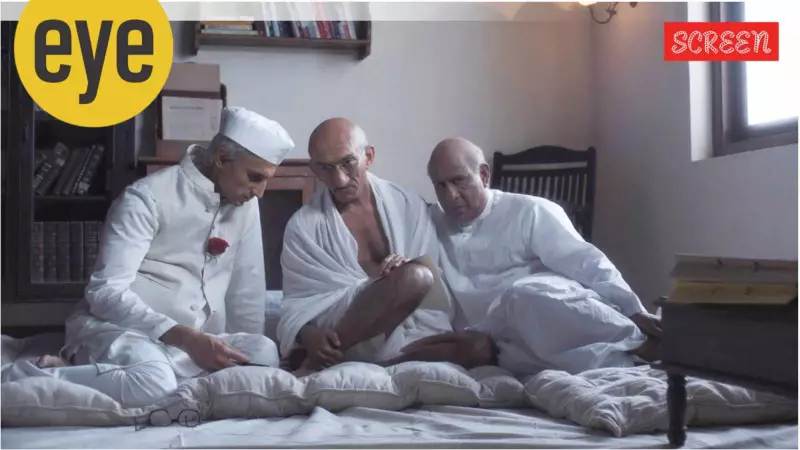
Renowned filmmaker Nikkhil Advani, who began his cinematic journey assisting legends of Indian arthouse cinema, has carved a distinct niche for himself. From his directorial debut with the blockbuster Kal Ho Naa Ho in 2003 to helming the ambitious historical series Freedom at Midnight, Advani has consistently demonstrated a mastery over large-scale projects. In an exclusive interview, he delves into the intricacies of creating the acclaimed SonyLIV series, the evolving landscape of filmmaking, and the indispensable 'X-Factor' required for success today.
Crafting a Seamless Historical Narrative
The second season of Freedom at Midnight, released on January 9, 2026, continues the gripping saga of India's Partition and the violent aftermath of independence. Advani reveals that the seamless narrative, which picks up directly from the first season, was a result of meticulous planning. The entire season was shot in an integrated manner, with scenes from different episodes filmed back-to-back on the same sets to maintain consistency and efficiency.
"You can’t create a seamless narrative unless you shoot it together," Advani stated. He emphasized the extensive preparation involved, including rehearsals, workshops, and complete readings of all 14 episodes with the cast and crew before filming began. This rigorous process ensured a unified vision for the massive project.

Beyond the Book: Incorporating Multiple Perspectives
While the series is an adaptation of the iconic book Freedom at Midnight by Larry Collins and Dominique Lapierre, Advani and his team of six screenwriters ventured beyond its pages. The writers—Abhinandan Gupta, Gundeep Kaur, Adwitiya Kareng Das, Divy Nidhi Sharma, Revanta Sarabhai, and Ethan Taylor—conducted deep research to present a balanced view.
"We realised that there are certain things mentioned in [the book] that might be questionable today and that might be only one person’s perspective," Advani explained. The goal was to create scenes that accounted for multiple viewpoints and contemporary historical understanding, transporting the audience into the rooms where Gandhi, Nehru, Sardar Patel, and Mountbatten made fateful decisions amidst chaos.
Advani's brief to the writers was clear: he wanted impactful, Salim-Javed style dialogues that would resonate with Indian audiences. He credited the talented cast, including Rajendra Chawla, Sidhant Gupta, Arif Zakaria, and Chirag Vora, for bringing these words to life, making his directorial role a joyful experience.
The Fearless Path Forward for Filmmakers
Reflecting on his own career, which saw the commercial disappointment of films like Hero and Katti Batti, Advani said it led him to a place where he felt he had "nothing to lose." This fearlessness propelled him to produce hits like Airlift (2016) and direct projects like P.O.W. – Bandi Yuddh Ke and Batla House (2019).
His advice to aspiring filmmakers is unequivocal: "They have to be fearless and disruptors." He stressed that in the current content-saturated environment, every project needs an 'X-Factor'—be it in subject choice, actor presentation, or creative collaborations—to attract an audience. "Otherwise, it is going to be tough for you to be able to get the right people to watch what you are making, no matter how good it is," he concluded.
Currently, Advani is wrapping up The Revolutionaries, a new series based on Sanjeev Sanyal's book which tells the audacious stories of young Indian revolutionaries engaged in armed resistance against the British before Gandhi's arrival. He also confirmed plans to return to the rom-com genre the following year.