

Peaky Blinders Returns to Spotlight with New Netflix Film and Upcoming Sequel Series
The iconic world of Peaky Blinders has dramatically returned to the cultural forefront with the recent Netflix release of Peaky Blinders: The Immortal Man and the exciting announcement of a brand-new sequel series currently in development for a projected 2027 premiere. This dual resurgence has reignited intense public fascination with the Shelby family saga while simultaneously reviving a persistent question that has shadowed the franchise since its inception: how much of Peaky Blinders reflects actual historical reality, and how much represents masterful television fabrication? The definitive answer, as revealed through extensive historical analysis, occupies a fascinating middle ground where genuine historical elements blend seamlessly with creative narrative construction.
The Evolving World of Peaky Blinders: From Birmingham Streets to Global Stage
The original television series meticulously chronicled the rise of Tommy Shelby, portrayed with unforgettable intensity by Cillian Murphy, as a traumatized First World War veteran who methodically builds a formidable criminal empire in the gritty, post-war landscape of Birmingham. Across six compelling seasons, the narrative ambitiously expanded from localized street-level betting operations into sophisticated political manipulation, complex international dealings, and direct confrontations with the rising tide of European fascism.
The newly released 2026 film, Peaky Blinders: The Immortal Man, strategically advances this timeline into the tumultuous period of the Second World War. This cinematic chapter presents an older, more withdrawn Tommy Shelby living in deliberate isolation as the devastating Blitz relentlessly reshapes Britain. The central conflict evolves beyond mere territorial control or business dominance into a profound exploration of legacy and consequence. His son Duke's increasing involvement in the family enterprise forcibly draws Tommy back into dangerous waters, pitting him against new existential threats—including sinister Nazi-linked forces—while compelling him to confront the far-reaching repercussions of his past decisions.

This significant narrative transition powerfully illustrates how the Peaky Blinders universe itself has matured and transformed. What originated as a gritty, localized crime drama has organically expanded into a broader, more symbolic epic that stretches across decades and monumental historical moments. The planned sequel series, envisioned by creator Steven Knight and set in the transformative 1950s, promises to continue this ambitious trajectory by shifting focus to a new generation of Shelbys rather than retreading Tommy's original ascent.
The Historical Reality: Who Were the Real Peaky Blinders?
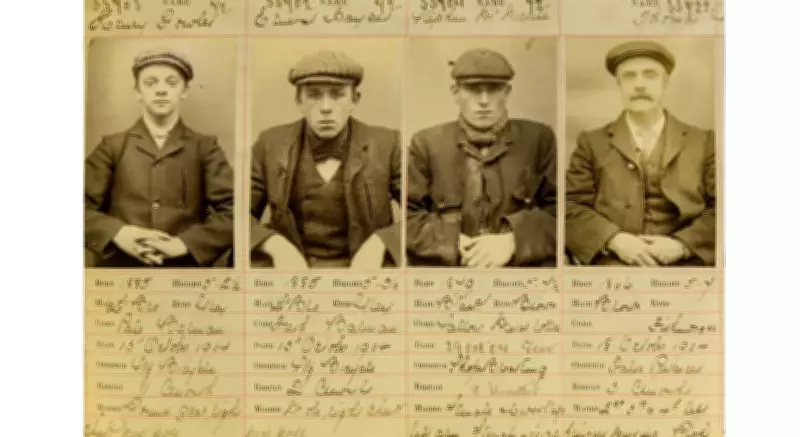
Contrary to the television portrayal, the authentic Peaky Blinders were neither a single, cohesive family unit nor a centrally organized criminal syndicate. The name historically referred to a loose collection of disparate street gangs that operated primarily within Birmingham's working-class districts—such as Bordesley and Small Heath—during the late 19th and very early 20th centuries. These were fundamentally neighborhood-based groups shaped overwhelmingly by harsh local socioeconomic conditions rather than any overarching hierarchical structure or visionary leadership.
Most members were remarkably young, typically teenagers or men in their early twenties, emerging from environments characterized by severe overcrowding, entrenched poverty, and severely limited opportunities. Their criminal activities directly mirrored this bleak reality. They engaged primarily in street-level violence, territorial fights with rival groups, petty theft, local intimidation, and small-scale gambling scams. These were not coordinated, city-wide operations but rather localized, often opportunistic acts with inherently limited scope and ambition.

Historical evidence conclusively shows that these original gangs never operated anything resembling the structured, hierarchical organization depicted in the television series. They did not control extensive betting networks, orchestrate sophisticated protection rackets, or maintain long-term criminal enterprises extending beyond their immediate geographical confines. By the 1920s, more organized groups like the Birmingham Boys had already superseded them, with later dominance in organized crime—particularly around racecourses—shifting to formidable outfits like the Sabini gang.
Style and Identity: Where the Series Aligns with History
The television series achieves greater historical accuracy in its depiction of how these men presented themselves to the world. The genuine Peaky Blinders were famously noted for their distinctive appearance, which forms a crucial part of their enduring historical identity. They dressed in a manner that deliberately set them apart—wearing tailored jackets, sharp waistcoats, distinctive bell-bottom trousers, elegant silk scarves, and practical steel-capped boots. Their iconic peaked caps, worn at a characteristic angle, became their definitive sartorial signature.
The name itself is widely understood to derive directly from this unique style: "Peaky" referencing the caps, and "Blinder" being authentic Birmingham slang describing someone strikingly or impeccably dressed. Their clothing was never incidental; it represented a deliberate assertion of identity and hard-won status within an environment where both were otherwise severely constrained.
However, one of the show's most persistent visual motifs—the idea that razor blades were sewn into those caps—lacks historical foundation. Esteemed historian Carl Chinn has addressed this directly, noting that razor blades only began circulating in the 1890s as relative luxury items. He emphasized that embedding blades into soft cap fabric would have been both impractical and unlikely for street gangs, as it would not provide the control or force required in actual combat. This dramatic image, he suggests, belongs more to later myth-making than to period reality.
Characters: Separating Historical Figures from Fictional Creations
The central Shelby family—Tommy, Arthur, John, and Polly—unfortunately does not exist within the historical record. They are compelling fictional constructions developed specifically for Peaky Blinders, though certain elements of their world draw inspiration from real accounts. Creator Steven Knight has revealed that the concept originated partly from childhood stories told by his parents about Birmingham, including relatives connected to the Sheldon family, who were involved in illegal horse-betting operations during a period when such activities were prohibited.
Around this fictional core, the series strategically incorporates numerous authentic historical figures who played significant roles in British organized crime or politics during the late 19th and early 20th centuries:
- Billy Kimber: Portrayed as a major rival to the Shelbys, Kimber was genuinely one of England's most powerful crime bosses, leading the dominant Birmingham Boys in racecourse betting and protection rackets. Unlike his televised demise, the historical Kimber died after a prolonged illness.
- Alfred Solomon: The real-life inspiration for Alfie Solomons, Solomon was indeed involved in criminal activities connected to racecourses and protection networks, though the television character is heavily dramatized.
- Darby Sabini: Depicted as another formidable rival, Sabini was an authentic Italian-born crime boss whose Sabini gang clashed with Kimber's organization and eventually became dominant in racecourse betting.
- Oswald and Diana Mosley: Oswald Mosley founded the British Union of Fascists and was interned during WWII as a national security threat. His wife Diana, from an aristocratic family, shared his views and was considered by authorities an even greater security risk.
- Winston Churchill: The series incorporates the iconic statesman at various stages of his political career, accurately reflecting his central role in British politics and WWII leadership.
While these individuals are drawn from authentic history, the series creatively places them into direct, sustained interaction with the fictional Shelby family. In reality, no historical evidence suggests these figures intersected in the manner presented. Their timelines, relationships, and conflicts are artfully rearranged and condensed to serve a unified narrative, bringing together personalities who operated in overlapping but not necessarily interconnected worlds.
Crime and Scale: The Most Significant Historical Departure
The television series' most substantial deviation from historical fact lies in its portrayal of criminal scale and sophistication. In Peaky Blinders, the organization is depicted as a highly structured, rapidly expanding criminal enterprise moving systematically into illegal betting networks, protection rackets, political influence, and even international dealings.
No historical basis supports this level of organization or reach. The authentic Peaky Blinders remained fundamentally local and fragmented. Their activities never extended into national networks or sustained enterprises, and they exercised no meaningful influence across industries or political structures. Their presence was tightly confined to specific Birmingham neighborhoods and limited forms of street crime. As organized crime in Britain evolved into more structured systems—particularly around racecourses and betting—it was other, more organized groups that achieved dominance, not the original Peaky Blinders.
Conclusion: Where History Ends and Television Begins
What the Peaky Blinders series authentically draws from history is specific and identifiable: the existence of Birmingham street gangs, their distinctive sartorial style, the presence of figures like Billy Kimber, and the harsh social conditions that shaped those environments. Beyond these elements, the central narrative pillars—the Shelby family dynasty, their sustained rise to power, the expansive scale of their operations, and their longevity into later decades—are masterfully constructed for dramatic television.
The series brilliantly assembles real names, authentic locations, and genuine historical fragments, then artfully arranges them into a continuous, compelling narrative that never existed in that precise form. This delicate balance between historical inspiration and creative liberty explains both the show's powerful authenticity and its enduring dramatic impact, ensuring the Peaky Blinders legacy continues to captivate audiences as it enters its exciting new chapter on Netflix and beyond.
