

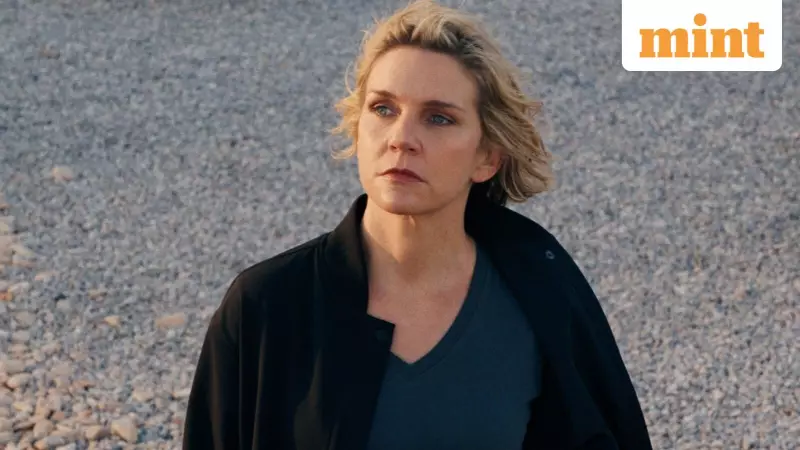
Imagine a world without war, crime, or scarcity. A planet where humanity operates as a single, efficient entity, sharing resources and knowledge in perfect harmony. This is the compelling yet chilling premise of Pluribus, the sensational new drama on Apple TV+ from Vince Gilligan, the visionary creator behind Breaking Bad and Better Call Saul. But as the series masterfully reveals, this utopia comes at a profound cost: the complete loss of individual free will and the terrifying homogenisation of human experience.
A World Where Everyone Knows Your Secrets
The show presents a stark reality where aliens have linked nearly every human into a global hive-mind. In this collective consciousness, personal secrets cease to exist, and individual taste is a relic of the past. The series poses a disturbing question: what is the value of art and individuality in a world where a romance novelist is considered just as accomplished as William Shakespeare because they serve the same functional purpose for the megabrain? This concept forms the core philosophical terror of Pluribus, making the viewer question whether such peace is worth the price of a uniform, predictable existence.
The Unlikely Protagonist: Carol Sturka's Lonely Rebellion
At the heart of the story is Carol Sturka, played with brilliant, bristling intensity by Rhea Seehorn. She is one of the last dozen or so "weirdos"—humans who remain outside the collective. While the world enjoys tranquil unity, Carol chooses a life of defiant solitude. She can take any car, go anywhere, living in an open-world reality she refuses to enjoy. Gilligan and Seehorn intentionally craft Carol as an unlikeable, bitter spoilsport, forcing audiences to ponder her choices rather than blindly root for her. What would you do if your neighbour, your partner, and the Prime Minister were essentially the same person? Carol's journey is a slow-burn exploration of this impossible quandary.

Her interactions with the hive-mind are fraught with unease. Playing a board game against an opponent who knows every move is, as she gripes, "like playing cards with fucking Google." This evokes classic existential confrontations, reminiscent of a chess match against Death itself. Meanwhile, other survivors cope in contrasting ways. Koumba Diabaté (Samba Schutte) surrounds himself with beauty and orchestrates elaborate 007-style scenarios for his amusement using hive-minded people as actors.
The Extremes of Resistance: Manousos's Militant Mistrust
If Carol's resistance is pragmatic, another survivor takes it to a militant extreme. Manousos Oviedo, portrayed superbly by Carlos-Manuel Vesga, represents absolute non-compliance. While Carol rationalises using hive-mind resources to reopen her grocery store or even borrow a priceless Georgia O'Keeffe painting, Manousos rejects their sustenance entirely. He survives on canned food from old storage lockers, meticulously keeping an account he intends to repay—a meaningless gesture in a world that wants nothing back. His journey, including learning English while traversing a lethal forest, highlights a different, more austere form of human endurance.
Gilligan's storytelling is sharper than ever, unfolding this unfamiliar apocalypse with novelistic confidence. The series conceptually echoes shows like Damon Lindelof's Mrs. Davis and The Leftovers, yet carves its own distinct identity. The drama simmers in moments where seemingly nothing happens, building profound tension around the simple act of maintaining one's self in a world of drones.
A Cast of Stellar Performances
Rhea Seehorn delivers an extraordinary performance, rendering Carol's malcontent both understandable and frustrating. A scene where she gasps in horror at a discovered secret is bone-chilling. Her small triumphs, like out-howling a pack of wolves, feel genuinely contagious. The supporting cast is equally strong. Karolyna Wydra is excellent as Zosia, the hive-mind interface assigned to Carol because she resembles the pirate hero on Carol's book covers, adding a layer of poignant manipulation to their interactions.

In a world she could command, Carol's insistence on digging ditches, buying groceries, and taking out her own trash becomes a radical act of self-definition. Pluribus provocatively asks if maintaining your own mundane chores, in a world of extras, is the ultimate expression of Main Character Energy. It's a challenging, thought-provoking series that lingers long after the episode ends, compelling us to question the very pillars of our individuality and freedom.
Streaming Tip Of The Week: The theme of being the main character in a fabricated world was brilliantly explored in Peter Weir's The Truman Show (Netflix), starring Jim Carrey as a man whose entire life is an unbeknownst television show—an essential watch for fans of existential sci-fi.
