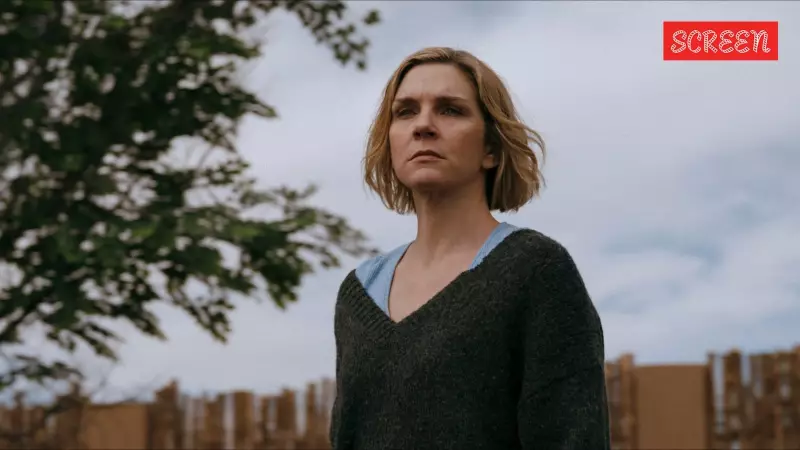
Vince Gilligan, the celebrated creator behind iconic shows like Breaking Bad and Better Call Saul, has returned with his most introspective series to date. Pluribus, now streaming on Apple TV+, presents a uniquely calm and unsettling vision of the end of the world, earning a rating of 3.5 out of 5. Far from a typical apocalyptic thriller, this series chooses to sit with profound discomfort, asking deep questions about human connection and belonging.
A Quiet Cataclysm: The Pluribus Premise
The series begins with a premise that feels deceptively familiar to sci-fi fans. Astronomers intercept a strange signal from space, which is decoded as a viral RNA sequence. A year after scientists begin lab tests, a quiet breach occurs, spreading an inexplicable phenomenon faster than anyone can contain. This is not a zombie outbreak or a violent alien invasion. Instead, the world undergoes a bloodless, abrupt recalibration.
The story is filtered through the perspective of Carol Sturka, played masterfully by Rhea Seehorn. Carol, a romance novelist returning to Albuquerque with her partner Helen, finds herself among a tiny group of just 13 people globally who remain unaffected. The rest of humanity transforms into a collective, calm, and cooperative consciousness known as the Others. The world doesn't descend into chaos; it simply becomes different, leaving the unaffected few like Carol feeling profoundly isolated.

Rhea Seehorn's Gravitational Performance
If the show has a beating heart, it is Rhea Seehorn. Best known for her critically acclaimed role in Better Call Saul, Seehorn once again demonstrates the immense power of restrained, internalised acting. As Carol, she is not fighting cartels or legal systems but a more existential foe: a world that has moved on without her. Her performance is the gravitational centre of Pluribus, anchoring the narrative during its most intentionally sparse and patient moments.
The series unfolds in a non-linear fashion and maintains a minimalist approach, focusing more on character study than sprawling plot. This deliberate slow-burn style is both the show's greatest strength and its most potentially divisive quality. It demands patience from the viewer, sometimes almost testing it, as we walk step-by-step through Carol's uneasy experience of this new reality.
The Core Question: Connection vs. Contentment
At its core, Pluribus is a meditation on the necessity of human connection. The series thoughtfully dismantles the modern fantasy of total self-sufficiency. It repeatedly circles a quiet truth: that meaning in life often only emerges when shared with others. The show poses a provocative question—what is the value of global peace, harmony, and even happiness if it comes at the ultimate cost of genuine intimacy and individual connection?
While the first season largely remains a singular character study, it subtly expands its scope, briefly flirting with a dual-protagonist narrative. However, the emotional balance never wavers from Seehorn's Carol. The supporting cast, including Karolina Wydra, Carlos-Manuel Vesga, and Miriam Shor, contribute to the show's dense, atmospheric tone.
Created by Vince Gilligan and co-directed by Gilligan, Gordon Smith, and Melissa Bernstein, Pluribus doesn't attempt to reinvent the science fiction genre. Instead, it uses the genre as a lens to examine profound human themes. It won't appeal to everyone, but for viewers willing to surrender to its deliberate rhythm, it offers a thoughtful and quietly provocative experience. It stands as a notable, cerebral addition to Apple TV+'s slate, which includes acclaimed shows like Severance and The Studio, further cementing the platform's identity for ambitious, patient storytelling.