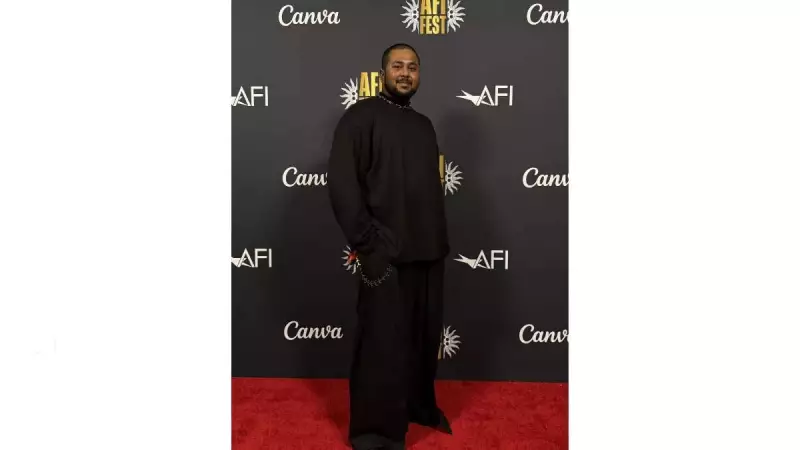
The Expanding Universe of Production Design
The role of the production designer has undergone a quiet but profound transformation, extending far beyond the traditional confines of cinema. In today's fragmented media ecosystem, where narratives flow seamlessly between film, television, advertising campaigns, live performances, and mobile-first platforms, designers must now cultivate a versatile mindset that transcends formats, cultural contexts, and evolving audience viewing habits.
A Career Forged in Global Movement
Among the creative professionals navigating this dynamic shift is Oscar O'Neill Shahapurkar, a Los Angeles-based production designer and art director whose career trajectory perfectly mirrors the changing grammar of contemporary visual storytelling. Originally hailing from Mumbai, Oscar O'Neill represents a generation of designers molded by international mobility and hybrid educational backgrounds.
His foundational training in production design at a premier Indian institute for film, communication, and creative arts was complemented by early professional immersion in the high-pressure world of large-scale Indian television. Working on reality and competition shows that operate under relentless deadlines and intense public scrutiny provided a practical, real-world education. These environments, characterized by immense scale and immediacy, taught him that design decisions carry direct logistical weight and narrative consequences.

From Practical Foundations to Narrative Depth
The decision to pursue advanced studies in the United States marked a pivotal turn towards a more research-intensive and narrative-centric approach to design. At the prestigious American Film Institute in Los Angeles, where he earned a Master of Fine Arts in Production Design, the discipline is rigorously treated as an integral extension of storytelling itself, not merely as visual decoration.
This academic philosophy emphasizes architecture, historical authenticity, and character psychology as the core pillars of design choices. It trains designers to think critically about how constructed environments actively shape and convey narrative meaning, embedding story within space.
Mastering the Spectrum of Modern Media
Since establishing himself in the U.S. industry, Oscar O'Neill has accumulated experience across the diverse formats that define today's media consumption. His portfolio includes work on prestige television projects, where he operated within large, union-regulated art departments. In these settings, production design prioritizes subtlety, continuity, and realism—serving long-form character arcs and plot development without drawing overt attention to itself. The goal is narrative credibility sustained over multiple episodes.
Beyond scripted television, his expertise extends into international commercial campaigns and documentary-style branded content. These projects demand a different kind of creative restraint, where environments must authentically support real-world brand identities and narratives without overwhelming the core message. Here, the designer's role evolves into one of sophisticated contextual framing.
Designing for Live Experience and Mobile-First Stories
Live events constitute another vital strand of his practice. Designing for music performances featuring globally renowned artists requires innovative spatial thinking that accommodates monumental scale, dynamic performance energy, and direct audience engagement. Unlike the controlled environment of film, live design must function flawlessly in real time, merging principles of architecture, stagecraft, and immersive storytelling.
One of the more forward-looking aspects of Oscar O'Neill's career is his early and extensive engagement with vertically formatted narrative series—content engineered specifically for mobile-first, social media consumption. This vertical storytelling paradigm actively challenges classical cinematic composition, constraining horizontal space and necessitating fresh approaches to blocking, depth, and spatial hierarchy.
His work as an art director on projects like The Road Between Us, a vertically oriented series from Miramax-affiliated GammaTime, positioned him at the forefront of this format's adoption, showcasing an adaptability crucial for modern design careers.

Translating Culture Through Design
His narrative short film work further highlights the cultural dimension of his practice. In The Apple Picker's Son, Oscar O'Neill served as production designer on a project that required evoking the emotional and visual essence of Kashmir within Los Angeles. Moving beyond literal replication, the design focused on conveying themes of memory and displacement through meticulous attention to texture, color palettes, and spatial composition. This project demonstrated the powerful capacity of production design to translate cultural specificity across geographical boundaries—a skill of increasing importance in globalized filmmaking.
The Future is Adaptability
What truly distinguishes Oscar O'Neill Shahapurkar's professional journey is not a single, rigid visual style, but rather a remarkable ability to fluidly move between vastly different formats while consistently serving the core narrative intent. This flexibility epitomizes a broader industry shift where designers are no longer siloed within a single medium or market.
Instead, they are increasingly operating across a platform-agnostic landscape shaped by streaming services, mobile viewing, and experiential events, often collaborating with international crews for global audiences. As storytelling continues its evolution beyond the traditional screen, designers like Oscar O'Neill represent a vanguard generation actively redefining the scope and purpose of production design. Their collective work suggests that the discipline's future lies not in isolated spectacle, but in intelligent adaptability—harnessing space, culture, and context to serve stories wherever and however they are told.