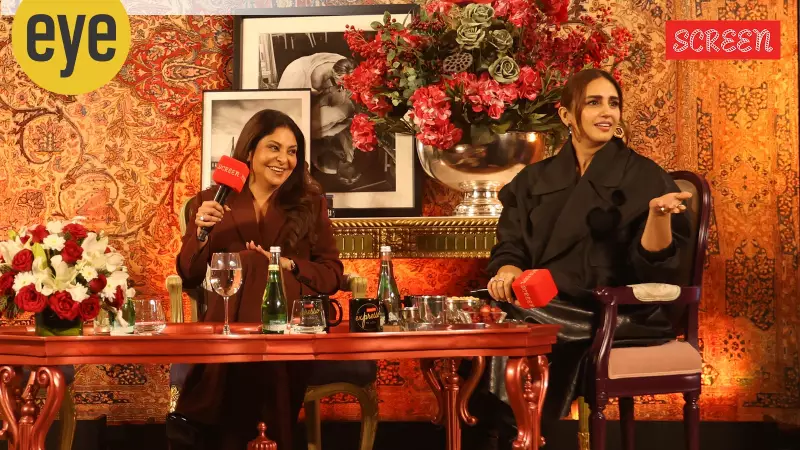
In a candid conversation at The Indian Express's Expresso, celebrated actors Shefali Shah and Huma Qureshi opened up about their latest gritty roles in the new season of Netflix's acclaimed series Delhi Crime, the seismic shift brought by OTT platforms in Indian entertainment, and their evolving perspective on criticism and creative responsibility.
Embracing Dark Roles and Changing Narratives
Shefali Shah, who reprises her role as the tenacious DCP Vartika Chaturvedi, revealed her immediate connection to the project. "I said yes in less than five minutes," she stated, reflecting on the initial offer from creator Richie Mehta. The actor was deeply moved by the real-life story of former DCP Chhaya Sharma, who cracked the infamous 2012 Nirbhaya case. "When the Nirbhaya case happened, we all asked why no one was doing anything. This script showed me there was someone doing something—and it was a woman. To step into those shoes has been overwhelming and humbling."
For Huma Qureshi, joining the franchise meant a stark departure. A fan of the first season, she initially thought she was being offered a cop's role. Instead, she was pitched the part of a ruthless human trafficker. "The script was really dark," Qureshi admitted. She saw it as a challenge to break away from being boxed in. "You never see women as gangsters; only the hot girl standing behind a goon. I thought it would be nice to just play the baddie for a change." She described crafting her character's chilling lullaby, "Lado Rani," as a perverse twist on a nursery rhyme, meant to comfort children in a terrifying context.

The OTT Revolution and New Creative Freedom
The discussion naturally turned to the transformative impact of streaming services. Huma Qureshi credited her experience on Netflix's Leila, co-directed by Deepa Mehta, as a turning point. "For the first time, there was somebody who told me that I didn't need a hero. I could be the hero. I didn't need to wear make-up to look beautiful. She made me feel like I was enough," Qureshi shared, highlighting how OTT platforms have enabled more complex, female-forward storytelling.
Shefali Shah agreed, noting that while the theatrical experience is an irreplaceable Indian cultural staple, OTT has democratized content. "In the '60s-'70s, many films featured women as accessories. OTT platforms changed that. They started giving full-fledged roles, telling stories you may not have heard, which may not conventionally fit the box office," Shah observed. She believes, however, that a balance is emerging, with character-driven stories now also finding space in cinemas.
On Production, Direction, and the Weight of Reviews
Both actors are expanding their horizons behind the camera. Shefali Shah serves as an executive producer on Delhi Crime and expressed a strong desire to direct. She framed this ambition as a duty, stating a powerful personal ethos: "I have the privilege of a mic and a camera, and if I don't use it to change the narrative, to at least a small extent, it would be really unfair." She added a note of caution, acknowledging the immense hard work and investment involved in filmmaking.
When asked about handling critiques, the actors revealed seasoned perspectives. Huma Qureshi recalled how the first season of her show Maharani was panned by English media, yet found staggering audience success, leading to multiple seasons. "Eventually, whether it is a series or a film, the audience is the ultimate metric," she concluded.
Shefali Shah shared her journey from being deeply affected by any negative feedback to adopting a more balanced view. "Honestly, art is subjective. Somebody may love it, somebody may not. I've seen 98 good reviews and two not-good reviews, so I know where it stands," she said, emphasizing the importance of trusting one's own gauge of a project's worth.
The conversation, moderated by film critic Shubhra Gupta, offered a compelling glimpse into the minds of two actors at the forefront of India's changing entertainment landscape, who are consciously using their platforms to champion powerful stories and nuanced roles for women.