Sonu Sood Advocates for Digital Restrictions for Minors After Ghaziabad Tragedy
The growing influence of social media and digital platforms in the lives of children has sparked significant worries regarding their effects on behavior, emotional development, and psychological well-being. Excessive screen time during formative years frequently reduces opportunities for in-person interactions, diminishes family connections, and impairs concentration, emotional maturity, and communication abilities.
Ghaziabad Incident Reignites Debate on Digital Dangers
The discussion gained urgency after three minor sisters died by jumping from the ninth floor of their residential building in Ghaziabad late on Tuesday night. This heartbreaking event has revived conversations about online gaming addiction, social media-induced stress, and the absence of robust emotional support networks for young individuals.
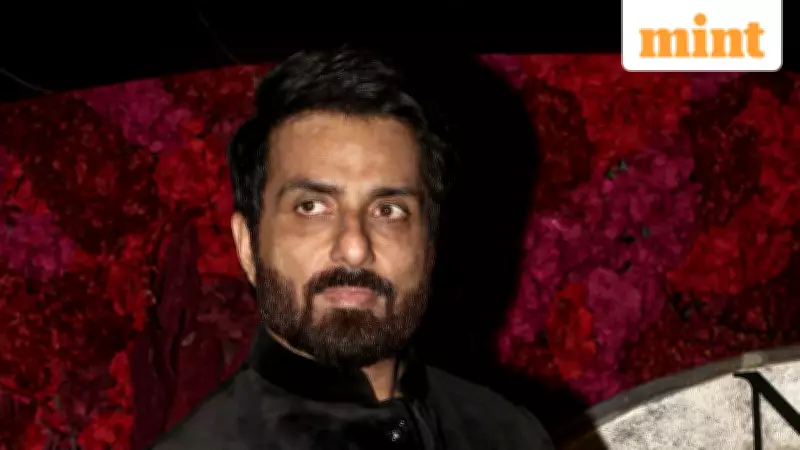
In response to the tragedy, actor Sonu Sood expressed profound concern over the unregulated use of online gaming and social media by minors. He urged parents and authorities to implement stricter controls on children's access to digital environments.

Sonu Sood's Emotional Appeal for Parental Involvement
Through a video message on Instagram, Sood highlighted the hidden pressures children endure due to constant immersion in virtual spaces, compounded by insufficient emotional engagement at home. He poignantly remarked, "... three children lost their lives in Ghaziabad. These children were not defeated, they were left alone. In the world of online and social media, we have left our children so far that we cannot hear their silence."
Reiterating a previous stance, Sood emphasized that children below 16 should be protected from social media and online gaming, except for educational purposes. While acknowledging technology's role in learning, he warned against unrestricted access, stating, "Some time ago, I said that we have to keep children under 16 years of age away from the world of online and social media. But we get so busy in our lives that we forget that there is another member of our family who is our mobile phone, our social media, with whom the children want to spend more time than us."
Emphasis on Human Connection Over Digital Distractions
Sood stressed the critical importance of emotional bonds, open dialogue, and active parental participation in a child's life, asserting that digital devices cannot substitute for human support. He explained, "If we want their lives, our lives, their future, the future of our country to be better, then it is necessary to put a ban. You think that they do not need a screen, they need our support. Children do not need a mobile, they need our presence, they do not need scolding, they need our conversation."
The actor noted that hectic lifestyles often lead parents to use mobile phones as distractions for children, inadvertently reducing meaningful family interactions and emotional connections. He cautioned that while digital tools are essential for education, they should not jeopardize children's mental and emotional health, adding, "But we do not have time for them either. Because we have given them a mobile phone with social media so that they can keep reading, keep watching. Technology is necessary for education, but it does not mean that we are putting the lives of our children at risk for that technology."
Call for Legislative Action and Collective Responsibility
Sood advocated for limiting mobile phone use among young children strictly to educational needs and called for shared responsibility to curb excessive digital exposure. He urged, "There should be a mobile phone for education, but not for social media, especially for children of a young age. Let's try together today to remove that member who is dividing our family. Before that, let's make a law together so that our children can live with us, not with social media, not with online gaming."
He encapsulated his message in an Instagram post caption: "Social media can wait. Childhood can't."

Details of the Ghaziabad Incident
The incident occurred around 2:15 am under the Tila Mod police limits in the Loni area of Ghaziabad. Assistant Commissioner of Police Atul Kumar Singh identified the deceased as Nishika (16), Prachi (14), and Pakhi (12), daughters of Chetan Kumar, a Ghaziabad resident. The minors were rushed to a nearby 50-bed hospital, where doctors declared them dead.
Sood also shared a post on X, stating: "Three young girls lost their lives in Ghaziabad today. Not to violence. Not to poverty. But to the unseen pressure of online gaming and digital addiction. I've raised my voice before, and I'll say it again. Social media and online gaming must be restricted for children under 16, except for education. Childhood needs guidance, not algorithms. Care, not constant screens. This isn't about blame. It's about protection, before it's too late. Let this not become another headline we forget. It's time to act."
Deputy Commissioner of Police (Trans-Hindon), Nimish Patil, indicated that preliminary findings suggest the girls were influenced by Korean culture. A suicide note recovered from their residence reportedly mentioned this influence, though it did not specify any particular game or application. He said, "From the suicide note, it is clear that the three girls were influenced by Korean culture. No particular app was named. At the time of the incident, the whole family was present in the house, but they were sleeping..."