

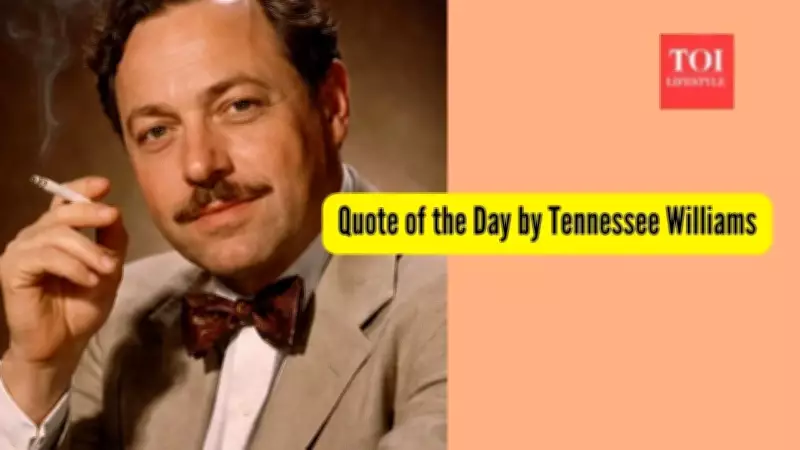
Tennessee Williams: The Life and Legacy of an American Playwriting Icon
Tennessee Williams stands as one of the most significant American playwrights of the 20th century, renowned for his emotionally intense dramas, vulnerable characters, and poetic language. His works continue to resonate deeply in theatre and literature, offering profound insights into the human condition.
Early Life and Formative Influences
Born Thomas Lanier Williams III in 1911 in Columbus, Mississippi, Williams grew up in a tumultuous household that profoundly shaped his writing. His father was frequently absent and harsh, while his mother, from a prosperous Southern family, clung to her genteel manners despite declining circumstances. A pivotal figure in his life was his sister Rose, who struggled with mental health issues and was later institutionalized. This personal trauma heavily influenced Williams, manifesting in his portrayal of fragile and psychologically complex characters throughout his career.
Career Breakthrough and Major Works
Williams' early years were marked by instability and emotional distress, especially after his family relocated to St. Louis. Feeling out of place in the industrial city, he turned to writing as an escape. He attended the University of Missouri and later graduated from the University of Iowa, where he honed his craft. After years of struggle, including odd jobs and clandestine writing, he achieved a major breakthrough in 1944 with The Glass Menagerie. This semi-autobiographical play catapulted him to fame, establishing him as a leading voice in American theatre.

Following this success, Williams produced a series of critically acclaimed plays that solidified his reputation. Notable among these are A Streetcar Named Desire (1947), Cat on a Hot Tin Roof (1955), and The Night of the Iguana (1961). These works explore themes such as desire, loneliness, repression, the clash between illusion and reality, and the erosion of traditional Southern values. His characters are often outsiders—sensitive, damaged, or misunderstood individuals navigating a harsh and unforgiving world.
Literary Style and Thematic Depth
Williams' writing is frequently described as poetic realism, blending realistic settings with poetic, symbolic, and emotionally charged language. He masterfully combined realism with expressionism, utilizing music, lighting, and detailed stage directions to convey his characters' inner states. For instance, in The Glass Menagerie, he employs memory as a structural device to create a dreamlike narrative, blurring the lines between past and present. In A Streetcar Named Desire, the character Blanche DuBois exemplifies the tension between illusion and reality, a recurring motif in his oeuvre.
A key aspect of his style is the focus on psychological complexity. Williams delved into the inner conflicts of his characters, particularly their fears, desires, and emotional vulnerabilities. Many are trapped by societal constraints, personal demons, or uncontrollable circumstances, highlighting human fragility and the ways people cope with suffering through fantasy, denial, or fleeting connections.
Addressing Taboo Subjects and Personal Insights
Williams was also notable for tackling taboo topics with directness and empathy, which was unconventional for his era. He openly addressed issues like sexuality, mental illness, and social alienation. His experiences as a gay man in a time of widespread societal condemnation deeply informed his work, providing a nuanced understanding of outsider status and the yearning for acceptance. This perspective enriched his characters, making them more authentic and compelling as they grappled with feelings of not belonging.
Later Life and Enduring Impact
Despite early triumphs, Williams faced significant challenges later in life, including depression, substance abuse, and the loss of close friends. While his later works received less acclaim, he continued to write and experiment with new styles. He passed away in 1983 in New York City, leaving behind a legacy that continues to influence theatre and literature profoundly.

Iconic Quote and Philosophical Reflection
One of Williams' most iconic quotes, from The Milk Train Doesn't Stop Here Anymore, states: “We all live in a house on fire, no fire department to call; no way out, just the upstairs window to look out of while the fire burns the house down with us trapped, locked in it.” This powerful metaphor captures a philosophical view of human existence, depicting life as precarious, fragile, and inevitably headed toward demise. The fire symbolizes time, suffering, decay, and death—inescapable forces that consume everything.
By emphasizing that there is no fire department to call, Williams underscores the absence of external salvation, reflecting existential themes of uncertainty and lack of guaranteed meaning. The idea of no way out reinforces the inevitability of fate, yet the upstairs window represents human consciousness—the ability to observe, reflect, and find moments of clarity and meaning amidst the chaos. This duality illustrates Williams' belief that while life is tragic, it also holds significance through our experiences and connections.
Ultimately, Williams' work reminds us that life's value lies not in avoiding adversity but in how we perceive and engage with the world during our fleeting time. His contributions remain a testament to the power of storytelling in exploring the depths of human emotion and resilience.
