

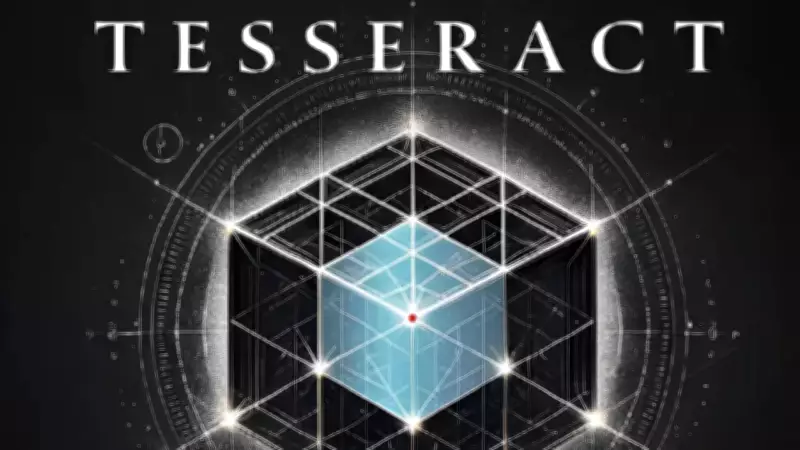
TOI's Tesseract: A Rare Theatrical Masterpiece Redefining Truth Through Art
The Times of India's magical musical production, Tesseract, stands as that rare celestial phenomenon in the cultural firmament—a star that appears only once every few decades. Unlike fleeting comets that blaze brightly before vanishing, this artistic creation continues to glow quietly long after its initial presentation, embedding itself deeply within the collective consciousness of its audience.
A Philosophical Response Through Choreography
The production opened with a powerful paradox during a week when actor Timothée Chalamet controversially declared opera and ballet as obsolete art forms that no one cares about. Rather than offering a verbal rebuttal, Tesseract responded with exquisite choreography—an elegant, assertive inclusion of ballet so breathtakingly beautiful that it felt less like contradiction and more like profound revelation.
Meera Jain's curatorial vision, perhaps unintentionally, transformed legacy from a museum artifact into a living organism, positioning ballet precisely where it belongs: flowing through the bloodstream of contemporary artistic expression. Here, art demonstrated what mere argument could never achieve.

An Immersive Journey Beyond Time
The evening's enchantment began at the very threshold, where interstellar music seemed to warp the hallway into a temporal tunnel. A gallery of archival headlines unfolded like a living prologue, whispering premonitions that audiences were entering a multidimensional theatrical experience.
Within minutes, ordinary time measurement dissolved completely. Three and a half hours evaporated with the hushed urgency of a lucid dream, enhanced by culinary delights from Indian Accent's renowned kitchens. Days of reflection followed the performance, with memories mirroring the production's own shards and reflections in the Man in the Mirror sequence.
The Double Helix of Identity and Performance
Sophia's journey and her alter ego formed a double helix of identity exploration, their oscillation so seamless that the protagonist seemed to flicker between two bodies of light and two musical intentions. This represented a quiet triumph of performance craft and directorial design that lingered not as mere effect, but as persistent after-effect—layers adhering to the mind's inner surfaces and continuously releasing new meanings.
The production felt like a transmission channeling the long arc of Meera and Samir Jain's thoughts, values, and courageous hospitality, not as signature but as pervasive atmosphere. Even during spectacular moments, what shone brightest was restraint—the discipline that makes technology serve emotion rather than smother it, that allows light to reveal rather than blind, that transforms movement into syntax rather than ornament.
Beyond Immersive Theater: A Civic Ritual
While press coverage accurately described Tesseract as immersive, interdisciplinary, and philosophical theater, it missed the deeper essence. The production functioned as the most exquisite benevolent narcotic for the soul—a satsang gathering with unmistakable vibrations where seekers aligned around questions older than nation-states yet younger than each new dawn.
The finale unfolded like Kairos's origami, each crease and fold converging until the tesseract concept revealed itself not as technical stunt but as the geometry of a truth that had been quietly forming throughout the evening. The relentless attention to detail, particularly in sections exploring beauty and art, pinned audiences with tender intensity, presenting an aria about what makes us human and why aesthetics constitute oxygen rather than indulgence.
Pioneering Stagecraft with Indian Ethos
The stagecraft represented cutting-edge technology in the only meaningful way: ideas first, electronics second. Rooted firmly in Indian ethos while speaking fluently to global audiences, Tesseract interwove journalism's archive with theater's alchemy and technology's sleight of mind. The production assembled global expertise, integrating live performance with:

- Large-scale LED environments
- Augmented reality experiences
- Sophisticated illusion design
- Sweeping sound architecture
This interdisciplinary rigor doesn't imitate international standards—it establishes them, threaded throughout with an Indic grammar of courage that recognizes truth as discipline rather than decree.
From Truth Prevailing to Truth's Geometry
The production prompted profound questions about truth itself. Perhaps the Times of India's famous motto Let Truth Prevail might evolve toward The Geometry of Truth, acknowledging that prevail becomes meaningless without examining what truth constitutes and who officiates its definition. Tesseract's exploration invites audiences to seek, question, listen, and platform polyphonies of approach and opinion, embodying the ancient wisdom: Ekaṁ sat viprā bahudhā vadanti (Truth is one, the wise call it by many names).
A Vision for Expansion and Evolution
If destiny permits a roadshow, Tesseract should tour nationally and internationally, reaching for the stars. May Act 2 blossom into Part 2, with the future of the planet chapter expanded into its own deep meditation—moving from archival intelligence (what we shorthand as artificial intelligence) toward planetary intelligence where biodiversity, species empathy, and human-animal kinship become central plotlines rather than footnotes.
Tesseract's rare inspirational ability to transform the personal into the political and then sublimate both into art explains its profound impact. The production insists that love must scale into responsibility and pain transform into purpose. As a work of language and light, it oscillates between surrealism, pop art, and Kafkaesque narratives—a composograph of cosmic intelligence whose architectonic, symbolic, haptic, and figurative elements gather into a grammar of awe.
The Human Theater of Expanding Truth
Saturated with both illusion and illumination, pulsing with transcorporeal rhythm, Tesseract recalls the oldest theater: the human body and mind convincing itself it can hold more truth today than yesterday. The concluding sprinkling of stardust, coupled with Meera Jain's opening invocation of her son and grandson, revealed the production's lineage—pregnant with poise and panache, born of nine months' gestation that feels inevitable in hindsight.
This theater-child emerged from travel, agency, care, curiosity, beauty, empathy, love, and familial imagination—not perfect but pure, not bound but beautiful, not tangible but profoundly true. Tesseract represents that rare artistic creation that doesn't merely entertain but transforms, inviting audiences to participate in the ongoing geometry of truth's revelation.
