

Childhood Curiosity Leads to Monumental Paleontological Discovery
Imagine the simple joy of a family walk along the beach turning into a moment of historic scientific significance. This is precisely what transpired for Ruby Reynolds, a young girl from England whose casual fossil hunt with her father unearthed clues to a colossal creature from the deep past.
The Fateful Day on Blue Anchor Beach
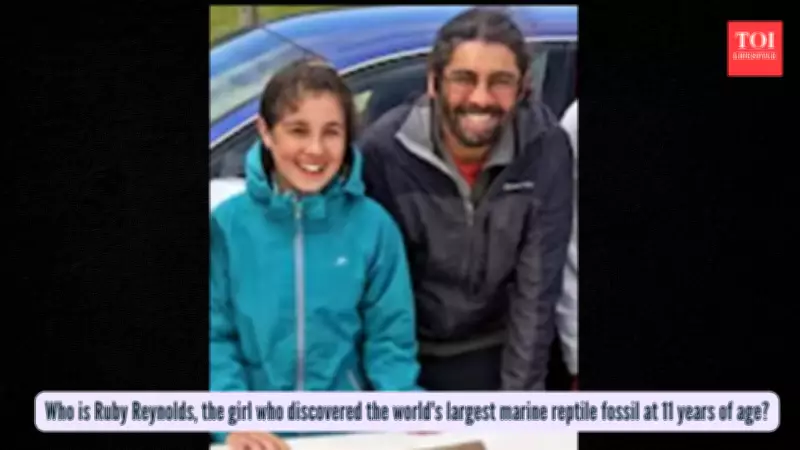
In 2020, Ruby Reynolds, then just 11 years old, was exploring Blue Anchor beach in Somerset, England, with her father, Justin. What began as a typical outing quickly transformed into an extraordinary adventure. Justin initially noticed a four-inch bone fragment, which he described as "bigger than any piece of bone I’d ever found before." However, it was Ruby who made the groundbreaking discovery: a massive jaw fragment measuring over six feet in length.
Ruby later recalled the moment with simple delight, stating, "It was just sort of lying there. I was just happy, really." The duo carefully collected the fossils and promptly handed them over to experts for further analysis.

Unraveling a Prehistoric Puzzle
Dr. Dean Lomax, a leading paleontologist, took charge of the specimens. Over time, additional fragments were pieced together, revealing the remains of a gigantic marine reptile. This meticulous work culminated in the identification of a new species, named 'Ichthyotitan severnensis,' which translates to "giant fish lizard of the Severn."
This creature dates back approximately 202 million years to the Late Triassic period. Based on the two-meter jawbone alone, scientists estimate that the ichthyosaur could have stretched between 20 to 25 meters (65 to 82 feet) in length—rivaling the size of a modern blue whale. With a dolphin-like body and air-breathing lungs, it likely hunted fish and squid in the shallow seas that once covered what is now Britain.
Justin Reynolds expressed the family's excitement, noting, "When Ruby and I found the first two pieces, we were very excited as we realised that this was something important and unusual."
From Fossil Hunter to Published Scientist
Today, Ruby Reynolds, now around 17 years old, has achieved a remarkable milestone. She co-authored the scientific study published in the journal PLOS ONE, detailing the discovery and analysis of Ichthyotitan severnensis. Reflecting on her achievement, Ruby said, "It was so cool to discover part of this gigantic ichthyosaur. I am very proud."
The fossils are set to be housed at the Bristol Museum for further research, with hopes that ongoing coastal erosion may yield additional finds. This discovery is particularly significant as it indicates that giant ichthyosaurs dominated the oceans earlier than previously thought, before their eventual disappearance during the end-Triassic extinction event.
Justin proudly summarized his daughter's accomplishment, stating, "Ruby is now a published scientist who... helped to name a type of gigantic prehistoric reptile." This finding provides a fresh perspective on the Triassic giants and underscores the profound impact of youthful curiosity combined with scientific inquiry.






