Gulkand in Ayurveda: A Seasonal Corrector, Not Just a Cooling Food
In the ancient wisdom of Ayurveda, Gulkand is not merely labeled as a "cooling food." Instead, it is revered as a seasonal correction mechanism. Summer intensifies Agni, or digestive fire, leading to heightened thirst, lighter sleep, quicker emotional responses, and increased heat in the blood. When this accumulated heat is not gently released, it can manifest as acidity, skin rashes, ulcers, irritability, or hormonal imbalances. Ayurveda addresses this not with extreme measures but with balance.
The Purpose and Preparation of Gulkand
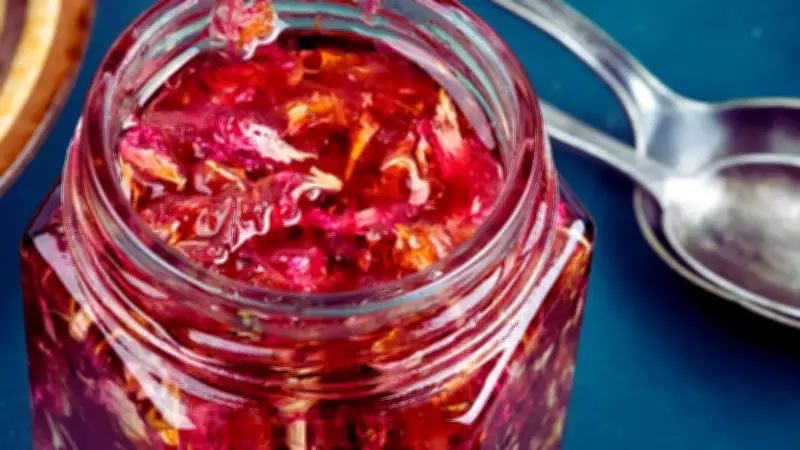
Gulkand exists precisely for this balancing act. Roses naturally possess upward and outward movements. When slowly infused under the sun, their cooling rasa (taste) becomes refined rather than raw. Gulkand does not abruptly lower body temperature; instead, it teaches the body to naturally release excess heat, particularly from the gut and blood where Pitta accumulates during summer. At an Ayurvedic level, Gulkand is classified as a Pitta-shamak dravya, traditionally used in heat-driven conditions like amlapitta (acidity), burning sensations, and excessive sweating—where cooling is required without suppression.
How Gulkand Works in the Body
This is why Gulkand is always advised in small, consistent doses and paired thoughtfully. Its sweetness nourishes, but more importantly, it stabilizes. Its sheeta virya (cooling potency) helps reduce internal heat, while its madhura rasa (sweet taste) and vipaka (post-digestive effect) pacify the sharp and fluid qualities of aggravated Pitta. It soothes dryness following heat, supports rakta dhatu (blood tissue), and calms the nervous system without dulling awareness. Ayurveda values Gulkand because it cools without weakening digestion, a rare quality among summer remedies. This also explains its role in promoting gentle bowel regulation (mridu virechana) during summer, easing constipation and abdominal heat without irritation.

Traditional Pairings and Applications
When taken with warm milk, Gulkand becomes restorative rather than stimulating. Warm milk allows the rose essence to penetrate deeper, alleviating heat that manifests as fatigue, disturbed sleep, or hormonal sensitivity. This is particularly relevant in summer when individuals feel tired despite adequate nutrition or restless despite physical exhaustion. The body isn't lacking energy; it's overheated, and Gulkand corrects this gently.
The same cooling and stabilizing action makes Gulkand useful in Pittaja yoni vyapad (gynecological disorders related to heat), especially when heat presents as burning, irritability, or heat-associated discharge. Paired with fennel, Gulkand works closer to the digestive fire. Fennel guides excess heat downward, preventing it from rising as acidity, bloating, or mouth ulcers. This combination was traditionally employed when digestion felt irritated rather than weak—when meals were digested too rapidly, not too slowly. Ayurveda recognizes this nuance, and Gulkand fits into it perfectly.
Historical and Cultural Context
In traditional paan, Gulkand was never merely decorative; it was functional. Betel leaf activates digestion, boosts circulation, and generates warmth. Gulkand was added to ensure this warmth didn't escalate into excess. The pairing allowed digestion to remain active while keeping the system cool and composed. When prepared correctly and used occasionally, it refreshed the body without overstimulation.
Even in buttermilk, Gulkand plays a role not as a flavoring but as a stabilizer. Summer often triggers irregular digestion: loose stools, burning sensations, or intestinal heat. Buttermilk steadies Agni, while Gulkand cools the intestinal lining. Together, they restore digestive rhythm rather than merely suppressing symptoms. This combination is traditionally chosen when digestive disturbances are driven by heat and irritation, not heaviness or coldness.

Dosha-Specific Recommendations
In Ayurveda, Gulkand was never understood as just something sweet; it was seen as a quiet response to the body's seasonal needs. It is naturally most suited to Pitta-dominant constitutions, where excess heat, sharp digestion, burning sensations, and irritability are prevalent. For Pitta-dominant individuals, Gulkand is traditionally taken in a quantity of 1-2 teaspoons (5-10 grams) with cold or room-temperature milk or plain water, either in the morning or at bedtime.
For Vata dosha, a smaller quantity of about 1 teaspoon is advised, taken with warm milk, preferably at night, with the optional addition of a pinch of shunthi (dry ginger) when Agni is weak. For Kapha dosha, Gulkand is used sparingly—about ½ teaspoon only—taken with warm water in the morning and traditionally avoided at night.
The article has been authored by Stuti Ashok Gupta, Co-Founder of Amrutam.