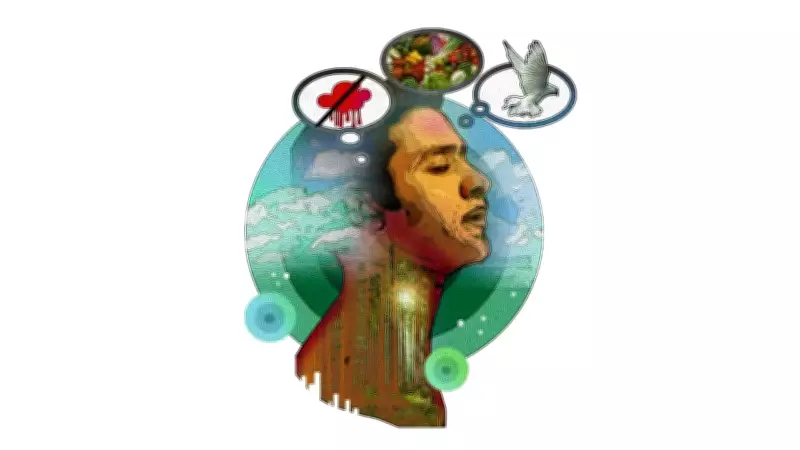
Beyond Diet: Jain Vegetarianism as a Holistic Path to Peace and Evolution
In an era marked by unprecedented scientific advancement and rapid technological progress, humanity finds itself at a curious crossroads. Despite multiplying resources and nourished bodies, a pervasive sense of restlessness and diminished satisfaction lingers. This paradox highlights a deeper disconnect, where external abundance often masks internal turmoil. Amidst this backdrop, the concept of vegetarianism, frequently reduced to mere dietary choices, emerges with profound implications when viewed through the lens of Jain philosophy.
Expanding the Definition of Vegetarianism
For many, vegetarianism is narrowly interpreted as a diet free from animal products. However, the Jain perspective offers a transformative expansion: vegetarianism equals what you think, what you speak, what you do, what you earn, and what you share. This holistic approach transcends food, encompassing conduct, thoughts, behavior, and even livelihood. From a spiritual standpoint, food is not merely a source of energy; it influences sensitivity, shaping hormones, neurotransmitters, and emotional responses. Modern science increasingly acknowledges this, moving beyond calorie counts to recognize food's impact on well-being.
The Principle of Ahimsa and Minimum-Violence Living
In Jain philosophy, ahimsa (nonviolence) extends far beyond refraining from killing. It involves avoiding suffering through thought, speech, or action. Neuroscience today confirms that living beings experience pain, aligning with ancient Jain categorizations of organisms by sensory capacity, from single-sensed to five-sensed beings. Thus, Jain vegetarianism is not merely plant-based; it is a minimum-violence diet. Practices such as avoiding root vegetables, refraining from eating after sunset, emphasizing fresh food, and consuming limited quantities are rooted in this philosophy, reflecting a deep respect for all life forms.

Three Levels of True Vegetarianism
True vegetarianism operates at three interconnected levels:
- Dietary Vegetarianism: Food free from the killing of animals, promoting physical health and environmental sustainability.
- Purity of Thought: A mind liberated from jealousy, hatred, and hostility, fostering inner peace and clarity.
- Ethical Living: Words and actions that do not hurt others, extending compassion beyond dietary choices to daily interactions.
In today's digital age, this means refraining not only from animal harm but also from wounding others through harsh words, insults, or social media trolling. Vegetarianism, therefore, signifies: no killing and no hurting.
Ethical Earning and Modern Relevance
Purity of food alone is insufficient if wealth is earned through exploitation, deceit, or unfair practices. Vegetarian living implies ethical earning, rejecting cheating, adulteration, and exploitation. Modern concepts of ethical business, such as prioritizing trust over profit, mirror ancient Jain principles of nonviolence and non-possessiveness, demonstrating their timeless relevance in fostering sustainable economies.
Health, Clarity, and the Path to Peace
While major medical institutions recognize plant-based diets as beneficial for longevity, Indian wisdom emphasizes clarity of consciousness. For meditators, inner turbulence poses a greater obstacle than physical ailments, and food shapes the mind's frequency. This explains why monks eat sparingly to maintain alertness and activity. Violence often originates in thought before manifesting as conflict; by accepting killing for food, humanity risks becoming desensitized to violence. When food is rooted in compassion, it can influence broader societal structures, potentially fostering peace in politics and reducing conflicts.

Vegetarianism as Evolutionary Progress
Vegetarianism is not merely a lifestyle; it represents a state of consciousness and a higher stage in human evolution. Human development can be viewed in three phases: survival, comfort, and sensitivity. As humanity enters this third stage, future humans may evolve to be not only intelligent but also compassionate. Embracing ahimsa and vegetarianism could have prevented many historical conflicts, promoting empathy and respect for all life. Thus, vegetarianism may well signify the next evolutionary phase of civilization, offering a psychological foundation for global harmony.