

Injured King Cobra Rescued and Treated in Una After Road Accident
In a remarkable wildlife rescue operation, an injured King Cobra was saved and treated at the zonal veterinary hospital in Barnoh, Una, following a road accident involving a JCB earthmover. The incident unfolded on the morning of February 25 in Malahat village, where the snake was crossing a road and suffered critical injuries after being run over.
Local snake catcher Jitendra Kumar swiftly responded to the scene after receiving alerts from concerned residents. Upon arrival, he found the reptile in a severely wounded state and immediately transported it to the veterinary hospital for urgent medical attention.
Challenging Surgery Under Expert Supervision
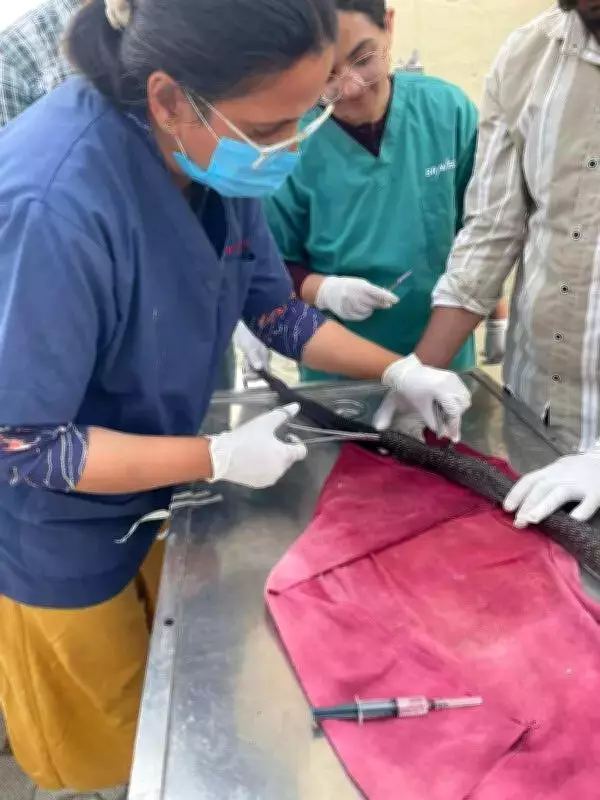
Under the skilled supervision of Dr. Shilpa and her team, the King Cobra underwent a complex surgical procedure. The veterinarians meticulously removed damaged tissues and carefully stitched and dressed the wounds. Dr. Shilpa, with over 12 years of experience, highlighted the unique challenges of handling this highly venomous species.

She and her colleague, Dr. Deepshikha, administered local anesthesia via a spray along with a small dose of inhaled sedation to ensure the snake's safety during the operation. Dr. Shilpa described the injuries as extremely severe, classified as third-degree, with internal organs such as the intestines exposed and protruding.
"We thoroughly cleaned and washed the wounds, repositioned the organs, and then sutured them with great care," she explained. The snake is currently under close observation for at least five days, with plans to release it back into its natural habitat contingent upon a full recovery.
Rarity of Such Cases and Legal Protections
Dr. Shilpa, on her third posting, noted that it is uncommon for critically injured snakes to be brought to veterinary doctors. In the past, she has treated snakes with minor injuries, often brought in by Army personnel for training-related purposes.
The King Cobra is a protected species listed under Part II of the Wildlife (Protection) Act, 1972. The law imposes strict penalties, including imprisonment of three to seven years and a minimum fine of Rs 10,000 for killing the species. However, Section 11(2) of the Act allows for the killing or wounding of a wild animal in good faith for self-defence or defence of others.
Increased Snake Sightings Due to Early Summer
Officials have attributed a rise in snake sightings in residential areas of Una district to the early onset of summer. This environmental shift has led to more frequent encounters between humans and wildlife, underscoring the importance of conservation efforts and prompt rescue operations like this one.
The successful treatment of this King Cobra serves as a testament to the dedication of wildlife rescuers and veterinarians in protecting India's biodiversity, even in challenging circumstances.






