

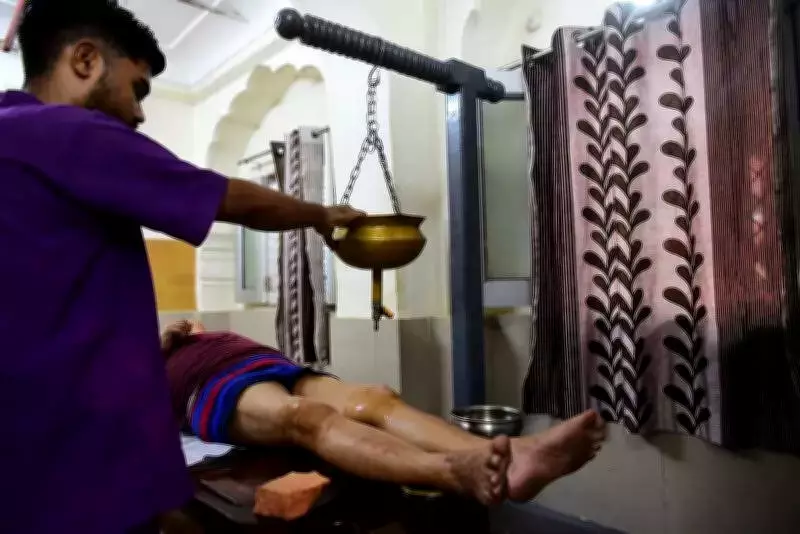
Punjab Government Amplifies Ayurveda Outreach in Rural Communities
In a significant move to bolster traditional healthcare accessibility, the Punjab government has dramatically intensified its efforts to expand Ayurveda-based treatment services across the state's rural and semi-rural regions. This strategic push aligns directly with the renewed national focus on strengthening India's indigenous medical systems, as highlighted in the recent Union Budget 2026-27 announcement.
Three-Week Health Camp Initiative Launched
District Ayurveda and Unani officer, Dr. Dinesh Kumar, confirmed the launch of an extensive series of Ayurveda and Homeopathic health camps. These camps are scheduled to run from January 7th to January 28th across the district, with a dedicated focus on underserved rural populations.
"The primary objective of these camps is to deliver Ayurveda directly to the doorsteps of the people, particularly those who face significant barriers in accessing specialized healthcare facilities," Dr. Kumar explained. He emphasized that patients visiting these camps would receive comprehensive care, including free consultation, treatment, and prescribed medicines.

Furthermore, Dr. Kumar underscored the department's commitment to continuity of care, stating, "Even after the conclusion of the camps, beneficiaries can seamlessly continue their treatment regimens by collecting free medicines from government-operated Ayurveda dispensaries."
Synchronized with National Budgetary Thrust
The state's proactive initiative dovetails perfectly with the central government's reinforced emphasis on traditional medicine. In the Union Budget 2026-27, Finance Minister Nirmala Sitharaman outlined a comprehensive plan to fortify India's traditional medicine ecosystem. Key budgetary allocations include:
- The establishment of three new All-India Institutes of Ayurveda.
- The systematic upgradation of AYUSH pharmacies and drug testing laboratories to meet higher quality standards.
- The strategic deployment of skilled healthcare personnel across the traditional medicine sector.
This national framework aims to create a robust infrastructure for affordable and accessible traditional healthcare, a vision the Punjab government is actively operationalizing at the grassroots level.
Rooted Tradition Meets Structured Modern Guidance
For countless rural residents, Ayurveda is far from a novel concept. Long before the advent of modern medical clinics in villages, communities traditionally relied on herbal decoctions, medicinal oils, dietary modifications, and seasonal remedies to address common ailments. These typically included joint pain, digestive issues, skin conditions, and various lifestyle disorders.
"What was historically often missing was structured, professional guidance and access to quality-controlled, standardized medicines," noted local observers. The government's camp initiative seeks to bridge this critical gap by providing expert consultation from qualified practitioners.
Community Response and Economic Advantages
Rattan Singh, a resident of Attari, expressed appreciation for the initiative while highlighting its rarity in rural settings. "People in our communities already possess a deep-seated belief in traditional medicine due to its reliance on herbs and natural remedies. With these organized camps, we are finally gaining access to proper advice from qualified doctors. We are hopeful that this will encourage more private practitioners to establish affordable clinics in our areas," he stated.
Ravinder Singh, a wholesale dealer of Ayurvedic medicines, elaborated on the system's core advantages for the common populace. "Ayurveda's greatest strengths lie in its inherent affordability and its preventive, holistic approach. Treatments frequently focus on correcting daily habits, diet, and overall lifestyle, which can significantly reduce dependence on expensive diagnostic procedures and long-term pharmaceutical medications," he explained.

He added that for rural households, where healthcare expenses can impose a substantial financial burden, government-supported Ayurveda services present a practical, sustainable, and low-cost alternative, enhancing both accessibility and economic feasibility for preventive and curative care.
The concerted efforts by the Punjab government, synchronized with national policy, mark a decisive step toward establishing the state as a leading hub for affordable, accessible, and quality-driven traditional medicine, particularly for its vast rural population.





